







President Emomali Rahmon: Eighteen State Investment Projects Continue to Be Implemented in the Energy Sector
Read also
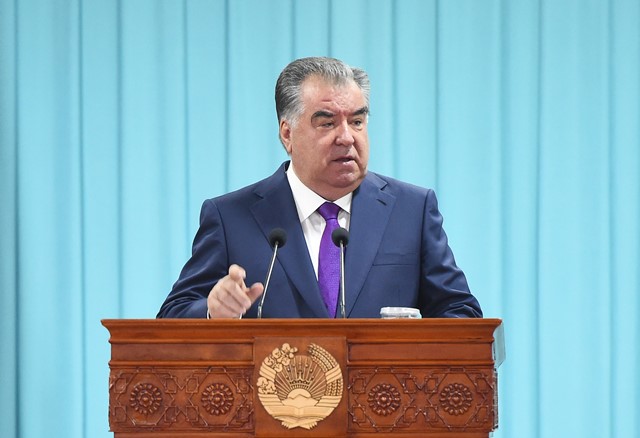
DUSHANBE, 13.07.2022 (NIAT Khovar) – Over 285 small and large hydroelectric power stations and one thermal power plant, 1,500 kilometers of high-voltage power lines, and 50 high-voltage electrical substations have been built and reconstructed during the last 30 years. That is, 75% of the country’s energy infrastructure has been modernized. This was stated today by President Emomali Rahmon in his speech at a meeting with the builders of the Rogun hydroelectric power plant (HPP).
During this period, Tajikistan has built more than 2,000 megawatts of additional power capacity. To date, 18 more state investment projects worth 16.6 billion somoni are being implemented in the energy sector.
He noted that Tajikistan has large hydropower resources, which are one of the main sources of renewable energy.
Nearly all of Tajikistan’s electricity is produced using water resources, and the country ranks sixth in the world in terms of the percentage of “green energy” production.
In addition, Tajikistan also ranks lowest in the world in terms of greenhouse gas emissions. In this regard, President Emomali Rahmon noted that the increasing production and widespread use of «green energy» is considered one of the priorities for the competitiveness of the economy of the country.
“We intend to use these huge opportunities in the face of global climate change not only for our own benefit, but also for the benefit of Central and South Asia. In this regard, we have carried out significant work to increase the production of electricity and expand its transmission networks,” he said.
He added that in order to develop the country’s energy sector, 34 state investment projects have so far been implemented costing a total of 57.2 billion somoni, 12 billion of which have been directed exclusively to the reconstruction and development of energy infrastructure.
Favorable conditions have been created for the formation of a unified energy system, ensuring the sustainability of the energy complex, the needs of the national economy and the population entirely at the expense of its own resources.
“In 2021, for the first time since gaining independence, electricity generation increased to 20.6 billion kilowatt-hours, which is a significant achievement in the industry,” he stressed.
 Lonely Planet Includes Tajikistan among the World’s Best Travel Experiences
 Emomali Rahmon and Xi Jinping Highlight Significance of Launching Direct Passenger Flights between Dushanbe and Beijing
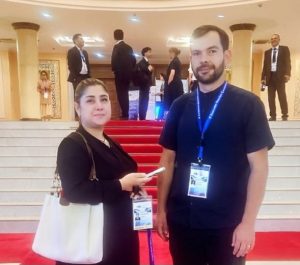 Tajikistan Provides Key Platform for Science–Policy Dialogue on Glacier Preservation, Says UCA Researcher
 CGTN Journalist Praises Tajikistan’s Leadership on Glaciers’ Issues and Highlights China-Tajikistan Cooperation
 UN Women Official Stresses the Role of Women in Climate Action at Glaciers’ Conference in Dushanbe
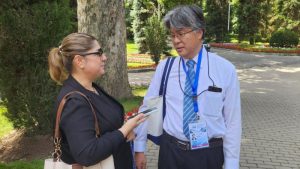 Japanese Researcher Highlights Tajikistan’s Role in Regional Water Security at High-Level Glaciers’ Conference
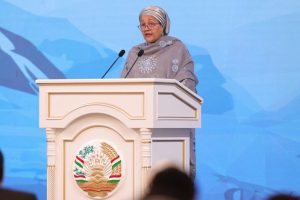 “This is Not Just Ice – This is Life”: UN Deputy Chief Calls for Urgent Action at Glaciers Conference in Dushanbe
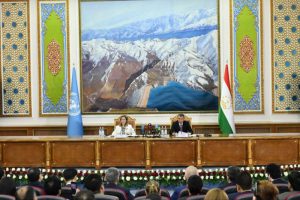 Dushanbe Hosts Landmark International High-Level Conference on Glaciers’ Preservation
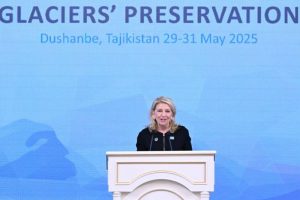 The Climate Crisis Is Primarily a Crisis of Children’s Rights
 Chinese Scientist Highlights Glacier Retreat as a Tangible Reality for Tajikistan, the Region, and the World
 Dushanbe Conference Launches New Era in Global Glacier Diplomacy
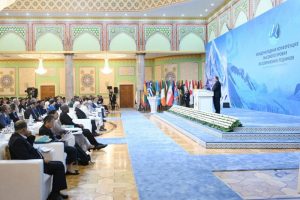 Global Leaders Urged to Fund UN Trust for Glacier Preservation