








Shashmaqom Cultural Program Held in Paris
Read also
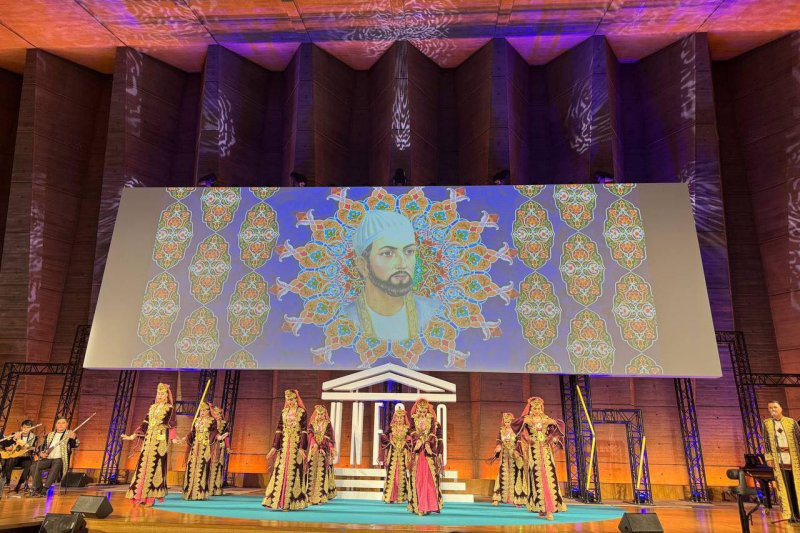
DUSHANBE, 12.06.2025 (NIAT Khovar) – On June 11, as part of the celebration of the 700th anniversary of Hofiz Sherozi and High-Level Celebration of the 50th Anniversary of the Intergovernmental Hydrological Programme and 60 years of UNESCO Water Sciences, a Shashmaqom cultural program was held in Paris.
The program was presented by masters of the Shashmaqom musical art from Tajikistan and attracted significant attention from guests and participants of the event.
The performance of this unique traditional musical heritage, included in UNESCO’s Representative List of the Intangible Cultural Heritage of Humanity, reflected the depth of the spiritual culture of the Tajik people and their contribution to the development of world civilization.
Tajikistan’s Minister of Foreign Affairs, Sirojiddin Muhriddin, emphasized that holding such events at the international level not only showcases national art but also makes a significant contribution to strengthening intercultural dialogue.
It is noteworthy that on November 7, 2003, Shashmaqom was officially inscribed on UNESCO’s Representative List of the Intangible Cultural Heritage of Humanity.
Shashmaqom is a vast, centuries-old poetic and musical tradition widespread among many Eastern peoples. It continues to attract the attention of researchers from both theoretical and historical perspectives.
For the Tajik people, Shashmaqom represents an entire universe, a culture, and the language of musical art. If the immortal creation of Firdavsi, the Shohnoma, is the pinnacle of poetic creativity, then Shashmaqom is the summit of musical art.
Shohnoma and Shashmaqom embody the highest ideals of patriotic thought — honor and dignity, peace and harmony, struggle and self-sacrifice, bravery and courage, the knowledge of reason and wisdom, joy and celebration, grandeur and triumph, sorrow and spiritual pain of the people.
The term “Shashmaqom” literally means “six maqoms” (musical modes) in Tajik. A maqom is a complex vocal-instrumental suite composed of multiple sections. Its structure includes both instrumental and vocal components.
Shashmaqom has a well-developed scientific foundation. It originated in Bukhara in the pre-Islamic era and later spread throughout the Eastern world.
The poetic foundation of the vocal parts of Shashmaqom consists of the verses of classical Tajik-Persian poets such as Hofiz, Saadi, Jomi, and others. Musical accompaniment is provided by traditional instruments like the tanbur, dutar, and doira. Once, Shashmaqom was court music — in the palace of the Emir of Bukhara, a dedicated Shashmaqom ensemble would delight the ruler and his guests with music and song.
There was also a period when attempts were made to ban and erase Shashmaqom from memory. But these efforts failed. The people preserved it and passed it down to future generations.
 National Conference to Be Held Marking the 115th Anniversary of Hero of Tajikistan Mirzo Tursunzoda
 Emomali Rahmon: “Navruz, Mehrgon, Sada, and Tirgon Embody Humanistic Values and Reverence for Nature”
 Emomali Rahmon: “The Tajiks Are One of the World’s Cultural and Civilization-Building Nations”
 Emomali Rahmon: «Borbad Is Recognized as One of the Earliest Masters of Musical Theory and a Professional Composer of the Aryan Cultural Tradition»
 President Emomali Rahmon Describes Historical and Cultural Heritage as the Identity of the Ancient Tajik People
 Tajikistan to host Chinese Culture Days
 National Museum of Tajikistan to Exhibit Artifacts at International Exhibition in China
 Filmmakers from 20 Countries to Participate in the International “Toji Somon” Film Festival
 Opening Ceremony of the Days of Mongolian Culture Held in Tajikistan
 President of Mongolia Ukhnaagiin Khurelsukh Explores the History of the Tajik People at the National Museum of Tajikistan
 Mongolian Culture Days to Take Place in Tajikistan