






CHAKAN INSCRIBED ON THE REPRESENTATIVE LIST OF THE INTANGIBLE CULTURAL HERITAGE OF HUMANITY. UNESCO’s decision on this matter was made on November 29 in Mauritius
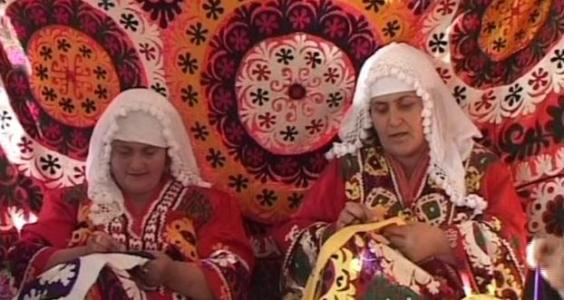
DUSHANBE, 30.11.2018. /NIAT «Khovar»/. Chakan — embroidery art in Tajikistan inscribed on the Representative List of the Intangible Cultural Heritage of Humanity. UNESCO’s decision on this matter was made yesterday, November 29, at the annual session of organization, held in Mauritius — the island state of Africa. NIAT “Khovar” has been reported today, November 30 by the Minister of Culture of the Republic of Tajikistan, Chairman of the National Commission of the Republic of Tajikistan for UNESCO Shamsiddin Orumbekzoda.
UNESCO’s official website presents Chakan as follows: «The art of Chakan embroidery is the practice of sewing ornaments, images of flowers and symbolic drawings with colourful threads on cotton or silk fabrics. The tradition is widespread among women and girls in Tajikistan. Chakan embroidery is used to decorate clothing and household items such as women’s shirts, headscarves, curtains, pillows, bedspreads and coverlets for cradles.
The embroidery features symbolic depictions and mythological images relating to the surrounding nature and cosmos, which express people’s wishes and hopes. The practice involves selecting the textile and threads, drawing ornaments, creating needlepoint images and sewing clothes.
In the past, the threads were prepared from cotton and silk fibres and coloured with natural paints made with plants and minerals: nowadays, Chakan dressmakers use fabric threads for needlework.
In the Khatlon region, the Chakan shirt is an important bridal dress. Grooms wear a ‘tāqi’ (the national skullcap featuring Chakan embroidery), and Tajik women and girls wear the Chakan dress during traditional festivals and holidays. The embroidered products are an expression of beauty, elegance and the unity of humans and nature.
The young generations learn the art from their mothers, grandmothers and older sisters, and transmission also occurs in groups through the so-called ‘ustod-shogird’ (master-student) method. Individual craftswomen sell their products in bazaars and through dress shops, providing an important way of earning».
It should be noted that earlier in this list was inscribed “Shashmaqom” — the great musical heritage of our people. In 2016, at the proposal of Tajikistan and Uzbekistan UNESCO inscribed pilaf (oshi palav) — the national dish of these countries on the Representative List of the Intangible Cultural Heritage of Humanity. In the same year, Navruz, the Eastern New Year, was inscribed on this list at the suggestion of the Republic of Tajikistan, supported by 10 other countries.
The Representative List of Intangible Cultural Heritage of Humanity was created by UNESCO in 2008 in order to preserve the unique traditions, cultures and arts of different countries of the world. To date, the list inscribes 509 items from 122 countries of the planet.
 Tajikistan, Iran Open Virtual Exhibition Showcasing Shared Cultural Heritage
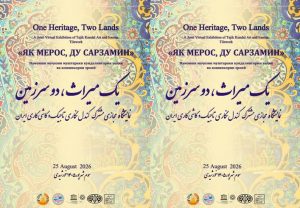 Tajikistan, Iran to Hold Virtual Exhibition “One Heritage, Two Lands”
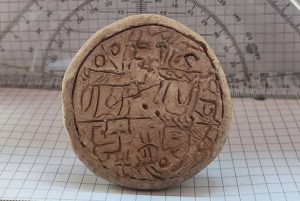 TAJIK CIVILIZATION. Ancient Royal Seal Unearthed at Sayyod Archaeological Site in Tajikistan
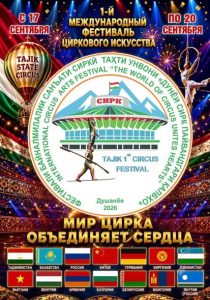 First International Circus Festival to Be Held in Dushanbe in September
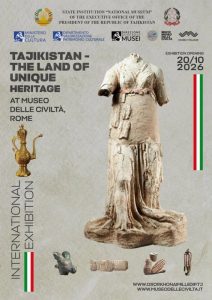 Rome to Host International Exhibition Showcasing Tajikistan’s Ancient Heritage
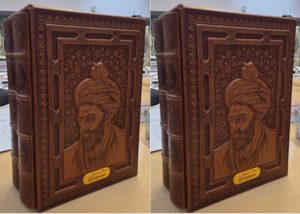 Tajikistan’s “Shahnameh” wins Grand Prix at CIS International Book Art Competition
 Tajik-Iranian Film Wins Best Actor Award at SCO International Film Festival
 Tajik Culture Days Open in Ulaanbaatar During Emomali Rahmon’s State Visit
 Tajik Culture Days Begin in Mongolia
 Dushanbe to host third Toji Somon National Film Festival in October
 Tajikistan records 889,400 foreign tourists in first half of 2026
 Tajikistan International University of Tourism and Entrepreneurship Named National Coordinator of Green University Ranking