







The Climate Crisis Is Primarily a Crisis of Children’s Rights
Read also
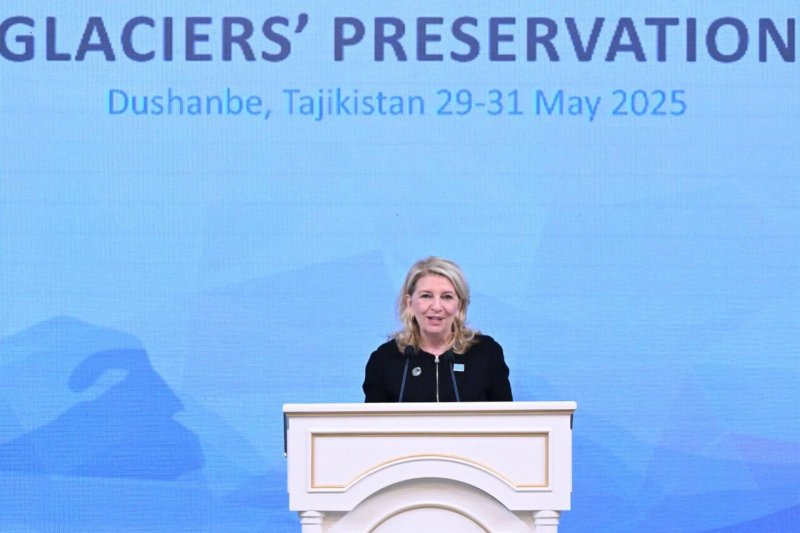
DUSHANBE, 31.05.2025 (NIAT Khovar) – On the highest points of the Earth—where nature once seemed eternal—glaciers are rapidly melting. As these glaciers retreat, the consequences felt “up there” increasingly impact those “down below,” especially children. This was highlighted by Catherine Mary Russell, Executive Director of the United Nations Children’s Fund (UNICEF).
According to Ms. Russell, for UNICEF, the climate crisis is foremost a crisis of children’s rights. It affects their health, safety, and access to essential services. More than one billion children live in areas of extremely high climate risk. Despite bearing the least responsibility for the crisis, children suffer its greatest consequences.
“Central Asia is among the most vulnerable regions. In Tajikistan alone, nearly 30% of glacier mass has already been lost. Without urgent action, glaciers are projected to shrink by another 15-20% by 2050,” she said, emphasizing that children must be at the heart of climate agendas and funding.
“UNICEF is committed to supporting climate education, strengthening water supply systems, healthcare, and social protection adapted to climate change. Importantly, we are creating opportunities for youth participation in decision-making,” Russell added.
The UNICEF Executive Director called for increased child-focused climate financing, noting that only 2.4% of multilateral climate funding currently addresses the services children need to be protected from the impacts of the climate crisis. “More must be done; the situation must change.”
“We urge governments to integrate children’s interests into their climate plans and updated national programs. Tajikistan’s example, which includes education, youth, and healthcare in its climate strategy, deserves high recognition,” concluded the UNICEF representative.
 Lonely Planet Includes Tajikistan among the World’s Best Travel Experiences
 Emomali Rahmon and Xi Jinping Highlight Significance of Launching Direct Passenger Flights between Dushanbe and Beijing
 Tajikistan Provides Key Platform for Science–Policy Dialogue on Glacier Preservation, Says UCA Researcher
 CGTN Journalist Praises Tajikistan’s Leadership on Glaciers’ Issues and Highlights China-Tajikistan Cooperation
 UN Women Official Stresses the Role of Women in Climate Action at Glaciers’ Conference in Dushanbe
 Japanese Researcher Highlights Tajikistan’s Role in Regional Water Security at High-Level Glaciers’ Conference
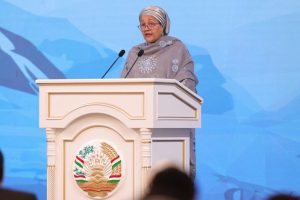 “This is Not Just Ice – This is Life”: UN Deputy Chief Calls for Urgent Action at Glaciers Conference in Dushanbe
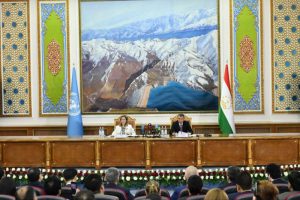 Dushanbe Hosts Landmark International High-Level Conference on Glaciers’ Preservation
 Chinese Scientist Highlights Glacier Retreat as a Tangible Reality for Tajikistan, the Region, and the World
 Dushanbe Conference Launches New Era in Global Glacier Diplomacy
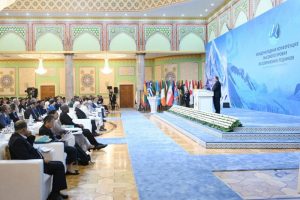 Global Leaders Urged to Fund UN Trust for Glacier Preservation
 Tajikistan Takes Global Leadership Role in Cryosphere Preservation