






“This is Not Just Ice – This is Life”: UN Deputy Chief Calls for Urgent Action at Glaciers Conference in Dushanbe
Read also
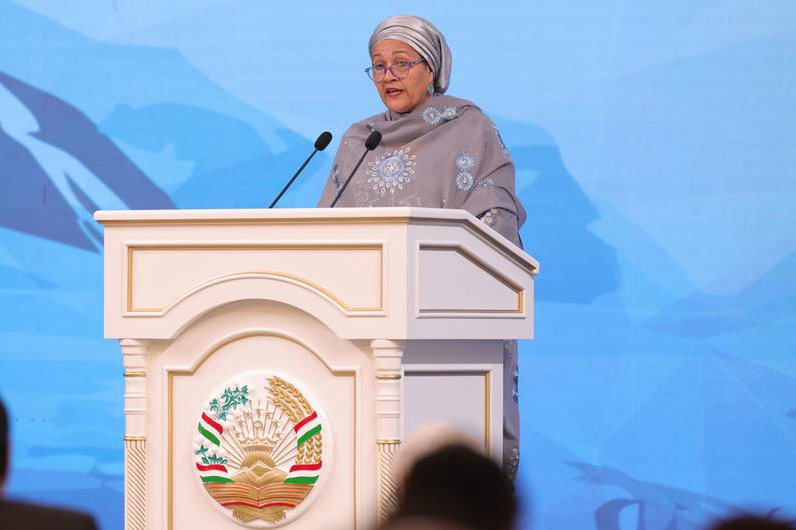
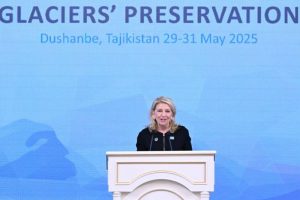
DUSHANBE, 02.06.2025 (NIAT Khovar) – Speaking at the International Conference on Glaciers’ Preservation in Dushanbe, the Deputy Secretary-General of the United Nations, Amina Mohammed, delivered a compelling call for global urgency in protecting the world’s glaciers and the ecosystems and communities they sustain, reports UN News.
“This is not just ice. This is food, water and security for generations to come,” Mohammed said during the closing day of the conference, which took place from 29 May to 31 May in the capital of Tajikistan.
According to Mohammed, glaciers have lost more than 9,000 billion tons of ice since 1975, equivalent to a 25-meter-thick ice block covering the entire country of Germany.
“At current rates, many glaciers may not survive this century,” she warned. “This is not just a mountain crisis – it is a slow-moving global catastrophe with far-reaching consequences for the planet and people.”
A day prior to her speech, Ms. Mohammed visited the Vanj Yakh Glacier in north-central Tajikistan, where she witnessed firsthand the striking beauty and fragility of one of Central Asia’s most vital water sources. The glacier, which supports millions of people across the region by feeding rivers and sustaining livelihoods, has already lost the equivalent of 6.4 million Olympic-sized pools of water due to climate change over the past 80 years.
The Dushanbe conference aimed to elevate glacier preservation on the global climate agenda in the lead-up to COP30, the upcoming UN climate change conference in Brazil this November.
“Glaciers, along with ice sheets, store approximately 70 percent of the world’s freshwater,” Mohammed noted. “Our glaciers are dying,” echoed Celeste Saulo, Secretary-General of the World Meteorological Organization (WMO), which co-organized the conference. “The death of a glacier is a mortal blow to our ecosystems, economies, and social fabric.”
Melting glaciers increase the risk of floods and mudslides, disrupt water security, and impact agriculture, forestry, and hydropower.
Mohammed stressed that immediate global action is essential: “The time to act is now — for our people and our planet.”
In Tajikistan, the United Nations has supported community resilience efforts through training for farmers and local stakeholders.
“More children are safe from disasters, they can go to school, learn, and grow,” said Parvathy Ramaswami, the UN Resident Coordinator in Tajikistan. “Families and communities become resilient and prosper.”
The conference also engaged with youth climate activists, whom Ms. Mohammed encouraged to remain vocal and courageous.
“The global decisions we are shaping today will affect their lives,” she said. “They should continue to raise their voices… and make every step count.”
 Lonely Planet Includes Tajikistan among the World’s Best Travel Experiences
 Emomali Rahmon and Xi Jinping Highlight Significance of Launching Direct Passenger Flights between Dushanbe and Beijing
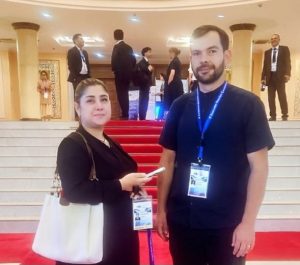 Tajikistan Provides Key Platform for Science–Policy Dialogue on Glacier Preservation, Says UCA Researcher
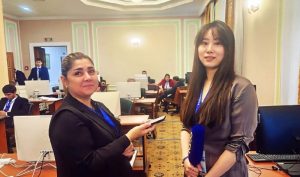 CGTN Journalist Praises Tajikistan’s Leadership on Glaciers’ Issues and Highlights China-Tajikistan Cooperation
 UN Women Official Stresses the Role of Women in Climate Action at Glaciers’ Conference in Dushanbe
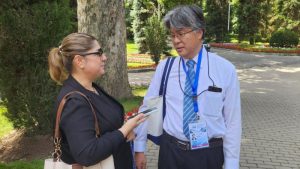 Japanese Researcher Highlights Tajikistan’s Role in Regional Water Security at High-Level Glaciers’ Conference
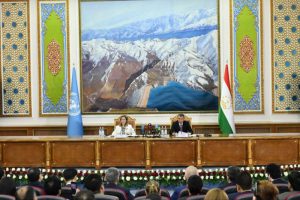 Dushanbe Hosts Landmark International High-Level Conference on Glaciers’ Preservation
 The Climate Crisis Is Primarily a Crisis of Children’s Rights
 Chinese Scientist Highlights Glacier Retreat as a Tangible Reality for Tajikistan, the Region, and the World
 Dushanbe Conference Launches New Era in Global Glacier Diplomacy
 Global Leaders Urged to Fund UN Trust for Glacier Preservation
 Tajikistan Takes Global Leadership Role in Cryosphere Preservation