







President Emomali Rahmon Opens 30,000-Seat National Stadium Built to International FIFA Standards
Read also
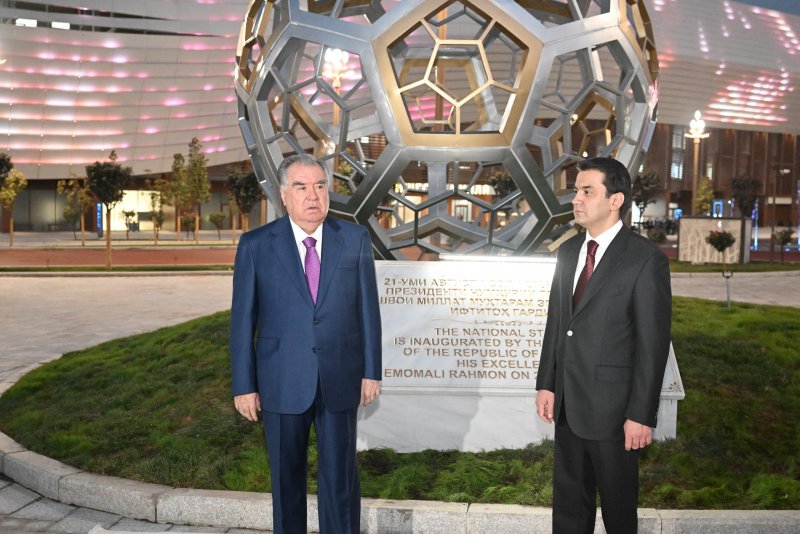
On August 21, the President of the Republic of Tajikistan, Leader of the Nation, Honorable Emomali Rahmon, and the Chairman of the Majlisi milli Majlisi Oli of the Republic of Tajikistan, Mayor of Dushanbe, Honorable Rustam Emomali, inaugurated the capital’s new National Stadium (the «National Stadium» State Institution under the Executive Office of the President of the Republic of Tajikistan).
At the stadium’s main entrance, a fountain—an art installation shaped like the President’s autograph and crafted from high-quality stainless steel—was designed and installed to honor the tireless efforts and dedication of the President of the Republic of Tajikistan, Leader of the Nation, Honorable Emomali Rahmon, whose contributions to the construction of the National Stadium and the development of modern Tajik football have been exceptional.
This feature is not merely decorative; it is a part of the National Stadium’s construction history and will endure for years to come as a primary symbol of its creation.
This majestic sports facility covers an area of 9.5 hectares and stands as a prime example of modern construction in the country.
The stadium features a two-tiered seating arrangement with a total capacity of over 30,000 spectators: the lower tier accommodates more than 12,000 people, while the upper tier holds 18,000.
Built to meet international FIFA standards, the facility holds a Category 2 international rating. Its specifications qualify it to host high-level club matches and international competitions.
To ensure the safe entry of fans, the stadium is equipped with 68 modern electronic turnstiles that meet international standards.
For ease of movement and efficient management, the building is divided into four main sectors. The structure of the two-tiered stands and the placement of the turnstiles were designed specifically to meet FIFA safety requirements—ensuring safety, preventing overcrowding, and facilitating the rapid evacuation of spectators.
The building has a footprint of 27,000 square meters, with a total floor area exceeding 42,000 square meters. The structure stands 33 meters tall and comprises five floors plus a basement level.
At the heart of the stadium lies a modern football pitch covering 7,140 square meters. The playing field measures 105 by 68 meters, complying with mandatory FIFA requirements for hosting international matches and World Cup games.
The overall dimensions of the sports area are 130 by 87 meters; this also meets FIFA standards, providing sufficient safe space around the pitch for safety zones and technical areas.
Match action will be broadcast on two large LED screens—each measuring 133 square meters—installed within the stadium. These screens are also designed to display match information and replays of key moments in accordance with FIFA standards.
It is worth noting that the high quality of match operations and live television broadcasts is ensured by powerful, state-of-the-art equipment.
The arena is equipped with 312 high-performance modern floodlights from Philips; these meet FIFA’s mandatory requirements for uniform lighting and enable matches to be played and broadcast in high-quality HD and 4K formats.
The sound system and acoustics are another key feature of the facility. The stadium is equipped with 88 professional BOSS loudspeakers, ensuring clear sound distribution across all the stands.
A system of 66 lighting fixtures allows the stadium to host large-scale shows and international-standard opening ceremonies featuring special lighting effects. The stadium is equipped with 50 surveillance cameras and 10 standard cameras that meet FIFA’s mandatory requirements for recording and broadcasting matches in high-quality HD and 4K.
Comprehensive security systems are also in place; the facility is equipped with modern fire detection and control equipment. More than 1,000 intelligent fire alarm units have been installed throughout the building in compliance with established regulations.
Four dedicated locker rooms with a total capacity of 104 spaces have been provided for athletes, as FIFA standards for hosting major tournaments and back-to-back matches require at least four separate locker rooms.
Facilities for officials and distinguished guests include one VVIP lounge (32 seats), 34 VIP lounges (306 seats), and 26 CIP lounges (416 seats). The inclusion of modern «Skybox» facilities is a key FIFA requirement for hosting high-ranking and distinguished guests.
In addition, the facility includes numerous service areas and restrooms that meet rigorous sanitary and technical standards.
The main façade of the National Stadium is clad in modern aluminum panels.
At night, the building’s façade becomes a key element of the stadium’s visual identity. A state-of-the-art media projection system, covering an area of over 30,000 square meters, has been installed on the façade.
This modern media projection system allows for the direct display of images, graphics, and various visual programs on the building’s exterior.
The stadium features a spacious parking area accommodating over 750 vehicles, alongside more than 3,000 square meters of landscaped grounds planted with evergreen trees, flowers, and shrubs.
President Emomali Rahmon described the opening of the National Stadium—built to mark the nationwide celebration of the 35th anniversary of State Independence—as a worthy gift to the people of Tajikistan.
It is worth noting that the National Stadium is distinguished by its grandeur and beauty; its architectural design is unparalleled in Central Asia.
The history of Tajik football dates back to the 1920s and 1930s. The first football championship in Tajikistan took place in 1937, featuring several football clubs.
This championship, and those that followed, helped transform football into a mass-participation sport in Tajikistan. Young people showed a keen interest in the sport, which embodies qualities such as courage, valor, and willpower, while also offering valuable philosophical lessons.
Football can be described not merely as a game, but as a school for cultivating proper conduct, discipline, patience, and resilience, as well as for fostering physical development.
Since the country gained its independence, football has steadily developed thanks to the attention paid to it by the state leadership.
During this period, the number of small and large football facilities and pitches in Tajikistan—which were previously scarce—has grown significantly.
Athletes now have the opportunity to train in excellent conditions under the constant guidance of coaches. Over time, attention to the development of football has intensified, providing Tajik athletes with greater opportunities to participate in international competitions.
Driven by the initiative and special attention of the Leader of the Nation, Emomali Rahmon, the country’s sports sector has experienced dynamic growth.
The upgrading of sports infrastructure—a crucial step in advancing football in Tajikistan—has proceeded at a particularly rapid pace over the last decade.
Today, sports and recreational facilities—especially those dedicated to football—are being built and commissioned not only in Dushanbe but in cities and districts across the country.
This has significantly boosted interest in sports—and football in particular—among the younger generation and youth. Women’s football is also expanding, with a growing number of women’s football clubs now active in Tajikistan.
Concurrently, the legal and regulatory framework for sports has been strengthened throughout the years of state independence through the adoption of relevant laws and documents. Key measures include the Law of the Republic of Tajikistan «On Physical Culture and Sport,» the «Strategy for the Development of Sport and a Healthy Lifestyle,» the three-phase state program «Football Development,» and the «National Concept for the Development of Physical Culture and Sport,» alongside the development and implementation of hundreds of projects aimed at sports and public health. Collectively, these initiatives have laid a solid foundation for the continuous development of sports in the country.
Now, as the country prepares to celebrate the 35th anniversary of the State Independence of the Republic of Tajikistan, a magnificent facility—the National Stadium of Tajikistan—has been constructed in the capital of our beloved homeland, meeting the highest international standards.
Tajikistan is now recognized not only for its international initiatives regarding water resources, climate, and global peace and stability but also as a key international proponent of football development. As we know, at the initiative of the esteemed Rustam Emomali—Chairman of the Majlisi milli Majlisi Oli of the Republic of Tajikistan, Mayor of Dushanbe, President of the Central Asian Football Association, and President of the Tajikistan Football Federation—May 25th is celebrated annually as World Football Day, starting in 2024.
It is precisely thanks to this attention and support that, during the years of national independence, Tajikistan’s U-17 national football team has qualified four times for the planet’s most prestigious football competition: the World Cup. Tajikistan has become a venue for CAFA (Central Asian Football Association) international competitions, hosting such tournaments more than 30 times over the past decade.
The Tajikistan Football Federation has received special awards from the leadership of the Asian Football Confederation in recognition of its efforts to develop football, particularly among children and adolescents.
In furtherance of the constructive initiatives undertaken by the Leader of the Nation, this magnificent modern stadium will further strengthen Tajikistan’s capacity to host global competitions and foster friendship among the peoples and nations of the world.
Going forward, Tajik footballers will train at this stadium—which meets international standards—to build upon their achievements and raise the national flag of independent Tajikistan at prestigious global competitions.
It is also worth noting that the high quality of match hosting and live television broadcasts is ensured by state-of-the-art technological and acoustic equipment.
Such a magnificent sports facility not only provides the infrastructure for hosting international competitions but also creates new opportunities for the development of Tajik football, the nurturing of young talent, and the staging of large-scale cultural and entertainment events.
The Leader of the Nation’s policy of supporting sports has created vast opportunities to achieve set goals, secure notable sporting successes on the global stage, and realize the long-held aspirations of our people, thereby paving the way for a proud new global image of our beloved Tajikistan.
This unwavering commitment shown by the President of the Republic of Tajikistan, Leader of the Nation, Honorable Emomali Rahmon, inspires the proud people of our beloved country to serve the constructive and civilizational ideals of the Tajik nation with dedication.
 President Emomali Rahmon Meets with Heads of SCO Member State Delegations in Dushanbe
 President Emomali Rahmon Meets First Vice President of Iran Mohammad Reza Aref
 President Emomali Rahmon Inaugurates 20 Development Facilities in Rudaki District
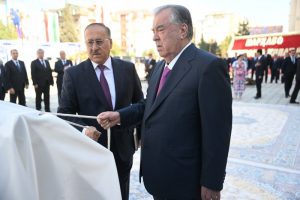 President Emomali Rahmon Inaugurates New Education Department Building in Rudaki District
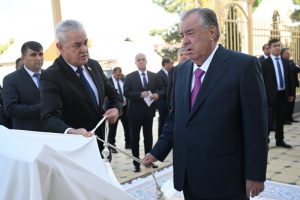 President Emomali Rahmon Inaugurates New Palace of Culture in Rudaki District
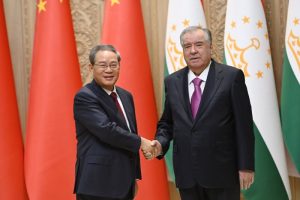 President Emomali Rahmon Meets Chinese Premier Li Qiang in Dushanbe
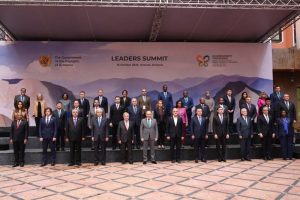 President of Tajikistan Emomali Rahmon Calls for Stronger Global Cooperation on Biodiversity Conservation
 President of Tajikistan Emomali Rahmon Arrives in Armenia for Biodiversity Conference
 President Emomali Rahmon Meets with President Ilham Aliyev in Baku
 President Emomali Rahmon Arrives in Baku to Participate in the Seventh CICA Summit
 President Emomali Rahmon Departs for Azerbaijan to Attend the Seventh CICA Summit