





Dushanbe – A Mirror of the History, Independence and Urban Culture of the Tajik People
Read also
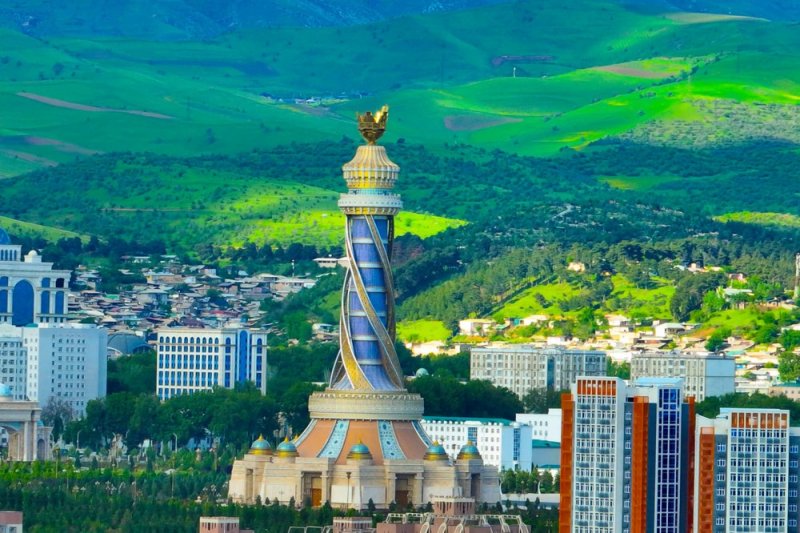
DUSHANBE, 04.09.2026 (NIAT Khovar) – In the history of every nation, cities are not merely a collection of avenues and buildings; they are a living form of historical memory, a material embodiment of statecraft, and a reflection of the level of enlightenment and culture of society. A people that builds cities is, in essence, building its future. A people that develops and beautifies its capital strengthens the center of its will, self-identification, and unity. From this perspective, Dushanbe, in the destiny of independent Tajikistan, is not only a political and administrative center, but also a symbol of national revival, a place where historical aspirations are brought to life, and a great arena for the creation of the new Tajik state.
The capital of a country is always a link connecting the past, the present, and the future. It is where the origins of an ancient civilization, the experience of national governance, the intellectual potential of society, and the nation’s vision for tomorrow converge. Today, with its renewed appearance, creative spirit, atmosphere of peace and stability, centers of science and culture, well-maintained roads and avenues, and distinctive national architecture, Dushanbe demonstrates that independence for the Tajik people is not merely a political event, but the beginning of a new stage of self-discovery, responsibility, and constructive development. Therefore, to speak of Dushanbe is to speak of the heart of Tajikistan, of the dignity of statehood, and of the creative spirit of the Tajik nation.
State independence, achieved by our people at the close of the twentieth century, fundamentally transformed the history of Tajik statehood and the destiny of the country, ushering in a qualitatively new stage of its development.
 Today, every brick we have laid in the foundation of state independence and strong national unity undoubtedly strengthens that foundation, making it increasingly solid and unshakable with each passing day.
Thanks to these great historical values – state independence and national unity – which have become the two powerful pillars of our statehood, the Tajik people, under the wise and far-sighted leadership of the Founder of Peace and National Unity – Leader of the Nation, His Excellency Emomali Rahmon, have achieved remarkable transformations and significant progress during the years of independence.
Thirty-five years of sovereignty and independent statehood have truly marked a period of national revival, sustainable development, and the establishment of a worthy place for the Tajik people on the political map of the world.
It is gratifying to see that today, as the foundations of a democratic, law-based, and secular state continue to strengthen, the face of our beloved country, Tajikistan, has undergone profound transformation. Thanks to the united, devoted, and honest work of the proud and glorious people of the country, as well as the support provided by the constructive policies of the Leader of the Nation, efforts to improve and beautify cities and districts have gained unprecedented momentum.
The construction of architectural and national landmarks, palaces and magnificent complexes, beautiful parks and avenues, industrial workshops and enterprises, the reconstruction of bridges and roads, as well as the modernization of hundreds of other infrastructure facilities in accordance with modern international standards, have given cities and districts, including the capital, Dushanbe, a distinctive appearance and even greater beauty.
Dushanbe is the largest city of Tajikistan and the magnificent capital of our beloved Motherland.
The result of a profound sense of responsibility, pride, and national dignity is that, over more than three decades of independence, the beautiful city of Dushanbe has rightfully attained a distinguished status. Today, our capital is the principal political, economic, social, and cultural center of the country; a focal point of the hopes and aspirations of Tajiks throughout the world; a cradle of national revival; a place of unity and constructive development; and a true mirror of the progress of sovereign Tajikistan.
History bears witness to the fact that throughout its many millennia of existence, the Tajik people have created cities and capitals that have consistently attracted the attention of the world. The traditions of urban planning and architectural artistry of the Tajik people, combining national characteristics with universal human values, have traversed a long path from antiquity to the present day.
On December 14, 1924, the All-Russian Central Executive Committee of the RSFSR adopted a resolution on the national and territorial delimitation of Central Asia and the establishment of a number of Soviet republics, which led to the creation of the Tajik ASSR. During the same period, the newly established government declared the city of Dushanbe its capital. From 1929 to 1961, the city was known as Stalinobod and developed into an important administrative, industrial, and cultural center.
After the restoration of its historical name in 1961, and until the proclamation of state independence on September 9, 1991, Dushanbe held the status of the capital of the Tajik Soviet Socialist Republic.
With the attainment of state independence, under the wise leadership of the Leader of the Nation, President of the Republic of Tajikistan, His Excellency Emomali Rahmon, Dushanbe entered a qualitatively new stage of development. Over these years, the capital has achieved significant progress in the economic, cultural, spiritual, and infrastructural spheres.
In the era of independence, Dushanbe has become the principal center for political decision-making and state administration. The key institutions of state power are concentrated here, enabling the city to fully perform the functions of the political heart of the country. This factor has largely determined the capital’s special role in strengthening political stability, improving public administration, and advancing national statehood.
Alongside the country’s attainment of state independence and the signing of the historic General Agreement on the Establishment of Peace and National Accord, Dushanbe, serving as the principal center for the development of the new state, underwent a profound transformation, becoming an even more majestic, well-maintained, and prosperous city.
At the initiative of the Government of the Republic, new administrative buildings, modern educational institutions, hospitals, and cultural centers have been constructed, transforming Dushanbe into a leading regional center.
The capital of the country consists of four districts: Ismoili Somoni, Shohmansur, Firdavsi, and Sino, each of which makes a significant contribution to the city’s socio-economic development, culture, and urban improvement.
Today, Dushanbe, as the country’s main gateway, welcomes visitors with its beauty, security, tranquility, and distinctive hospitality, vividly reflecting the city’s ambitious urban development, as well as the noble qualities of humanism, brotherhood, and solidarity among its residents.
The capital of Tajikistan, as a major center of spirituality, science, and education, a symbol of independence and peace, and an embodiment of the rich historical and cultural heritage of Aryan civilization, has earned a worthy place among the capitals of the world.
The Tajik experience of peacemaking not only determined the country’s path toward further progress but also acquired international significance, strengthening Dushanbe’s reputation as a symbol of peace, national reconciliation, and unity.
In 2004. the city of Dushanbe was awarded the UNESCO “City of Peace” prize. In November 2016, the capital of Tajikistan received the “City of Peace” award from the Silk Road Foundation. This award was recognized the republic’s outstanding contribution to strengthening the values of peace, tolerance and solidarity.
The Tajik experience of peacemaking, achieved through wise political dialogue, constructive negotiations, mutual compromises, and the historic act of mutual forgiveness, is today rightfully regarded as one of the most successful examples of the peaceful settlement of conflict on the international stage.
In this context, with a sense of pride and high dignity, it is appropriate to note that the adoption of the United Nations General Assembly resolution on the ‘International Decade for the Promotion of Peace for the Benefit of Future Generations (2027–2036)’ upon the new initiative of the President of the Republic of Tajikistan, Honorable Emomali Rahmon, is a clear testimony to the growing authority and influence of Tajikistan on the international arena, and lays the foundation for further strengthening the country’s position and standing as a peace-loving state, a pioneer and initiator in solving global problems.
In the context of globalization and rapid social transformations, the role of capitals as political, economic, and cultural centers is growing with each passing day. Over the years of independence, Dushanbe has become a key element in the formation of national statehood and the strengthening of national identity.
Undoubtedly, the capital owes much of its rapid development to the constant attention and support of the Founder of Peace and National Unity – Leader of the Nation, President of the Republic of Tajikistan, His Excellency Emomali Rahmon, as well as to the constructive activities of the Chairman of the Majlisi Milli of the Majlisi Oli of the Republic of Tajikistan and Chairman of the City of Dushanbe, His Excellency Rustami Emomali.
Thanks to their attention, support, and leadership, the capital’s appearance, infrastructure, level of urban improvement, and quality of services provided to residents and visitors have undergone fundamental changes. Today, Dushanbe rightfully ranks among the region’s most attractive and dynamically developing cities, becoming an increasingly popular destination for tourists.
One of the most important steps taken during the first years of His Excellency Rustami Emomali’s tenure as Chairman of the City of Dushanbe was the development and approval of the General Plan of the City of Dushanbe pursuant to Resolution No. 212 of the Government of the Republic of Tajikistan dated April 28, 2017. In accordance with the General Plan, more than 752 facilities were constructed in 2017–2019 alone, while fixed assets totaling 5.4 billion somoni were commissioned from all sources of financing. During the same period, more than 707,700 square meters of housing were built.
Following the wise and successful policy of the Leader of the Nation and thanks to the proactive efforts of His Excellency Rustami Emomali, Dushanbe is confidently advancing toward a new stage of socio-economic development. The rapid modernization of the capital is vividly reflected in contemporary architectural solutions, advanced technologies, and innovative approaches to urban planning, shaping its modern and attractive appearance.
Within a short period, modern administrative and residential buildings, educational and medical institutions, cultural palaces and sports complexes, industrial enterprises, and recreational parks have been constructed. All of this has given our beloved Dushanbe a festive, elegant, and truly capital-city appearance.
One of the key priorities in urban development remains the preservation of traditions and the incorporation of elements of national architecture.
In preparation for the worthy celebration of the 35th anniversary of the State Independence of the Republic of Tajikistan, the City of Dushanbe adopted an Action Plan for urban improvement and development for 2022–2026, encompassing more than 4,300 projects.
As part of preparations for this great national celebration, by July 1, 2026, the planned targets had been achieved ahead of schedule. These included the construction of 57 general education and preschool institutions equipped with modern facilities, 27 healthcare facilities, 98 industrial workshops and enterprises, the construction and rehabilitation of 65 kilometers of roads, 51 administrative buildings, and 356 high-rise residential buildings with service centers, as well as sports facilities and hotels.
The modernization and upgrading of the capital’s infrastructure to meet contemporary requirements, particularly the reconstruction and renovation of roads, are regarded as a fundamental prerequisite for the further development of any major metropolitan city.
Accordingly, in recent years, more than 252 kilometers of transport roads in the capital have been reconstructed, including 60 kilometers in 2025 alone.
During this period, with the aim of bringing the road and transport network into line with international standards, four road and railway bridges, two three-level and two two-level interchanges, as well as 219 new modern bus stops, were repaired, reconstructed, and commissioned.
A significant achievement has also been the large-scale modernization of the public transport fleet. Modern buses and trolleybuses from leading global manufacturers have been introduced in the capital, while a cashless fare payment system has also been successfully implemented.
It is worth noting that in 2018, the joint Tajik-Turkish enterprise “Akia Avesto Automotive Industry,” specializing in the production of Akia buses, commenced operations in the capital. At the same time, the city’s public transport fleet is being actively supplemented with modern electric vehicles, including electric buses, electric cars, as well as electric motorcycles and bicycles.
Today, 90 Akia electric buses operate on the streets of Dushanbe, while four official taxi services “Koviyon,” “Olucha-Auto,” “Eco-Taxi,” and “Safo-Taxi” provide residents and visitors to the capital with access to 13,035 modern electric vehicles.
Passenger transportation is organized across 91 routes: 33 routes are served by buses and electric buses, 9 by trolleybuses, and 49 by minibuses.
Modern Dushanbe is a dynamically developing industrial center with 854 industrial enterprises. The capital rightfully serves as a leader in implementing the state’s strategic goal of accelerated industrialization, and the city administration is consistently taking effective measures in this direction.
In recent years alone, at the initiative and with the support of the Leader of the Nation, His Excellency Emomali Rahmon, and thanks to the constructive activities of the Chairman of the City of Dushanbe, His Excellency Rustami Emomali, 116 new industrial workshops and enterprises have been built and commissioned in the capital, creating more than 11,000 new jobs.
These include 15 enterprises producing textiles, leather and footwear, and garments; 21 enterprises manufacturing construction materials; 7 enterprises processing locally sourced stone; 4 enterprises producing polypropylene bags; 5 furniture factories; 5 enterprises manufacturing electrical equipment; 12 confectionery and 6 dairy enterprises; 2 meat-processing plants; 4 enterprises producing soft drinks; 3 oil-processing facilities; and a number of other facilities fully equipped with modern technology.
Furthermore, in order to transform the capital into an advanced industrial center and support manufacturing entrepreneurship, the state institution “Dushanbe City Fund for Support of Manufacturing Entrepreneurship” was established in 2019. Over the six years of its operation, the Fund has provided business entities with preferential loans totaling more than 485 million somoni. These funds have enabled the implementation of 81 business projects, the establishment of 81 new enterprises and industrial workshops, and the creation of 6,000 new jobs.
The construction of magnificent buildings and palaces, beautiful parks and avenues, modern hotels and cultural institutions, all designed in accordance with the finest traditions of national architecture, has brought Dushanbe’s service sector up to global standards and contributed to presenting the capital of Tajikistan with distinction on the international stage.
Over the years, the capital has seen the construction of architecturally distinctive buildings incorporating national elements. These landmarks have become a source of pride for all city residents and have contributed to promoting Dushanbe on the global stage. They include the National Library, the National Museum of Tajikistan, the “Kohi Somon,” “Kohi Navruz,” “Kohi Surush,” “Dushanbe-Plaza,” “Qasri Bakht,” and “Kohi Parthenon” palaces, the five-star Crowne Plaza Dushanbe hotel, the major “Osh” National Cuisine Center, as well as the buildings of the Government of the Republic of Tajikistan, the country’s Parliament, the Ministry of Foreign Affairs, the Ministry of Justice, the Ministry of Economic Development and Trade, the Ministry of Health and Social Protection of the Population, the Committee for Environmental Protection under the Government of the Republic of Tajikistan, the Supreme Court of the Republic of Tajikistan, the Executive Authority of State Power of Sino District, the Abu Hanifa Nu’man ibn Thabit Mosque, the Imam A’zam — Abu Hanifa Nu’man ibn Thabit Islamic Institute of Tajikistan, the Academy of Public Administration under the President of the Republic of Tajikistan, Dushanbe Television, the new administrative building of the state unitary enterprise “Smart City,” as well as major shopping centers such as Siyoma Mall, Yovar, Rudaki Plaza, and a number of other facilities.
“Kohi Navruz” is one of the finest examples of contemporary urban architectural art and embodies the distinctive style of national architecture. Its patterns, ornaments, and elements of decorative and applied arts reflect more than 6,000 years of the history of Tajik culture and civilization.
Dushanbe is a capital city with tremendous intellectual potential. The symbols of our statehood and rich spiritual heritage are reflected in the magnificent Architectural Сomplex of National Unity and the Revival of Tajikistan, whose central element is the monument to Ismaili Somoni. The comlex is also adorned with monuments to outstanding figures of science and literature whose names have become part of world culture, including Abuabdullo Rudaki, Abu Ali ibn Sino, Abulqosim Ferdowsi, Omar Khayyom, Sadriddin Ayni, Abdurrahmoni Jami, Bobojon Ghafurov, and other prominent representatives of Tajik science and culture.
During the era of independence, one of the world’s tallest flagpoles, standing 165 meters high, was erected in Dushanbe and entered into the Guinness World Records.
In addition, the capital saw the construction of the magnificent Central Cathedral Mosque, one of the largest architectural structures in Tajikistan and the largest religious and cultural complex built during the years of independence.
In 2022, on the occasion of the 31st anniversary of state independence, the “Maydoni Istiqlol” (“Independence Square”) complex was commissioned in the presence of the Leader of the Nation, His Excellency Emomali Rahmon, and the Chairman of the City of Dushanbe, His Excellency Rustami Emomali. The complex has become a symbol of hope and pride for compatriots around the world. Its majestic monument embodies the ideals of freedom and sovereignty, as well as the centuries-old aspirations of the proud Tajik people. Built in accordance with the finest traditions of national architecture and incorporating a city museum with rare historical exhibits, the complex has become one of the favorite places for recreation and leisure for hundreds of city residents and foreign visitors.
The city of Dushanbe, as the capital of independent Tajikistan and a center of science and culture of the ancient Tajik people, is rightfully a source of particular pride for all citizens of the country.
A vivid testament to this is the National Library of Tajikistan, a true legacy of the era of independence and one of the largest repositories of knowledge in Central Asia.
The unique exhibits and artifacts housed in the capital’s museums, including the National Museum of Tajikistan, the National Museum of Antiquities, the Museum of Ethnography, and the house museums of prominent figures in science and literature, provide compelling evidence of the rich history, ancient culture, and distinctive character of our beautiful homeland.
In 2022, the Dushanbe History Museum opened on the second floor of the “Maydoni Istiqlol” complex. It includes an art gallery and the “Takhti Tojikon” (“Throne of the Tajiks”) exhibition, which covers various historical periods and presents artifacts discovered during archaeological excavations in the territory of the capital.
Upon entering the museum, visitors’ particular attention is drawn to the throne of King Ismoili Somoni, displayed in a separate hall. The royal throne was reconstructed using historical elements and ornaments from the ancient murals of Afrosiyob, Varakhsha, Ancient Panjakent, and Bunjikat, which Tajik craftsmen reproduced in stone with extraordinary precision. Surrounding the throne are seven symbolic golden keys to the country’s ancient cities: Dushanbe, Sarazm, Khujand, Istaravshan, Hisor, Yamchun, and Hulbuk. Also displayed here are replicas of masterpieces from the Oxus Treasure, including a golden bracelet and a golden chariot. Crowning the royal throne is a crown, a symbol of enduring statehood, adorned with gold and precious stones.
The museum’s exhibits tell residents and visitors to the capital every day about the centuries-old history of Dushanbe and the stages of its modern development.
Dushanbe’s cultural and concert venues fully reflect the ancient and creative civilization of the Tajik people. They include the Sadriddin Ayni State Academic Opera and Ballet Theatre, the Abulqosim Lohuti State Academic Drama Theatre, the V. Mayakovsky State Russian Drama Theatre, the Mahmudjon Vohidov Youth Theatre, the “Lukhtak” State Puppet Theatre, the Muhamadjоn Qosymov Young Spectator Theatre, the “Oina” Miniature Theatre, the “Kohi Borbad,” “Kohi Vahdat,” and “Kohi Surush” cinema and concert complexes, the “Vatan,” “Zebunniso,” and “Navruz” cinemas, as well as the Akasharif Juraev State Philharmonic, the State Circus, and the “Ahorun” Amphitheater. All these venues attract attention not only for the high standard of their performances but also for their magnificent architectural design.
On August 24, 2026 was a historic memorable event for the people of Tajikistan. On this day, on the eve of the celebration of the 35th anniversary of Tajikistan’s state independence, the President of the Republic of Tajikistan, Leader of the Nation, Honorable Emomali Rahmon, and the Chairman of the Majlisi milli Majlisi Oli of the Republic of Tajikistan, Mayor of Dushanbe, Honorable Rustam Emomali, inaugurated a magnificent building of the National Theatre in the heart of the country — the city of Dushanbe.
The building of the National Theatre consists of 7 floors — two underground and five above-ground floors, and its height reaches 35 meters. Three hectares of land were allocated for its construction.
The National Theatre has three main halls and a large number of auxiliary halls and rooms. The main hall is designed for 2,500 spectators.
The National Theatre of Tajikistan, with its unique design, modern architecture, and national decoration, stands in the center of the capital and has become one of the largest and most beautiful theatrical institutions in the region. The architectural and decorative ideas of this art center are closely linked to the proposals of the Leader of the Nation, His Excellency Emomali Rahmon.
Particular attention is also being paid to the younger generation. Over the past two years, new buildings have been constructed in the capital for the Odina Hoshim Children’s School of Arts and the Abdufattoh Odinaev Children’s Music School No. 3. Built using elements of both national and modern architecture, these facilities stand as a vivid testament to the city authorities’ continued commitment to the development of culture and education.
Indeed, over the years of independence, Dushanbe has undergone a profound transformation, becoming a modern, dynamically developing, and well-maintained capital that is confidently advancing along the path of further development and prosperity.
More than 60 cultural and recreational parks and boulevards, covering a total area of over 1,080 hectares, add particular beauty to the capital’s appearance. From 2017 to 2019 alone, through the direct initiative of the Leader of the Nation and thanks to the constructive efforts of His Excellency Rustami Emomali, new modern parks such as “Kurushi Kabir,” “Ahmadi Donish,” “Alisher Navoi,” “Vose,” and “Javonon” (Youth Park) were established. In addition, such well-known recreational areas as Abuabdullo Rudaki Park, “Khayyom,” Sadriddin Ayni Park, Abulqosim Ferdowsi Park, “Kuli Javonon” (Youth Lake), Children’s Park, Victory Park, and Alexander Mironenko Park, along with numerous avenues and boulevards, were completely reconstructed, improved, and made available to residents and visitors of the capital, creating excellent conditions for comfortable recreation.
Thanks to the initiatives of the Chairman of the City of Dushanbe, His Excellency Rustami Emomali, to transform the capital into a “green city” and a “city of flowers,” today Dushanbe is immersed in greenery and vibrant colors, providing a solid foundation for environmental security and a comfortable life for its residents. Every year, in preparation for the international Navruz holiday alone, between 5 and 6 million tulip bulbs are planted throughout the capital, giving Dushanbe a unique charm and freshness.
It is no coincidence that Dushanbe rightfully bears the status of a green and flourishing city. Environmental cleanliness, the improvement of streets and mahallas, as well as the careful maintenance of parks and avenues have become an integral part of the high civic culture of its residents.
Dushanbe is rightfully regarded as a city of youth and a leading capital of knowledge. At present, the city is home to 27 institutions of higher professional education, 22 institutions of secondary professional education, 208 general education schools serving more than 400,000 pupils and students, as well as 174 preschool institutions.
Thanks to the far-sighted educational policy of the Leader of the Nation, His Excellency Emomali Rahmon, and the tireless efforts of the Chairman of the City, His Excellency Rustami Emomali, from 2017 to 2025 alone, 61 new general education institutions with a capacity of 83,952 student places (in two shifts) and 37 modern kindergartens accommodating 7,439 children were commissioned in the capital.
At the same time, from 2017 to 2024, with the direct support of the Chairman of the City, 347 modern sports facilities meeting international standards were constructed and commissioned in the capital. These include the magnificent State Institution “Tennis Palace and Aquatic Sports Complex,” as well as the modern “Juventus” and “Crocus Fitness” complexes, which have provided a powerful impetus to the development of physical culture and sports.
Thanks to the creation of such advanced infrastructure, more than 400 high-level international championships and competitions have been held in Dushanbe over the years. Tajik athletes have achieved outstanding results at these events, proudly defending the sporting prestige of their homeland.
It is a particular source of pride for all citizens that Dushanbe has today become not only a venue for prestigious political, cultural, and scientific forums but also a recognized center for major international sporting events. A vivid confirmation of this was the large-scale international judo tournament, the Dushanbe Grand Slam, which brought together hundreds of the world’s strongest athletes and further enhanced the international standing of Tajikistan’s sport.
Another unique achievement of the industry is the construction of a luxurious sports facility in our beloved capital – the National Stadium.
The new National Stadium was inaugurated on August 21of this year by the President of the Republic of Tajikistan, Leader of the Nation, Honorable Emomali Rahmon, and the Chairman of the Majlisi milli Majlisi Oli of the Republic of Tajikistan, Mayor of Dushanbe, Honorable Rustam Emomali,
This facility covers an area of 9.5 hectares and stands as a prime example of modern construction in the country. The stadium features a two-tiered seating arrangement with a total capacity of over 30,000 spectators: the lower tier accommodates more than 12,000 people, while the upper tier holds 18,000.
Built to meet international FIFA standards, the facility holds a Category 2 international rating.
At the heart of the stadium lies a modern football pitch covering 7,140 square meters. The playing field measures 105 by 68 meters, complying with mandatory FIFA requirements for hosting international matches and World Cup games.
In furtherance of the constructive initiatives undertaken by the Leader of the Nation, this magnificent modern stadium will further strengthen Tajikistan’s capacity to host global competitions and foster friendship among the peoples and nations of the world.
In order to promote public health, prevent diseases, and provide quality medical care to the residents of the capital, 310 healthcare and preventive institutions of various levels, as well as around 900 sports facilities, are currently serving the population.
In an era of rapid transformations and geopolitical challenges, the mass media play a crucial role in informing society and ensuring information security. For this reason, particular attention is being paid to the development of television and radio broadcasting by the Chairman of the City of Dushanbe, His Excellency Rustami Emomali, under whose leadership this sector continues to develop and improve.
In March 2017, the state institution “Televisioni Poytakht” (“Capital Television”) was renamed the State Institution “Televisioni Dushanbe” (“Dushanbe Television”), and the channel switched to high-definition (HD) broadcasting. With the direct support of the city administration, since August 2019, the channel’s daily broadcasting time has increased from 12 to 18 hours, while satellite broadcasting has made its programs accessible to viewers abroad as well.
The technical capabilities of the television channel have also expanded significantly. In 2019, it was equipped with a modern Outside Broadcast (OB) van. This mobile studio, consisting of three specialized vehicles, is equipped with advanced technologies for live broadcasting and recording. The complex includes 16 professional cameras and enables live broadcasts of national and international events in Full HD format.
In preparation for the worthy celebration of the 35th anniversary of state independence, on December 24, 2025, the President of the Republic of Tajikistan, Leader of the Nation, His Excellency Emomali Rahmon, and the Chairman of the Majlisi Milli of the Majlisi Oli of the Republic of Tajikistan and Chairman of the City of Dushanbe, His Excellency Rustami Emomali, inaugurated the new building of the State Institution “Televisioni Dushanbe.”
The new media complex, rising in the center of the capital, features 80 spacious offices, a 200-seat assembly hall, electronic and traditional libraries, as well as four modern television studios. The studios are equipped with advanced 4K digital technology, enabling the production and broadcasting of programs in accordance with the highest international standards of television broadcasting.
In recent years, alongside providing prompt coverage of major domestic and international events, “Televisioni Dushanbe” has actively promoted the values of state independence, national unity, peace, stability, and patriotism. The channel comprehensively covers the constructive work of the people and the country’s remarkable achievements during the era of independence, making a significant contribution to presenting Tajikistan with distinction on the international stage.
Today, the Chairman of the City of Dushanbe, His Excellency Rustami Emomali, through his dedication to public service and strong sense of patriotism, plays a key role in developing interstate relations, promoting people-to-people diplomacy, and strengthening Tajikistan’s positive image on the international stage.
Our beloved Dushanbe is consistently expanding the geography of its international cooperation, developing sister-city relations with capitals and major cities of countries across Asia, Africa, Europe, the Americas, and the Commonwealth of Independent States (CIS).
Dushanbe has established sister-city relations with the following cities around the world: Sana’a (Yemen), Lusaka (Zambia), Monastir (Tunisia), Lahore and Islamabad (Pakistan), Klagenfurt (Austria), Boulder (USA), Reutlingen (Germany), Mazar-i-Sharif (Afghanistan), Tehran and Shiraz (Iran), Saint Petersburg (Russia), Minsk (Belarus), Urumqi, Xiamen, Qingdao, and Hainan (China), Ankara (Türkiye), Ashgabat (Turkmenistan), Baku (Azerbaijan), Astana (Kazakhstan), Doha (Qatar), and Bishkek (Kyrgyzstan). This represents an important achievement in the system of international relations.
At the same time, the capital is actively developing multilateral trade, economic, and cultural partnerships with Moscow (Russian Federation), Tashkent (Uzbekistan), as well as with the Chinese megacities of Chengdu, Beijing, and Hangzhou.
It should be noted that the main purpose of sister-city agreements is to expand and strengthen interregional ties with foreign partners on the basis of equality and mutual benefit. This opens up broad opportunities for Dushanbe to establish direct cooperation in the trade, economic, scientific, technological, and cultural spheres.
Under the leadership of the constructive and forward-looking leader, His Excellency Rustami Emomali, Dushanbe has in recent years become a regular and hospitable host of prestigious regional and global forums.
A stable political environment, impressive socio-economic achievements, and a high level of international standing have enabled the capital of Tajikistan to successfully host a number of landmark events of global significance. These include meetings of the Council of Heads of State of the Commonwealth of Independent States (CIS), summits of the Shanghai Cooperation Organisation (SCO) and the Conference on Interaction and Confidence-Building Measures in Asia (CICA), as well as high-level international conferences dedicated to the International Decade for Action “Water for Sustainable Development, 2018–2028,” held in 2018, 2022, 2024, and 2026, and the International Conference on Glacier Preservation, held in 2025.
In addition, Dushanbe has hosted a wide range of prestigious international forums, exhibitions, and festivals, including “Navruz Dushanbe – Cultural and Tourist Heritage,” “Dushanbe – A City of Opportunities for Children’s Development,” “Integrating Cities in Advancing Sustainable Tourism,” the international tourism exhibition “Dushanbe International Tourism Exhibition,” the children’s festivals “Blooming Capital” and “Visiting Dushanbe,” the summer festival “Dushanbe Summer Fest,” and many other vibrant events of international scale.
The organization of such large-scale forums and events consistently provides a powerful impetus for deepening interstate relations, effectively showcasing the capital’s achievements in development and accelerating the growth of the country’s tourism sector.
Today, Dushanbe is a full member of a number of prestigious international associations, including the International Assembly of Capitals and Major Cities (IACMC), the World Tourism Cities Federation (WTCF), the United Cities and Local Governments (UCLG), as well as other important organizations.
The capital’s growing international standing is receiving broad recognition worldwide. According to the analytical agency TurStat, Dushanbe consistently ranks among the top 10 safest cities in the CIS for tourism, as well as among the best cities for travel and recreation.
Particular recognition of the city’s achievements came with the decision of the Council of Heads of State of the CIS to designate Dushanbe as the “Cultural Capital of the Commonwealth for 2021,” as well as the decision of the Council of Ministers of Tourism of the member states of the Economic Cooperation Organization (ECO) to grant the capital the status of “ECO Tourism Capital for 2020–2021.” Within the framework of these prestigious designations, more than 300 major events were held in 2021 with the participation of high-ranking foreign guests, including international forums, academic conferences, symposia, concerts, sporting competitions, and festivals. These events were accompanied by a large-scale renovation and modernization of the city’s cultural institutions, parks, historical monuments, and tourism infrastructure as a whole.
Of particular pride is the fact that, during the 11th meeting of the Executive Council of the Asian Mayors Forum, held in Tehran in November 2025, the city of Dushanbe was officially declared the Cultural Capital of Asia for 2026.
The selection of Dushanbe for this prestigious status by the member states of the organization is a vivid testament to the international community’s profound respect for Tajikistan, as well as a reflection of the capital’s new image as an active center of regional dialogue and cultural diplomacy.
Today, Dushanbe is confidently positioning itself as a modern tourism and metropolitan center. The city’s well-developed infrastructure includes an international airport, railway and bus stations, dozens of high-class hotels, restaurants, national teahouses, shopping and entertainment centers. For the comfort of residents and visitors, the capital offers dozens of parks, public gardens and boulevards, museums, libraries, theaters, modern sports complexes—including the Tennis Palace and Aquatic Sports Complex, “Kohi Navruz,” “Kohi Borbad,” “Kohi Vahdat,” “Kohi Surush,” and “Kohi Parthenon”, as well as 310 healthcare and preventive institutions. All these facilities provide a consistently high level of service to hundreds of thousands of residents and foreign visitors every day.
For the convenience of visitors to the capital, specialized tourist information kiosks operate at Dushanbe International Airport, the railway station, and key transportation hubs.
According to official statistics, in 2025, 2,104,703 foreign citizens arrived in Tajikistan, of whom 1,784,430 were registered as tourists — 19% more than in 2024. According to expert estimates, approximately 60% of them (1,070,658 people) visited Dushanbe and made use of the capital’s infrastructure. A total of 370,539 tourists arrived in the city through the capital’s air and railway gateways alone, representing a 66.7% increase compared with the previous year.
Dushanbe is consistently implementing comprehensive measures to modernize the service sector, enhance comfort, and ensure public safety. The “Safe City” hardware and software complex operates successfully, alongside modern buses equipped with Wi-Fi and cashless fare payment systems, as well as 24-hour taxi services. Large-scale efforts are also underway to artistically illuminate streets and avenues using advanced lighting technologies, while electronic government and municipal services based on information and communication technologies (ICT) continue to expand.
In 2019, the State Unitary Enterprise “Smart City” was established in the capital with the aim of improving the efficiency of public services, enhancing citizens’ quality of life, ensuring public safety, and accelerating the region’s socio-economic development through ICT. This initiative became a vivid demonstration of the strengthening of innovation processes, the successful introduction of digital technologies into the economy, and the expansion of electronic government services and cashless payment systems.
Today, more than 20 large-scale projects are being implemented in Dushanbe within the framework of the “Smart City” concept. These include “Digital Economy,” “Smart Transport,” “Smart Education,” “Smart Healthcare,” “Smart Lighting,” “Green Economy” (“Green City”), and the “Electronic Map” project. Specialists of the State Unitary Enterprise “Smart City” under the Executive Authority of State Power of the City of Dushanbe are successfully implementing initiatives aimed at digitizing schools and clinics, expanding the public Wi-Fi network, modernizing the municipal solid waste management system, introducing intelligent transport solutions, and expanding public safety systems.
During a meeting with the leadership, activists, and representatives of various sectors of the Executive Authority of State Power of the City of Dushanbe on February 15, 2017, the President of the Republic of Tajikistan, Leader of the Nation, His Excellency Emomali Rahmon, aptly noted:
“The capital is truly the cradle of the maturity, development, and progress of the nation, and no civilized state or country in the world can exist without powerful scientific and cultural centers. The highly cultured Tajik nation, which thousands of years ago already possessed a distinctive system of statehood and governance, as well as well-planned and culturally vibrant capitals, has gained worldwide recognition for its ancient traditions of urban planning and city governance, as well as for the creation of great cultural centers.”
In the context of globalization and deepening processes of cultural integration, the Leader of the Nation, alongside the development of all spheres of society, pays particular attention to preserving, reviving, and enriching the spiritual and civilizational values of the people. For this reason, in his Address to the Majlisi Oli of the Republic of Tajikistan on December 16, 2025, the Head of State announced the need to establish a Center of Aryan Civilization and, with the aim of elevating the ideals and timeless wisdom of the international Navruz holiday, to construct an International Navruz Center in our beautiful capital, the city of Dushanbe.
Without exaggeration, it can be said that all these remarkable achievements and constructive initiatives are opening truly bright prospects for the future of our beloved capital.
Today’s Dushanbe, as the political and administrative center of independent Tajikistan, has rightfully earned a reputation as a city that unites hearts, a place of warmth and inspiration, a symbol of friendship, peace, and harmony, a center that attracts compatriots from around the world, and a true pearl in the heart of Asia.
Dushanbe, as the political, economic, and cultural center of independent Tajikistan, flourishes, renews itself, and becomes more beautiful with each passing day. We, the proud residents of this blessed land, under the leadership of our dedicated and far-sighted mayor, His Excellency Rustami Emomali, are confidently moving toward new heights of development and achievement.
Thanks to the constructive work, innovative approach, and energetic efforts of His Excellency Rustami Emomali, the heart of Tajikistan has been transformed into a modern, comfortable, and beautiful city that proudly represents our country on the international stage. These achievements are a vivid result of the consistent implementation of the wise and far-sighted policy of the Founder of Peace and National Unity – Leader of the Nation, President of the Republic of Tajikistan, His Excellency Emomali Rahmon.
A high standard of urban culture is one of the most important indicators of a mature society. Being a resident of the capital is not only a great honor but also a tremendous responsibility.
It is the sacred duty and civic responsibility of every citizen to demonstrate a culture of communication, care for their native city, preserve its cleanliness, expand green spaces, and pass down the traditions of Tajik hospitality from generation to generation. Each of us must recognize that the well-being, comfort, peace, and prosperity of Dushanbe depend to a great extent on the personal contribution of every resident. After all, our great ancestors have been builders and founders of cities since time immemorial, guardians of a high standard of urban culture and careful stewardship of the environment.
Thus, the role of a capital in the destiny of any nation extends far beyond its status as an administrative center. The capital is a living memory of statehood, a reflection of political thought, a school of urban culture, and the backbone of national consciousness. The history of the Tajik people from ancient traditions of urban planning and great centers of science and civilization to modern sovereign Dushanbe testifies to the inseparable connection between statehood, culture, and urban development. From Sogdiana and Bactria to Bukhoro and Samarqand, from the legacy of the Samanids to independent Dushanbe, a centuries-long path unfolds along which the capital has always been perceived as a center of wisdom, law, craftsmanship, education, and the will to build and strengthen the state.
Therefore, modern Dushanbe is a natural continuation of the centuries-old tradition of Tajik urban development and capital governance, combining in its appearance the achievements of the modern state with historical spirit, cultural heritage, and the creative strength of the Tajik people.
Dushanbe of the past, present, and future remains for Tajiks and compatriots around the world a symbol of hope and pride, unity and solidarity, statehood and national cohesion. It is a city where historical memory and aspirations for the future, national traditions and modern development come together. For every member of the Tajik people, Dushanbe is not merely the capital of the Republic of Tajikistan, but a true embodiment of its glorious history, rich culture, enduring national values, and the creative strength of a sovereign state.
The capital, which unites compatriots regardless of where they live or which region they come from, plays a special role in strengthening national unity, national consciousness, and respect for state values. For millions of Tajik citizens living abroad, Dushanbe remains a living symbol of their homeland, cherished memories, and an unbreakable spiritual connection with their native land. That is why Dushanbe is not merely the country’s political, economic, and cultural center, but the beating heart of the nation, an embodiment of its hopes and aspirations for development, as well as an important symbol of the growing authority of sovereign Tajikistan on the world stage.
The mission of every conscientious citizen is to regard the capital not simply as a place of residence, but as a space of personal responsibility, high civic culture, and constructive thought. Modern Dushanbe calls upon each of us to preserve the cleanliness of our native city, respect the law, safeguard our cultural heritage and universal human values, advance science and education, raise a worthy generation, and strengthen the spirit of patriotism and civic responsibility.
For a capital becomes truly great when, alongside its beautiful buildings, the culture of each individual, a knowledge-based society, responsible thinking, and a benevolent spirit of constructive action also flourish. The improvement of Dushanbe is a reflection of the culture and purity of our thinking; the prosperity of the capital is a guarantee of the prosperity of the state; and the strengthening of its standing is a worthy testament to Tajikistan’s achievements in the modern world and its aspirations for the future.
At this moment, the immortal lines of the People’s Poet of Tajikistan, the unforgettable master of the word, Loiq Sherali, resonate with particular poignancy:
O Dushanbe,
From you begins our journey and all our vast expanse,
The story of our intellect, our dignity, and our strength.
The history of the Tajik’s longing lives in you,
The destiny of the Tajik people lives in you.
Mavsumа MUINI,
Deputy Chairman of the Majlisi Namoyandagon
of the Majlisi Oli of the Republic of Tajikistan,
Candidate of Historical Sciences
 Dushanbe seeks stronger tourism ties with Chinese cities
 Dushanbe, Shiraz to Mark 35th Anniversary of Sister-City Relations in 2027
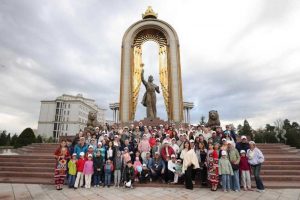 Dushanbe Welcomes More Than 700,000 Tourists in First Half of 2026
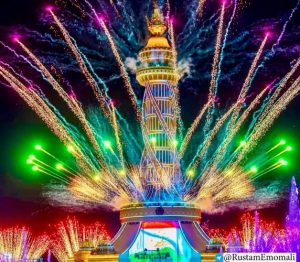 Dushanbe to Mark the 35th Anniversary of Tajikistan’s State Independence with Grand Celebrations
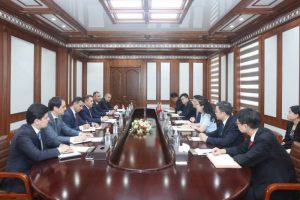 Dushanbe and Chongqing discuss prospects for expanding cooperation
 Firdavsi district reports industrial output growth in first half of 2026
 Shohmansur district reports industrial output surge to 601 million somoni in first half of 2026
 President Emomali Rahmon Inaugurate the New Building of the Ministry of Justice of Tajikistan
 Tajikistan Launches 191 New Industrial Enterprises in First Half of 2026
 President Emomali Rahmon Meets with Representatives of Leading Chinese Metallurgical Companies
 President Emomali Rahmon Meets with Industrial Workers and Activists in Sughd Province
 President Emomali Rahmon Launches Construction of Cement and Lime Plants in Sughd Province