







Asian Parliamentary Assembly Standing Committee Adopts Resolution on Strengthening the Culture of Peace, Tolerance, and Respect for Cultural Values
Read also
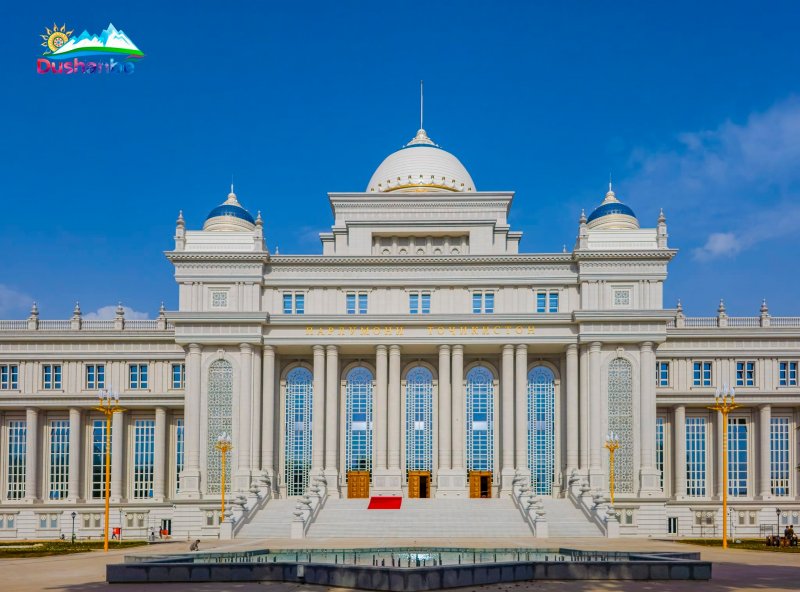
In support of the initiative of the President of the Republic of Tajikistan, Leader of the Nation Emomali Rahmon, the Standing Committee of the Asian Parliamentary Assembly adopted a resolution on strengthening the culture of peace, tolerance, and respect for the cultural values of nations.
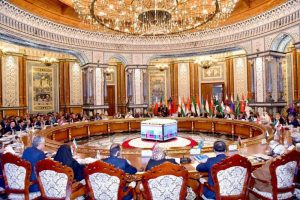
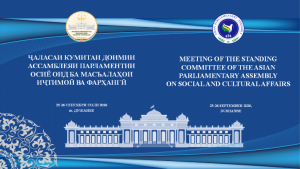
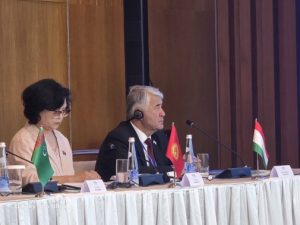
The meeting of the Standing Committee on Social and Cultural Affairs of the Asian Parliamentary Assembly (APA) was held in Dushanbe, the capital of the Republic of Tajikistan, which has also been designated the Capital of Culture of Asia for 2026. Representatives of more than 20 member states of the inter-parliamentary body discussed issues related to strengthening peace, tolerance, and intercultural dialogue, as well as preserving cultural heritage and developing parliamentary cooperation. The meeting was attended by the Secretary-General and Secretariat of the Asian Parliamentary Assembly, as well as parliamentary leaders and delegations from the United Arab Emirates, Saudi Arabia, Bhutan, Bahrain, Cambodia, Qatar, Bangladesh, Indonesia, Cyprus, Pakistan, Türkiye, Oman, China, Iran, Kyrgyzstan, Kazakhstan, Azerbaijan, Uzbekistan, and Russia.
Sixteen draft resolutions were considered during the meeting. One of the key issues discussed was the draft resolution proposed by Tajikistan on strengthening the culture of peace, tolerance, and respect for the cultural values of nations, in support of the proposal put forward by the President of the Republic of Tajikistan, Leader of the Nation Emomali Rahmon, to proclaim the «International Decade for Strengthening Peace for Future Generations (2027–2036).» Following consideration of the draft resolution and the views expressed by participants, the resolution was unanimously adopted by the member states of the Asian Parliamentary Assembly.
The resolution was drafted with reference to the Pact for the Future, adopted at the 2024 Summit of the Future, as well as the UN General Assembly resolution on the «International Decade of Peace for Future Generations.» The document also draws upon the Charter of the United Nations, the Universal Declaration of Human Rights, the International Covenants on Civil and Political Rights and on Economic, Social and Cultural Rights, and the Declaration and Programme of Action on a Culture of Peace.
The resolution emphasizes that peace and security, sustainable development, the rule of law, respect for human rights, and intergenerational solidarity are interconnected and crucial to building resilient societies and ensuring dignified living conditions for present and future generations.
In this context, tolerance, respect for cultural, religious, linguistic, and civilizational diversity, as well as intercultural dialogue, are recognized as means of preventing conflict and fostering trust among peoples. The resolution also highlights the role of international, parliamentary, and cultural diplomacy, as well as constructive dialogue, in conflict prevention and the peaceful resolution of disputes.
A key area identified in the resolution is strengthening the role of parliaments in promoting a culture of peace. The resolution calls upon the parliaments of the Asian Parliamentary Assembly member states to take the necessary measures, within the scope of their legislative and oversight mandates, to foster tolerance, mutual understanding, the rule of law, and respect for human rights and fundamental freedoms.
At the same time, the resolution emphasizes the need to expand political dialogue, exchange legislative experience, and strengthen inter-parliamentary ties as means of promoting regional and international peace and stability. It proposes that issues such as peace, tolerance, mutual understanding, intergenerational solidarity, the preservation of national cultural values, and the development of parliamentary diplomacy be regularly addressed in the Assembly’s future activities. The resolution places particular emphasis on the role of education and science in fostering a culture of peace.
It is proposed that the values of a culture of peace—mutual respect, civic responsibility, and tolerance be more fully reflected in state policies, national programs, education systems, and the activities of scientific, cultural, and educational institutions. Member states are also encouraged to expand joint educational, scientific, and awareness-raising programs aimed at promoting a culture of peace, respect for diversity, and the development of civic responsibility.
Furthermore, the resolution envisages expanding cooperation among universities and scientific and cultural institutions, emphasizing the importance of supporting joint scientific, cultural, youth, and humanitarian projects.
Preserving cultural, linguistic, religious, and civilizational diversity is another key aspect of the resolution. It encourages the parliaments of member states to strengthen the legal and institutional frameworks for the protection and development of cultural diversity and to facilitate the preservation of national and universal cultural heritage.
Intercultural and inter-civilizational dialogue is proposed as a means of strengthening mutual trust, preventing conflicts, and creating conditions for peaceful coexistence.
The resolution also focuses on inclusive societal participation in cultivating a culture of peace. It highlights the vital role of youth and women, higher education institutions, scientific centers, civil society organizations, and the media in strengthening peace, preventing extremism, and fostering mutual understanding among peoples. At the same time, the document emphasizes the need to strengthen intergenerational solidarity and create greater opportunities for inclusive participation in decision-making.
The resolution also addresses several contemporary threats to peace and stability. In particular, it expresses concern over the rise of armed conflicts, terrorism, extremism, hate speech, discrimination, racism, xenophobia, cybercrime, and the spread of disinformation.
It further underscores that the fight against terrorism, extremism, hate speech, discrimination, racism, xenophobia, and other forms of intolerance must be conducted in accordance with international law and the Charter of the United Nations, while respecting fundamental human rights.
The resolution also focuses on the impact of information and communication technologies on peace and stability. Member states are encouraged to strengthen cooperation to counter the spread of hate speech and disinformation, as well as the illicit use of information and communication technologies. At the same time, the role of mass media and digital platforms in promoting a culture of peace, tolerance, and social responsibility, as well as in countering incitement to violence, is emphasized.
The resolution regards the responsible use of modern technologies as a key element of an information environment conducive to peace and mutual understanding.
The resolution also welcomes international initiatives by member states aimed at strengthening peace, promoting sustainable development, protecting the environment, advancing preventive diplomacy, and developing equitable international cooperation.
It calls upon the parliaments of the Asian Parliamentary Assembly member states to actively contribute, in cooperation with the United Nations, the Asian Parliamentary Assembly, the Inter-Parliamentary Union, and other international and regional organizations, to the implementation of the goals of the International Decade for the Promotion of Peace. It also proposes that the Bureau and Secretariat of the Asian Parliamentary Assembly strengthen coordination with relevant United Nations bodies, particularly regarding the implementation of the goals of the International Decade.
The resolution goes beyond merely outlining objectives; it also proposes a mechanism for ongoing dialogue and the exchange of experience. Specifically, it recommends that the parliaments of member states present the results of measures taken to implement the resolution at future sessions of the Asian Parliamentary Assembly and share their experiences.
The concluding section expresses confidence that the consistent implementation of the document’s provisions can contribute to strengthening peace and stability, mutual respect, tolerance, and the integration of cultures, as well as to the sustainable development of Asian nations and the global community.
The resolution proposed by Tajikistan presents the culture of peace as a broad area of parliamentary cooperation and focuses on coordinating the efforts of Asian countries across the political, legal, social, and cultural spheres, as well as in education, science, information, and people-to-people ties.
 Tajikistan Discusses Implementation of UN Disability Rights Convention
 Tajikistan Invites Women Parliamentarians to 2027 Peace Conference in Dushanbe
 Tajikistan, Mongolia Seek to Strengthen Inter-Parliamentary Cooperation
 Tajikistan Ratifies Deal to Expand Air Links With UAE
 Standing Committee of the Asian Parliamentary Assembly Adopts Resolution on the Culture of Rational Water Resource Use
 Dushanbe to Host Asian Parliamentary Assembly Social and Cultural Affairs Meeting
 Tajikistan, Uzbekistan Underscore Shared Commitment to Friendship and Strategic Partnership
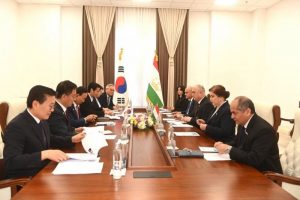 Faizali Idizoda Meets with Deputy Speaker of the National Assembly of the Republic of Korea
 Tajikistan, Saudi Arabia Seek Deeper Interparliamentary Ties
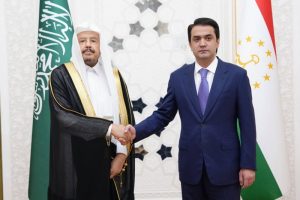 Rustam Emomali Meets Saudi Shura Council Chief To Strengthen Bilateral Ties
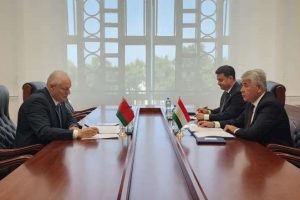 Tajikistan and Belarus Reaffirm Commitment to Interparliamentary Cooperation
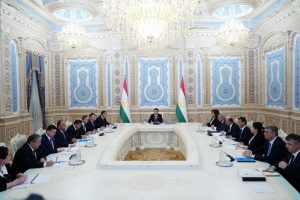 Rustam Emomali Chairs Majlisi milli Council Meeting in Capital