





Parliament and National Diplomacy: Thirty-Five Years of Experience in Tajikistan’s Independent Statehood — Reflections by Deputy Speaker Mavsuma Muini
Read also
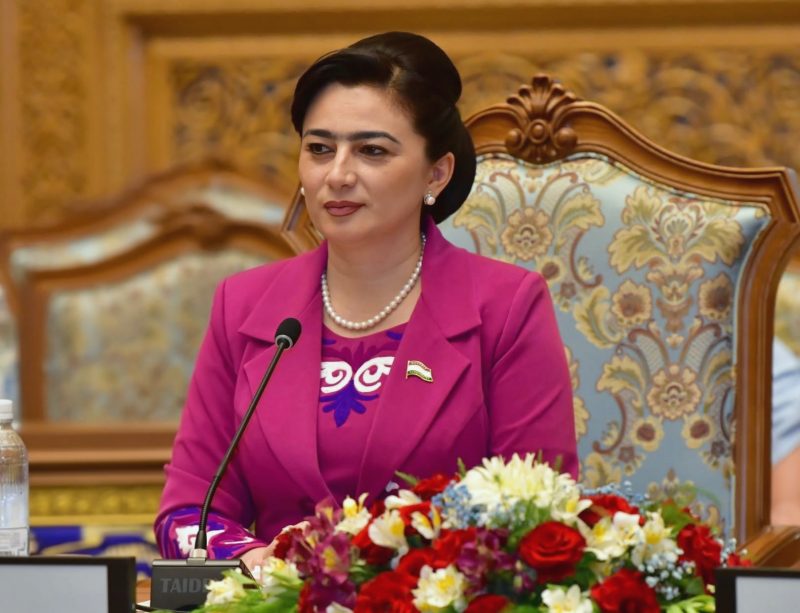
In the history of nations, there are days that are determined by the calendar, and there are days that are determined by destiny. For the Tajik people, the Day of State Independence is one of those days that has gone beyond the boundaries of a political event and has become the beginning of a new era of national self-awareness, the revival of the will to statehood, and the nation’s return to the independent stage of history. From this perspective, the celebration of the 35th anniversary of the State Independence of the Republic of Tajikistan is not merely an occasion to sum up a period of time, but an opportunity to reflect on the path taken and consider the responsibility for the journey ahead.
During the years of independence, the Republic of Tajikistan achieved great historical achievements, which significantly strengthened the country’s position not only at the national level, but also in the international arena.
For 35 years, being an era of defending real independence, establishing and strengthening the pillars of national statehood, forming a democratic and rule-based society, implementing sustainable development of the country through large-scale political and social reforms, and the national and cultural revival of the tajik people, the republic has steadily pursued a multilateral policy in the international system.
In today’s world, where international relations take on new forms every day, power is being redistributed, interests are changing at an unprecedented pace, and geopolitical rivalries are penetrating deep into regions, states can maintain a stable position if their foreign policy is not merely a set of diplomatic relations, but an embodiment of their worldview, national will, and strategic statecraft. Over the thirty-five years of independence, Tajikistan has followed precisely such a path of state-building — a path that has passed through difficult trials and has today become a distinctive school of national diplomacy.
If we speak today of Tajikistan’s diplomacy, we must first speak of the logic of its formation. Tajik diplomacy did not emerge under calm and favorable conditions; it took shape in days when the very existence of the state was under threat, society was caught in a political crisis, and the fate of the nation depended on choosing the right path. Therefore, the history of Tajikistan’s foreign policy cannot be separated from the history of the modern state-building of the Tajik people.
It is at this historical juncture that the role of the Leader of the Nation, President of the Republic of Tajikistan, Honorable Emomali Rahmon, as the architect of the foreign policy of independent Tajikistan acquires its true meaning. An architect is one who lays the foundation before constructing a building, determines its balance before the walls rise, and sees the future in a plan before others can see the result. Looking back at the history of the past thirty-five years, we can see that Tajikistan’s foreign policy has developed according to precisely this logic: first, the preservation of the state; then, the consolidation of statehood; and subsequently, the enhancement of the state’s position in the international community.
The historical truth is that independence came to Tajikistan not through a peaceful political transition, but on the eve of the collapse of an entire world order. The Republic of Tajikistan became independent at a time when it still lacked independent diplomatic experience, its network of foreign missions was limited, and its legal system governing international relations had not yet taken complete shape. Subsequently, the political crisis and civil war deepened these difficulties to such an extent that the issue was no longer merely the administration of the state; it was the preservation of the state itself.
Under these circumstances, the XVI Session of the Supreme Council became a turning point in the history of the Tajik people. This session did not merely change the composition of the leadership; it changed the logic of statehood. It was from this point that it became clear that Tajikistan could not rely solely on military force or domestic measures for its survival. The country had to make the international community a partner in peacebuilding, gain the trust of states, and transform diplomacy into one of the fundamental pillars of statehood.
In this context, the historic address of the Leader of the Nation to the people of Tajikistan on December 12, 1992, acquired particular significance. When those words were spoken, they were not merely a statement of the tasks of a government; they were a plan for the revival of the state. It identified the restoration of diplomatic relations, entry into the international community, alignment of legislation with international standards, and strengthening cooperation with neighboring countries as the state’s foremost priorities. Today, thirty-five years later, it can be said that many of Tajikistan’s diplomatic achievements stem precisely from this strategic vision.
Subsequently, at the XVI Session of the Supreme Council, a principle was articulated that remains the cornerstone of Tajikistan’s foreign policy to this day: respect for international law, maintaining a balance of interests, and pursuing a balanced and pragmatic foreign policy. At a time when many newly independent states were still searching for their path, this worldview laid the foundation for the formation of an independent school of diplomacy in Tajikistan.
Perhaps it is precisely here that the difference between sustainable state-building and temporary statecraft becomes apparent. There are states that follow events, and there are states that determine the direction of events. Over these years, Tajikistan has sought to move beyond merely responding to developments and reach the level of taking initiatives. This path began with national peace, was strengthened by the “open doors” policy, and today continues through Tajikistan’s global initiatives on water, glaciers and international peace.
Throughout this process, one truth remains clear: diplomacy becomes sustainable when it draws strength from the culture of the nation, the history of statehood, and a responsible leadership worldview. Therefore, speaking about Tajikistan’s foreign policy is, in reality, speaking about a philosophy of statehood in which the protection of national interests, respect for international law, and historical responsibility toward the nation are interconnected as inseparable values.
It is precisely at this point that we encounter one of the most important characteristics of the state-building school of independent Tajikistan, which distinguishes it from the experience of many newly independent countries. In most states, foreign policy takes shape after the domestic situation has stabilized. In Tajikistan, however, it emerged simultaneously with the revival of statehood and, for this reason, diplomacy from the outset assumed a dual responsibility: on the one hand, representing the state in the international community, and on the other, using international opportunities to preserve the state itself.
This can be understood by looking only at the events of 1993–1997. Had the country’s leadership limited itself at that time solely to resolving domestic issues, Tajikistan might have remained isolated from the international community for many years. However, the Leader of the Nation, Honorable Emomali Rahmon, transformed the issue of peace from a domestic matter into an issue of international shared responsibility. It was precisely this worldview that led the United Nations, other international institutions and friendly states to become actively involved in the Tajik peace process.
It must be acknowledged that this was not solely the result of the work of professional diplomats; above all, it was the result of the trust that the Head of State was able to establish at the international level. Diplomacy is ultimately the art of creating trust, because states place greater trust in will than in words and greater trust in consistency than in promises. Tajikistan gained precisely this trust during the most difficult years of its history.
When, after more than five years of negotiations, the General Agreement on the Establishment of Peace and National Accord was signed, the international community did not merely celebrate the end of a war; it witnessed the emergence of a new experience in the culture of peacebuilding — an experience that the Leader of the Nation himself later called “the most unique achievement of the period of independence,” and which indeed became a school for the study of peace at the international level.
Here, the true meaning of the historical idea that diplomacy gains value when its results are felt in people’s lives becomes clear. If peace remains only on the pages of agreements, the state cannot become stable. But when peace opens the way to economic revival, the return of refugees, and the restoration of schools, roads and people’s lives, diplomacy then transforms from the art of negotiation into the art of statecraft.
In political science, there is a concept that is less frequently used in the Tajik language but is of fundamental importance for understanding Tajikistan’s experience: the concept of a “statesman.” The difference between a statesman and a politician is that a politician may respond to the issues of the day, whereas a statesman lays foundations for decades. A politician can make decisions, but a statesman determines the course of history.
If we look at the experience of successful states in the 20th century, we see that figures such as Charles de Gaulle, Deng Xiaoping and Indira Gandhi are remembered above all because they were able to lead their countries from periods of crisis to periods of stability. The same logic can be seen in Tajikistan’s experience: the Leader of the Nation, Honorable Emomali Rahmon, shaped foreign policy not merely as a set of formal relations, but as an integral element of state-building.
Strategic vision emerges precisely here. As early as the XVI Session of the Supreme Council, the idea was expressed that Tajikistan’s foreign policy should be “balanced and pragmatic,” free from one-sided alignment and based solely on the supreme interests of Tajikistan. If these words may seem ordinary today, it should be remembered that they were spoken in the early years of the emerging multipolar world order, when many states were still searching for their path.
This foresight has become even more significant today. The world of today differs from the world of 1993, but the fundamental principle established at that time has not changed: preserving sovereignty, maintaining a balance of interests, and preventing one-sided dependence. When, in 2002, the Leader of the Nation announced the “open doors” policy, some regarded it merely as a change in the form of foreign relations. Reality, however, showed that this concept went beyond a diplomatic tactic and embodied a comprehensive worldview of statecraft.
“Open doors” means an open state, but not in the sense of losing its identity and national interests. On the contrary, it expresses confidence in its own strength, readiness for cooperation, and the ability to protect national interests under conditions of global integration. This is the fundamental difference between this policy and many other models: Tajikistan chose cooperation, but not dependence; it chose dialogue, but did not relinquish its right to make independent choices.
In a world where geopolitical rivalries are intensifying day by day, maintaining such a balance is itself a major diplomatic achievement.
Today, Tajikistan’s diplomacy is no longer limited to resolving regional issues. If, in the early years of independence, the main priorities were peace, security and the revival of the state, today Tajikistan has become a country that brings global issues onto the international agenda.
The greatest example of this transformation is the country’s global initiatives on water. From the International Year of Freshwater to the “Water for Life” Decade, from the “Water for Sustainable Development” Decade to the High-Level International Conferences on the International Decade for Action “Water for Sustainable Development” in Dushanbe, all of this demonstrates that Tajikistan has been able to transform an issue rooted in its own geography into an issue concerning all humanity.
There is a philosophical point here. There are states that speak only of their own problems, but there are also states that find universal solutions to problems arising from their own circumstances. Tajikistan chose the second path.
Today, the issue of glacier preservation is also part of this process. Tajikistan’s international initiatives in this area and the holding of global events in Dushanbe demonstrate that the country has shifted from the position of a decision-taker to that of a proactive international agenda-setter. This is the true evolution of foreign policy.
And if today the United Nations General Assembly adopts a resolution on the “International Decade of Strengthening of Peace for Future Generations (2027–2036),” this too should be viewed within the same logical sequence: from national peace to global peace; from our own experience to a proposal for humanity.
In today’s world, parliaments have become one of the most important platforms for dialogue, building trust, and strengthening interstate relations. It is precisely this characteristic that has made parliamentary diplomacy one of the important instruments of modern foreign policy.
The experience of the Republic of Tajikistan in this area has also gone through distinct stages of formation and development. If, in the early years of independence, the main task was to establish the legal and fundamental foundations of international relations, today the Majlisi Oli of the Republic of Tajikistan, as the supreme representative body, plays an active role in developing international dialogue and interparliamentary relations.
Therefore, parliamentary diplomacy for Tajikistan is not merely a new form of international activity. It is a logical continuation of the same school of statecraft that was formed in the early years of independence under the leadership of the Leader of the Nation, President of the Republic of Tajikistan, Honorable Emomali Rahmon.
In this process, Parliament has an important responsibility as a representative institution: to present the achievements of the state, defend the national position, establish relations of trust with the parliaments of other countries, and create new foundations for the development of friendly relations.
The Majlisi milli and the Majlisi namoyandagon, each within its respective powers, contribute to strengthening relations with the parliaments of foreign countries, participating in international parliamentary organizations, exchanging legislative experience, and presenting the position of the Republic of Tajikistan.
This process stems from the far-sighted policy of the Leader of the Nation, President of the Republic of Tajikistan, Honorable Emomali Rahmon, and is continuously improved as an important component of foreign policy and the culture of national statehood. The continuation of this direction in the parliamentary activities of the country has found a logical connection with the policy of the Chairman of the Majlisi milli Majlisi Oli of the Republic of Tajikistan, Rustam Emomali, and the activities of the Chairman of the Majlisi namoyandagon Majlisi Oli of the Republic of Tajikistan, with both, each in their own style but within the framework of one political school and one worldview of statecraft, consistently pursuing this path. Because a political school is, above all, a school of values, thought, and responsibility. It endures not through the repetition of forms, but through preserving its essence and adapting it to the demands of the times.
Today, Tajikistan’s presence in the Inter-Parliamentary Union, the Parliamentary Assembly of the Commonwealth of Independent States, the Parliamentary Union of the Organization of Islamic Cooperation, the Asian Parliamentary Assembly and other international parliamentary structures demonstrates that parliamentary diplomacy has become an important component of the country’s international activities.
The strength of parliamentary diplomacy lies in the fact that it creates ties not only between states, but also between people, societies and cultures. If traditional diplomacy opens the official channels of dialogue between states, parliamentary diplomacy can strengthen these channels through the trust of the people, the experience of legislators and direct relations among representatives of nations.
Through parliamentary diplomacy, opportunities can also be effectively established for attracting investment, exchanging experience, resolving regional and global challenges, and strengthening peace and security. In this area, the Parliament of Tajikistan can play a key role not only as a legislative institution, but also as an active member of the international community.
Therefore, for the Republic of Tajikistan, the further development of parliamentary diplomacy is not only a necessity of the times, but also an important opportunity to strengthen the country’s position in the system of international relations, protect national interests, and contribute to resolving regional and global issues.
During his address at the solemn gathering marking the 35th anniversary of the State Independence of the Republic of Tajikistan, held on September 8, 2026, at the newly built National Theater, the Leader of the Nation, Emomali Rahmon, stated: “Over the 35 years of independence, Tajikistan has pursued a balanced, peaceful, and constructive foreign policy and, guided by the principle of an open-door policy, has earned a respected place on the world stage.”
In conclusion, I would like to return to the thought with which this speech began: the state is not merely a collection of institutions; the state is a trust entrusted by history, and foreign policy is the mirror in which the value placed on this trust becomes visible.
Thirty-five years of independence have shown that statehood begins with a single decision, but continues through hundreds of correct decisions. Independence is proclaimed through a single political act, but is preserved through a culture of responsibility. Diplomacy begins with a single meeting, but remains strong through trust built over years.
Today, Tajikistan is recognized in the international community as a peace-loving, proactive country and an advocate of dialogue. This standing did not emerge by itself. It is the result of a path that began in the difficult days of the XVI Session of the Supreme Council, passed through the Tajik school of peace, was strengthened by the “open doors” policy, and today finds its expression in Tajikistan’s global initiatives.
From this perspective, it can be said that the most important legacy of the foreign policy of independent Tajikistan is not merely its embassies, agreements and international resolutions. The most important legacy is the statecraft worldview that has brought together the protection of national interests, respect for international law, balanced relations and historical responsibility. It is this worldview that today presents Tajikistan with a distinctive standing in the international community.
May this wisdom always embody the spirit of Tajikistan’s diplomacy — a diplomacy that draws strength from the thousand-year-old culture of the nation, serves the interests of the state, and paves the way for peace, trust and constructive cooperation for future generations.
Mavsuma Muini
Deputy Chairman of the Majlisi namoyandagon
Majlisi Oli of the Republic of Tajikistan,
Candidate of Historical Sciences.
 Tajikistan Seeks to Strengthen Transport Links Among SCO Member States
 Tajik Ambassador Presents Credentials to Algeria’s Foreign Minister
 Tajikistan and Kuwait Discuss Cooperation on Combating Transnational Crime
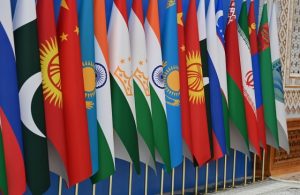 SCO Prime Ministers Gather in Dushanbe for 25th Council Meeting
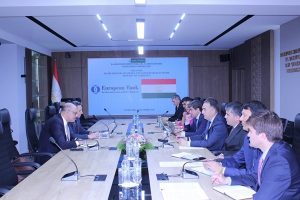 Tajikistan, EBRD Discuss Expanding Energy Cooperation and Hydropower Development
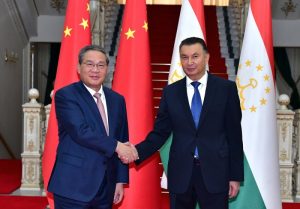 Tajikistan, China Sign Five Cooperation Agreements During Li Qiang’s Visit
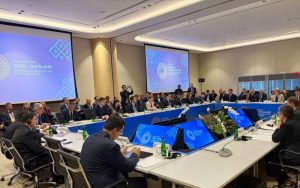 Tajikistan Discusses Economic Cooperation With International Financial Institutions in Bangkok
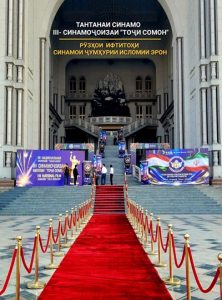 Iranian Film Days Open in Dushanbe as Part of Toji Somon Film Awards
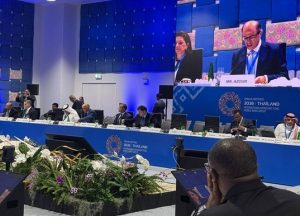 Tajikistan’s Central Bank Chief Discusses Monetary Policy Amid Global Economic Uncertainty in Thailand
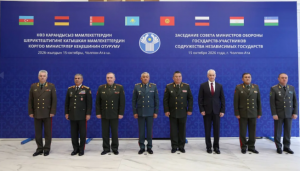 Tajikistan Participates in CIS Defense Ministers’ Meeting in Kyrgyzstan
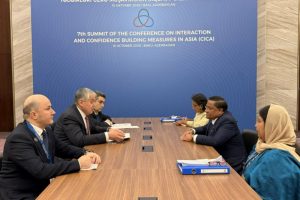 Tajikistan, Sri Lanka Discuss Bilateral Cooperation on Sidelines of CICA Summit