







Rustam Emomali Calls for Accelerated Digital Reforms and Improved Public Services in Tajikistan
Read also
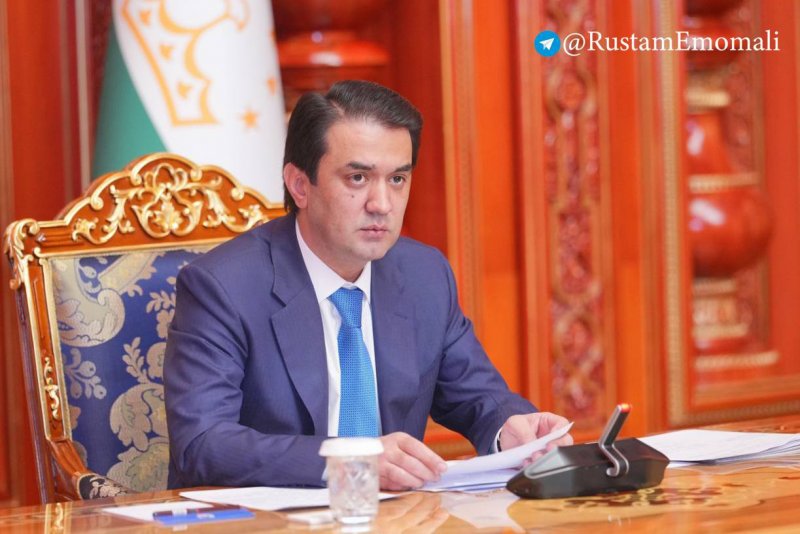
A meeting of the State Commission for the Implementation of Digital Reforms under the President of Tajikistan was held on November 23 under the chairmanship of Rustam Emomali, Chairman of the Majlisi Milli (National Assembly) of the Majlisi Oli (Supreme Assembly) of Tajikistan, NIAT Khovar reported, citing the upper house of parliament.
The meeting discussed progress in implementing digital reforms, the quality of public services, the integration of information systems, the simplification of administrative procedures and further tasks facing ministries and government agencies.
It was noted that, with the support of President of Tajikistan Emomali Rahmon, the country has established the necessary legal and organizational framework for developing the digital economy.
The designation of 2025-2030 as the Years of Digital Economy and Innovation Development and the adoption of the Medium-Term Program for the Development of the Digital Economy for 2026-2030 have created additional opportunities to advance these reforms.
As part of efforts to establish the sector’s legal framework, more than 77 regulatory legal acts have been adopted, over 3,500 government agencies have been connected to a unified electronic document management system, and more than 120 public services have been made available through an electronic portal.
At the same time, the transition to fully electronic services and the integration of sectoral information systems require further improvement. Rustam Emomali stressed that heads of ministries and agencies bear personal responsibility for the results of digital reforms.
He said the performance of government bodies would be assessed based on improved access to quality public services, reduced administrative procedures, greater transparency and the efficient use of public funds.
The integration of information systems, prevention of duplicate spending, optimization of processes and elimination of unnecessary paperwork must become integral parts of the reforms, he said.
In this regard, the development and implementation of comprehensive sectoral digitalization plans have been identified as a priority. The plans must specify responsible officials, measurable performance indicators and clear deadlines, covering all areas of each sector.
The meeting also discussed the regulation of taxi services. Drawing on the experience of other countries in the region, participants stressed the need to introduce a new regulatory framework for the sector. The proposed measures are intended to bring informal taxi services into the formal economy, create permanent jobs and reduce administrative barriers.
In this regard, instructions were issued to review the relevant regulations, simplify documentation procedures and abolish the quota system for taxi operations.
It was noted that, as part of a pilot project, a simplified licensing procedure, including for self-employed taxi drivers, would be introduced through the unified public services portal. The new procedure is scheduled to take effect on January 1, 2027. In the meantime, the relevant authorities were instructed to conduct extensive outreach among drivers to explain the application and licensing requirements.
In the public finance sector, the meeting focused on the transition from paper-based document management to electronic systems and their integration.
The relevant authorities were instructed to review the digitalization of all stages of the budget process, including planning, approval, execution and oversight, and develop measures to eliminate redundant procedures and introduce unified electronic workflows.
Regarding taxation, the need to simplify registration, reporting, accounting, planning and audit procedures was emphasized, along with reducing manual operations and preventing repeated inspections.
The meeting also addressed the simplification of customs procedures, the effective use of inspection technologies at border crossings and the development of digital mechanisms for imports, including e-commerce goods.
It was specifically stressed that at customs checkpoints equipped with information systems and the necessary technological infrastructure, goods must not be processed without using electronic procedures and available technological capabilities.
The implementation of the Commission’s decisions and the assessment of government agencies’ performance should focus on improving the quality of public services and increasing the efficiency of public administration.
In conclusion, heads of ministries and agencies were instructed to ensure the timely implementation of the directives, remove administrative barriers and deliver tangible results from digital reforms.
 Tajikistan and Egypt Discuss Bilateral Cooperation and Preparations for Political Consultations
 Tajikistan and Jordan Discuss Expanding Bilateral Cooperation and Strengthening Political Dialogue
 Shohin Airlines Launches Regular Flights Between Dushanbe and Khorog
 Tajik Ambassador Meets Governor of Kuwait’s Al-Ahmadi Governorate
 Tajikistan Reaffirms Commitment to Combating Violence Against Children at Conference in Manila
 Tajikistan to Hold International Scientific and Cultural Events at UNESCO Headquarters in Honour of Avicenna and Omar Khayyam
 Tajikistan, Luxembourg Discuss Expanding Inter-Parliamentary Cooperation
 Tajikistan and EU Hold 13th Meeting of Parliamentary Cooperation Committee in Brussels
 COP31: Dushanbe Focuses on Protecting Mountain Communities from Climate Change Impacts
 Tajikistan’s Economy Grows 8.3% in First Nine Months of 2026, GDP Reaches 136.2 Billion Somoni