






President Emomali Rahmon Inaugurates National Theatre of Tajikistan
Read also
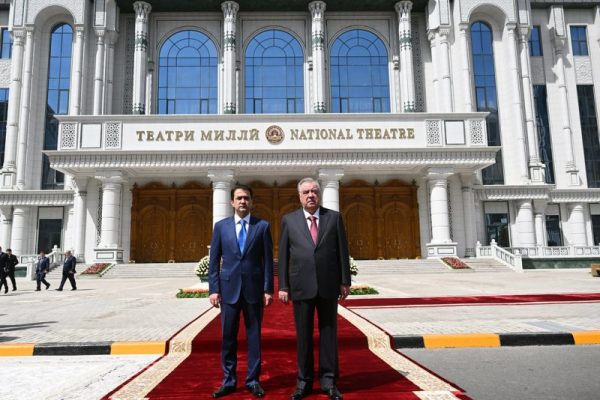
On August 24, the President of the Republic of Tajikistan, Leader of the Nation, Honorable Emomali Rahmon, and the Chairman of the Majlisi milli Majlisi Oli of the Republic of Tajikistan, Mayor of Dushanbe, Honorable Rustam Emomali, inaugurated a magnificent building of the National Theatre in the capital of the country — the city of Dushanbe.
The opening of this edifice of culture and art is a memorable historic event for the people of Tajikistan. The National Theatre was built on the direct initiative of the President of the Republic of Tajikistan, Leader of the Nation, Honorable Emomali Rahmon, and is considered a valuable and unique gift to the people of Tajikistan and figures of culture and art in honor of the 35th anniversary of state independence.
After the opening, the President of the Republic of Tajikistan, Leader of the Nation, Honorable Emomali Rahmon, and the Mayor of Dushanbe, Honorable Rustam Emomali, made inscriptions in the book of distinguished guests with good wishes.
The National Theatre of Tajikistan, with its unique design, modern architecture, and national decoration, stands in the center of the capital and has become one of the largest and most beautiful theatrical institutions in the region. The architectural and decorative ideas of this art center are closely linked to the proposals of the Leader of the Nation, His Excellency Emomali Rahmon.
The National Theatre is no longer just a new and modern building. It is a grand palace of art, a place of creation, a stage for dreams, and a symbol of respect for the world-famous culture of the Tajiks of Aryan descent.
The magnificent building of the National Theatre is built in one of the most beautiful and central areas of Dushanbe, adjacent to the National Museum and the State Flag Park. Its location in this central corner of the capital has further enhanced the architectural and cultural image of Dushanbe, giving the capital of the country a new beauty and freshness.
From every corner of the building, architectural splendor, national thought, and high taste of creative art are felt. The President of the Republic of Tajikistan, Leader of the Nation, Honorable Emomali Rahmon, while familiarizing himself with the capabilities of the building, expressed sincere gratitude to the responsible leaders and specialists and Tajik craftsmen for completing the construction work in a timely manner and with high quality.
The design and decoration of the National Theatre combines modern architecture with unique elements of Tajik art. The patterns and designs, decorative details, the shape and design of the halls, the interior and exterior decoration, and artistic elements are all executed taking into account the national culture and the requirements of modern architecture.
Here one can clearly observe the blend of the millennial history and civilization of the Tajik nation with the achievements of architecture and modern technologies.
The best building and decorative materials, modern machinery and equipment were used to build and equip this great cultural facility.
Behind this feat today stands a long path of hard work, labor, and effort.
The construction of this great cultural palace began 11 years ago.
On March 17, 2015, the President of the Republic of Tajikistan, Leader of the Nation, Honorable Emomali Rahmon, in a solemn ceremony, laid the first brick of the National Theatre of Tajikistan and launched the construction work.
From that day on, builders, engineers, architects, designers, specialists, and skilled craftsmen set to work. Years passed. Stone upon stone, brick upon brick and pattern upon pattern, a great cultural palace was erected.
Today, the result of that creative work is before the eyes of the residents of the capital and guests of the country.
The building of the National Theatre consists of 7 floors — two underground and five above-ground floors, and its height reaches 35 meters.
Three hectares of land were allocated for its construction.
The numbers show only a part of the grandeur of this structure.
The real splendor of the National Theatre is embodied in its interior space, in large halls, modern stages, and wide creative opportunities.
The National Theatre has three main halls and a large number of auxiliary halls and rooms.
The main hall is designed for 2,500 spectators.
A hall that can simultaneously introduce thousands of people to the magical world of Tajik architecture and urban planning.
A large stage and a special place for the orchestra allow for theatrical performances, operas, ballets, symphony concerts, and other high-level cultural events to be held here.
The height of the main hall is 18 meters, and its design was developed taking into account the modern requirements of the performing arts.
In addition to the main hall, two other halls are intended for holding cultural and educational events, conferences, and concerts.
One of them has a seating capacity of 1,000, and the conference hall has a capacity of 1,115 people.
Thus, the National Theatre can simultaneously host various cultural and political events.
The theater building houses rehearsal rooms for singers and ensembles, finishing, sewing, and shoemaking workshops, lighting rooms, audio and video recording studios, and other necessary departments.
On different floors of the building there are administrative offices, a theater museum, a place for exhibiting paintings, halls for receiving distinguished guests, a conference room, and other service facilities.
That is, here a stage work is not just performed — it begins with an idea, is created, developed, and put on stage in this environment.
Suitable and modern working conditions have been created for the artists and theater staff.
Each component of this large complex is aimed at enabling the creator to create a new work with the necessary collective consciousness and opportunities.
The National Theatre is equipped with 17 passenger and freight elevators and 6 escalators, and a hotel with 136 sleeping and resting places is also provided for guests.
Two underground floors have parking for 250 vehicles and numerous technical and auxiliary rooms.
The building is equipped with modern heating, air conditioning, and other engineering equipment.
All these opportunities turn the National Theatre into a complete cultural complex.
However, the greatness of this structure is not only in its size and equipment.
Its real greatness lies in the cultural mission of the National Theatre.
Culture is the mirror of the nation, the essence of the nation.
The stage is a place where history, aspirations, love for the homeland, human values, and life lessons are conveyed to the audience through the language of culture and art.
The theatre plays a major role in the spiritual education of society, strengthening national self-awareness, and respect for historical and cultural values.
Therefore, the construction of such a large cultural palace is a testament to the special attention paid to the development of art and the creation of favorable conditions for people of culture.
One of the main features of the National Theatre is that modern technology is harmonized with the symbols of national culture.
The interior decoration of the building uses patterns and drawings that originate from the thousand-year-old history and civilization of the Tajiks.
Each pattern tells a story from the history of the nation.
Each decorative element shows the connection between the present and the past.
And every corner of this grand palace is evidence of the fact that the Tajik nation, during the period of independence, pays more attention to the preservation and revival of national culture and its presentation at the international level.
Throughout the period of independence, many measures were taken to develop science and culture and the activities of cultural and artistic institutions.
During the years of independence, a number of new theater institutions were established, and the buildings of existing theaters were renovated and modernized.
All these measures are aimed at one important goal — the development of art, support for people of culture, and the creation of suitable conditions for creativity.
Here, the stage is ready for the creation of great works and the expression of national aspirations.
Here, an opportunity is created for the upbringing of talents.
Here, the best pages of the nation’s history can be brought to the stage.
Here, historical heroes, outstanding figures of literature and culture, the lives of the people, and the aspirations of today’s generation can be created into immortal works.
And perhaps from these stages the voices of young artists will rise who will represent Tajik art on the world’s great stages in the years to come.
Today, the doors of the National Theatre were opened to the public.
With the opening of these doors, the door to another world was also opened.
The world of unique culture and art.
The world of music.
The world of images and emotions.
The world of history and dreams.
Now the curtains are opening on this stage.
Music will resonate in these halls.
Historical figures and heroes of new works will live on the stage.
Here, the voices of artists find their way into the hearts of thousands of spectators.
Here, the tears of the hero of the stage can fill the eyes of the audience, his laughter can make thousands of people smile, and his story can awaken the thoughts of society.
This is the power of theatre.
A power that changes people not with walls and columns, but with words, music, gestures, and feelings.
From now on, the National Theatre can become a venue for the most important cultural events, festivals, theatrical performances, opera, ballet, symphony concerts, and international programs.
It can further represent Tajikistan on the international stage as a country with a rich culture, high art, and ancient civilization.
From the first brick to the first act.
From construction to the stage.
From the plan to reality.
From the labor of builders to the creation of craftsmen.
This is the path traveled by the National Theatre.
A path that began 11 years ago when the first brick was laid and today has reached the beginning of a new era.
A new era — the era of the real life of the theatre.
The era of creating new performances.
The era of discovering new talents.
The period of bringing historical heroes and eternal images of Tajik literature to the stage.
The period of presenting national culture on the great stages of the world.
When the curtain of this stage opens, perhaps the audience will remember the hard work of thousands of people behind each performance — the hard work of those who built this palace so that today the artists can bring their dreams to the stage.
The National Theatre is no longer just a building.
It is a place for preserving national values, spiritual education of generations, and presenting the history and civilization of the Tajiks.
This palace was built and designed for today and tomorrow.
For today’s generation and future generations.
So that every child who enters this hall today may become a great artist tomorrow.
So that every young person who learns art on this stage today will raise the flag of Tajik culture on world stages tomorrow.
So that the name of Tajikistan will sound even louder in the world of art with its high culture, original art, and national values.
Today, a palace stands in the center of Dushanbe, the walls of which are made of stone and iron, but its spirit originates from the culture, art, and aspirations of the nation.
The National Theatre is where history comes to the stage.
This is where literature turns into images.
This is where music reaches emotion.
Here lies the power, strength, national pride, self-awareness and self-knowledge, a high sense of patriotism, the spirit of the Aryan civilization, the splendor of the high art, and culture of the Tajiks, and a great sense of tribute to their illustrious ancestors.
And now, on the eve of the 35th anniversary of the State Independence of the Republic of Tajikistan, the curtain of a great stage is being raised.
A stage that can make the voice of Tajik culture louder.
A stage that can turn the creative dreams of new generations into reality.
A stage where the past, present, and future of the nation are intertwined.
The National Theatre is now ready.
It is ready to become the stage of a new history of Tajik culture.
It is ready to find its special place in the heart of Dushanbe and in the culture of the nation.
This is a masterpiece and a miracle of the century, but no modern filming equipment can show this splendor and grandeur in all its details. Only with eyes and hearts full of love and pride for this land, for this creative and innovative Leader, and for the civilized and urban-building Tajiks of Aryan descent, can one see this unspoiled land up close, bite one’s finger in wonder, and have faith in the even brighter future of the homeland.
 President Emomali Rahmon Meets with Heads of SCO Member State Delegations in Dushanbe
 President Emomali Rahmon Meets First Vice President of Iran Mohammad Reza Aref
 President Emomali Rahmon Inaugurates 20 Development Facilities in Rudaki District
 President Emomali Rahmon Inaugurates New Education Department Building in Rudaki District
 President Emomali Rahmon Inaugurates New Palace of Culture in Rudaki District
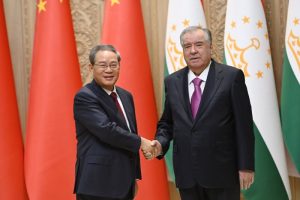 President Emomali Rahmon Meets Chinese Premier Li Qiang in Dushanbe
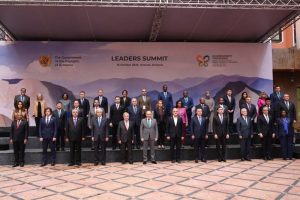 President of Tajikistan Emomali Rahmon Calls for Stronger Global Cooperation on Biodiversity Conservation
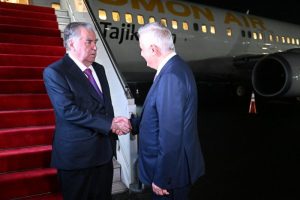 President of Tajikistan Emomali Rahmon Arrives in Armenia for Biodiversity Conference
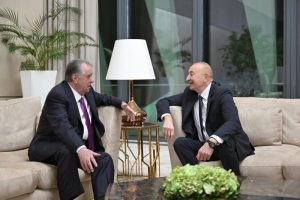 President Emomali Rahmon Meets with President Ilham Aliyev in Baku
 President Emomali Rahmon Arrives in Baku to Participate in the Seventh CICA Summit
 President Emomali Rahmon Departs for Azerbaijan to Attend the Seventh CICA Summit