







IMF Executive Board Approves $189.5 million for Tajikistan to Tackle COVID-19 Pandemic
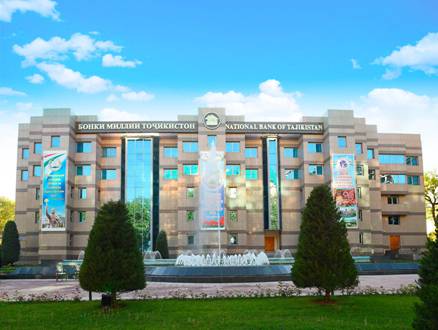
DUSHANBE, 07.05.2020. (NIAT Khovar) – The IMF Executive Board has approved a $189.5 million loan to help Tajikistan meet its urgent needs for financing the balance of payments and budgetary needs associated with the COVID-19 pandemic.
In order to maintain macroeconomic stability, the authorities are taking measures to supplement the healthcare budget, strengthen social protection of vulnerable groups and support enterprises during the current shock.
The loan was made under the accelerated lending mechanism (RKF) in the amount equivalent to $189.5 million (80 percent of the quota). These funds are earmarked to go toward avoiding serious destabilization of the economy and to meet the urgent health and social expenses associated with COVID-19. This crisis is expected to have significant economic and social consequences in Tajikistan. It is currently projected that the economy will shrink by 2 percent this year, and the overall budget deficit could grow to 7.7 percent of GDP.
Following the discussion of the Executive Board, Deputy Managing Director and Chairman Tao Zhang made the following statement:
“The COVID-19 pandemic has serious humanitarian and economic consequences for Tajikistan. Failures in trade and transportation led to a sharp reduction in remittances and government revenues and created an urgent need to finance the balance of payments and budget.
The authorities in response adopted an action plan and measures to contain the pandemic. Health expenditures and targeted support for the most vulnerable households and sectors of the economy are urgent priorities, and a temporary increase in the budget deficit in these conditions is justified. The country’s authorities are committed to ensuring full transparency and providing information on resources allocated to emergency response, including the publication of quarterly reports and retrospective reviews of crisis costs. In the medium term, the authorities are committed to fiscal consolidation and a prudent borrowing policy to reduce the budget deficit and put debt on a stable path. The authorities also intend to maintain exchange rate flexibility, improve the functioning of the foreign exchange market to support economic growth, and make external adjustments while avoiding excessive volatility and economic disruptions. Changes in liquidity and inflation will continue to be closely monitored as part of monetary policy.
The IMF financial assistance under the RKF will provide a significant portion of the funding needed to implement anti-crisis measures. To bridge the remaining funding gap, the provision of additional concessional and grant financing from the international community is of vital importance.”
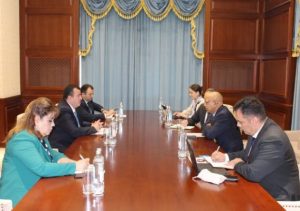 Tajikistan, IMF Discuss Economic Growth, Cooperation Plans
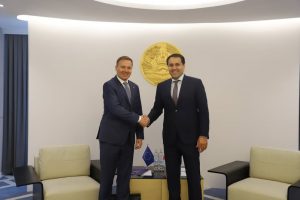 Tajikistan, EU Hold Talks on Digital Economy Cooperation
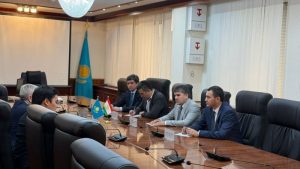 Tajikistan, Kazakhstan Discuss Expanding Unified Energy System Cooperation
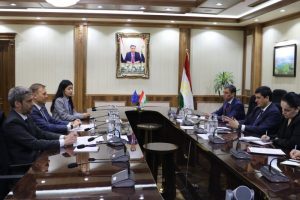 EU, Tajikistan Discuss Climate Action and Environmental Protection Initiatives
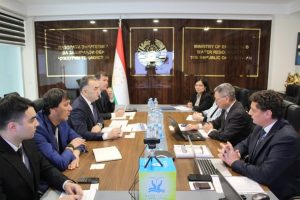 Tajikistan, ADB discuss water management and energy cooperation in Dushanbe
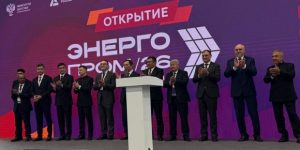 Tajik Energy Minister Attends Opening of International Electric Power Forum in Kazan
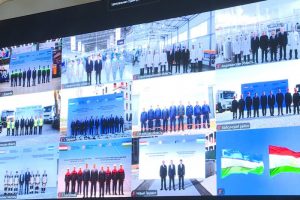 Emomali Rahmon Points to Significant Potential for Further Development of Tajik-Uzbek Economic Partnership
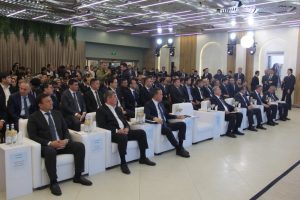 Tajikistan, Uzbekistan Hold Second Interregional Business Forum to Boost Trade Ties
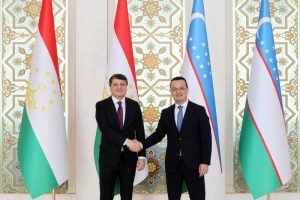 Tajikistan, Uzbekistan Discuss Expanding Industrial Cooperation in Tashkent
 European Investment Fund Invests in Shohin Airlines
 Tajikistan Discusses Export Development Program for 2026–2030
 Moody’s Upgrades Tajikistan to B2, Cites Strong Economy and Fiscal Stability