






China International Book Trading Corporation’s Reading China Series 2 Focusing on China’s Path of High-quality Development
Read also
DUSHANBE, 20.09.2022 (NIAT Khovar) – China International Book Trading Corporation, released the second part of Reading China, a series of high-end interviews. This series of interviews focuses on “A Community of Shared Future for Mankind”, “High-quality Development” and other key issues of concern to the international community, interviewing experts in international relations, politics and economics to explain their understanding of China’s development practices.
According to the China International Book Trading Corporation, three honorable guests, namely David Blair, vice-president of the Center for China and Globalization (CCG), Einar Tangen, Senior Researcher at Taihe Institute (TI), and Professor Alessandro Teixeira of Public Policy at School of Public Policy and Management at Tsinghua University, were invited to this interview to speak on the topic of “High-quality Development” in order to discuss upon hot issues such as China’s economic strategy of “Dual Circulation” and the Development of Sci-tech Innovation.
China proposed for the first time in 2020 to “build a new development pattern of domestic circulation and international circulation boosting each other”. Chinese President Xi Jinping has pointed out that building a new development pattern of domestic circulation and international circulation boosting each other with the domestic circulation as the mainstay is a major decision made considering the trends of events in light of the changes in China’s development stage, environment and conditions, especially in light of changes in China’s comparative advantages.
David Blair, vice-president of the Center for China and Globalization (CCG), said that great powers need to develop and progress by their inherent strengths, and the emphasis on high-quality growth and economic stability is relevant for an economic powerhouse like China. Einar Tangen, Senior Researcher at Taihe Institute (TI), believed that China’s policy of “Dual Circulation” is not identical with detaching itself from the world economy, however, it means China firstly needs to ensure that its domestic market is functioning properly, and on that basis improving efficiency and reducing costs, and then attracting more foreign investment.
At present, China has placed the Sci-tech Innovation at the heart of its overall national development, and has set the strategic goal of becoming a leading innovative country by 2030 and a world power in the sci-tech innovation by 2050.
Alessandro Teixeira, professor of Public Policy at School of Public Policy and Management at Tsinghua University, said that the Sci-tech Innovation emphasized by Chinese President Xi Jinping is science-based, and the innovative accomplishment is only produced, when China strengthens its technology on the basis of developing science.
 Tajikistan, World Bank Discuss Cooperation in Energy, Transport and Social Sectors
 Tajikistan Hosts International Forum on Geology and Mining Industry Digitalization
 Tajikistan, Japan Strengthen Cooperation in Training Industrial Specialists
 RCU Launches 2026–2027 Archaeology Season Across AlUla and Khaybar to Advance Heritage Research
 Tajikistan, UNICEF and Islamic Development Bank Discuss Digital Cooperation and Child Safety Online
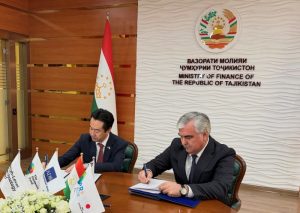 Tajikistan Secures $84.44 Million in Grants From ADB and JICA for Health, Social Insurance and Energy Projects
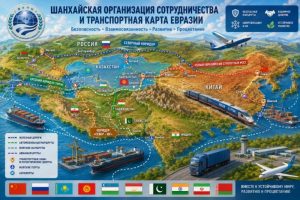 Tajikistan Seeks to Strengthen Transport Links Among SCO Member States
 Tajik Ambassador Presents Credentials to Algeria’s Foreign Minister
 Tajikistan and Kuwait Discuss Cooperation on Combating Transnational Crime
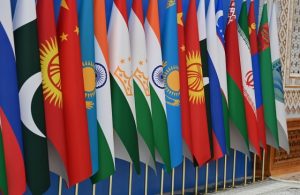 SCO Prime Ministers Gather in Dushanbe for 25th Council Meeting
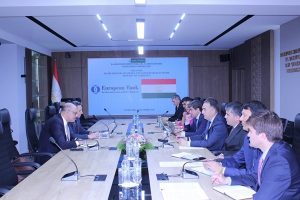 Tajikistan, EBRD Discuss Expanding Energy Cooperation and Hydropower Development