




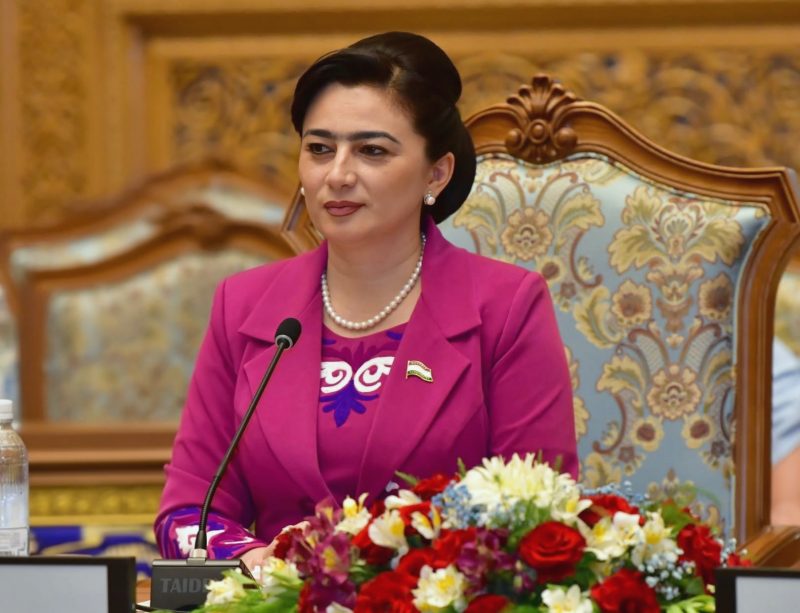
Mavsuma Muini: “Women Make a Significant Contribution to Tajikistan’s Parliamentary Diplomacy”
Read also
The independence and sovereignty of the state, attained after centuries of selfless struggle, arduous labor, and the tireless aspirations of our freedom-loving people, constitute an invaluable and supreme blessing. They have enabled the Tajik people to become the rightful masters of their own destiny and have allowed our society, as a democratic state, to integrate into the global historical process of humanity.
In the modern history of the Tajik people, the achievement of state independence became a key political event, marking the beginning of a new era in the revival of this nation, which has made a tremendous contribution to world civilization, and contributing to the development of its centuries-old traditions.
History has proven that for over a millennium, our people have relentlessly striven to reconstitute their national statehood.
Today, history itself has entrusted us with the mission of realizing the centuries-old aspirations of the Tajik people—to develop and strengthen an independent Tajikistan.
The path traversed by history has led to the majestic celebration of the 35th anniversary of State Independence, the seminal achievement of the Tajik people.
It is precisely owing to the firm will and devotion of the people of Tajikistan to their native land that this historical milestone has acquired a constructive character, laying a solid foundation for national statehood within the country.
An analysis of the acquisition of sovereignty and our socio-political trajectory demonstrates that the Republic of Tajikistan attained independence during a period of fundamental shifts in world politics. Despite the chaos and severe trials of those years, under the wise leadership of the Founder of Peace and National Unity—the Leader of the Nation, President of the Republic of Tajikistan, His Excellency Emomali Rahmon—the country confidently began building its statehood and shaping a sovereign foreign policy. Within the shortest possible time, Tajikistan succeeded in strengthening its position on the international stage. From the earliest days of independence, the unprecedented and unique contribution of the Head of State to establishing friendly diplomatic relations with various nations and authoritative international organizations has served as a solid foundation for Tajikistan’s integration into the global community.
Since attaining sovereignty, the Republic of Tajikistan has entered a qualitatively new phase of its development, characterized by the active formation of statehood, the consolidation of democratic foundations, and the extensive expansion of foreign policy contacts.
Over these years, Tajikistan, by pursuing a balanced, pragmatic foreign policy that aligns with the spirit of the 21st century, has succeeded in taking its rightful place and gaining significant authority within the global community of civilized nations.
State independence allowed Tajikistan to take its place on the world stage. It also served as a powerful impetus for formulating its own foreign policy strategy, establishing the national legislative body, and actively developing parliamentary relations at the international level.
Over the past 35 years, the supreme representative body of state power in the country—having traversed a path of transformation from the Supreme Soviet to the bicameral Majlisi Oli—has exerted significant efforts to build an effective system of interparliamentary cooperation with foreign nations, as well as with leading international and regional organizations.
In particular, from the moment of gaining independence until the adoption of the 1994 Constitution, during which time the Supreme Soviet possessed the plenitude of state power, the international and interstate relations of the republic were carried out predominantly through the active participation of the corps of deputies in intergovernmental and interparliamentary relations.
According to the 1994 Constitution, a presidential form of government was established in the Republic of Tajikistan, and the Majlisi Oli was founded as the supreme representative and legislative body of state power.
Occupying a key place in the system of separation of powers, the renewed parliament, through interparliamentary relations, made a worthy contribution to strengthening political, economic, cultural, and legal cooperation with countries around the world.
As the supreme legislative body of Tajikistan transformed into a permanent professional institution, the parliamentary diplomacy of the Majlisi Namoyandagon of the Majlisi Oli acquired the character of mature, independent representation. From that moment on, the international relations of the republic began to develop actively and directly at the level of the people’s representatives.
Through parliamentary diplomacy, it is also possible to effectively create opportunities for attracting investment, exchanging experience, resolving regional and global problems, and strengthening peace and security. In this regard, the Parliament of Tajikistan can play a key role not only as a legislative body but also as an active participant in the global community.
In the contemporary era, interparliamentary diplomacy serves as one of the priority tracks of the foreign policy of states. It allows for the strengthening of friendly ties and mutually beneficial cooperation between the supreme legislative bodies of countries, as well as the discussion of key regional and international issues at the level of people’s representatives. For the Republic of Tajikistan, which, after gaining independence, embarked on the path of building a legal, democratic, and secular state, the development of this form of dialogue has acquired particular significance.
In this context, the place and contribution of women to the parliamentary diplomacy of the Republic of Tajikistan represent one of the most relevant and significant issues for scientific research. Over the years of sovereignty, the women of the republic have actively participated in the political, social, and public life of the country, making, alongside men, a notable contribution to strengthening the foundations of statehood, developing parliamentarism, and expanding international ties. The presence of women within the Majlisi Oli, interparliamentary friendship groups, committees, official delegations, and international parliamentary organizations serves as vivid evidence of the consistent advancement of their status within the country’s political system.
It should be emphasized that the participation of women in interparliamentary diplomacy is not only a reflection of the principles of equal rights and opportunities but also a crucial indicator of the development of political culture and the strengthening of a democratic society. Through their active engagement, women parliamentarians make a significant contribution to shaping a positive image of Tajikistan, protecting national interests, developing international cooperation, and advancing the agenda related to peace, security, human rights, education, healthcare, and the institution of the family.
That is precisely why a comprehensive study of the role and contribution of women to the parliamentary diplomacy of the Republic of Tajikistan is of profound scientific and practical significance. This topic allows for a detailed analysis of women’s participation in the development of external parliamentary ties and international processes, as well as an assessment of the impact of their activities on strengthening the country’s authority on the global stage. This article is dedicated to researching this significant aspect and is designed to comprehensively shed light on the constructive role of women in the formation and development of Tajikistan’s interparliamentary relations over the years of independence.
Without exaggeration, it can be stated that the country’s independence has laid a solid foundation for the formation of a new system of statehood, the development of parliamentarism, and the large-scale expansion of foreign policy activities.
Today, in the name of progress across all key areas of societal life, Tajik women pursue successful careers within all branches of state power—legislative, executive, and judicial—and are also actively engaged in ministries, government agencies, and public associations.
The Leader of the Nation, President of the Republic of Tajikistan, His Excellency Emomali Rahmon, in his Address to the Majlisi Oli «On the Main Directions of the Domestic and Foreign Policy of the Republic» dated December 16, 2025, specifically emphasized: «We always highly value the role of the glorious women and girls of our Motherland in all vital spheres of the state and society, and we are proud of their efforts towards building a stable and prosperous future for the country.»
Thanks to the consistent implementation of state policy aimed at ensuring gender equality and advancing the status of women, female representatives of Tajikistan have been able to occupy rightful positions in the field of parliamentary diplomacy and international relations. Today, they make a notable contribution not only to the legislative process and representative activities but also to the positioning of the republic on the world stage, the protection of national interests, and the expansion of global cooperation.
From the earliest days of gaining sovereignty, the President of the Republic of Tajikistan, Leader of the Nation, His Excellency Emomali Rahmon, has paid special attention to the issue of women’s participation in political life and public administration. Under his leadership, solid institutional and legal foundations were created for their broad involvement in executive branch structures, the diplomatic corps, the judiciary, and, in particular, the supreme legislative body of the country.
It is precisely due to the pragmatic and peaceful «open door» policy of the Head of State that the Republic of Tajikistan is recognized globally as a reliable partner and the author of authoritative global initiatives. In this context, parliamentary diplomacy has transformed into one of the most effective instruments for strengthening interstate ties, to the development of which Tajik women parliamentarians make a significant and constructive contribution.
The Beginning of Women’s Participation in Parliamentary Diplomacy
The first convocation of the Majlisi Oli of the Republic of Tajikistan (1995–2000) carried out its activities under extremely difficult post-war conditions. It was during this very period that the foundations of the country’s parliamentary diplomacy were laid. Within the structure of the parliament, such women as Khusnoro Mirzoeva, Rafika Musoeva, Gulafzo Savriddinova, Kimmat Rustamova, and Adolat Rakhmonova actively worked. They made a worthy contribution to strengthening national unity, developing legislation, and restoring Tajikistan’s international ties.
At this stage, women began to participate actively in interparliamentary meetings and international events, thanks to which Tajikistan gradually established itself within the global community as an independent state. Despite the political and economic difficulties of the early years of independence, women parliamentarians succeeded in making a significant contribution to political dialogue and the restoration of trust on the international stage.
Strengthening the Role of Women Parliamentarians in International Relations
In the second convocation of the Majlisi Oli (2000–2005), the parliamentary diplomacy of Tajikistan entered a new stage of its development.
During this period, the participation of women in international parliamentary structures became noticeably more active. Within the Majlisi Milli, fruitful activities were carried out by Azizova Bibikhon, Boboeva Mavjuda Valievna, Kravchenko Nina Pavlovna, Muborakshoeva Nazarbegim, and Khojaeva Sanobar Hamidovna. A significant contribution to the work of the Majlisi Namoyandagon was made by women parliamentarians Savriddinova Gulafzo, Homidova Sanobar Abdulloevna, Uzoqova Zulfiya Anvarovna, Mahmadova Tojinisso Fayzalievna, Yusupova Mavluda Mirzoevna, Boboeva Layli Yokubjonovna, Rahimova Sanavbar Huseynovna, Samieva Ra’no Yah’yoevna, Murodova Munira Muminovna, and Nosirova Mehrinisso Teshaevna.
Of great importance for increasing the international authority of the country was the activity of Gulafzo Savriddinova in the post of Deputy Chairman of the Majlisi Namoyandagon and Vice President of the National Parliamentary Group of Tajikistan in the Inter-Parliamentary Union. The active work of other women parliamentarians in international organizations also contributed to the development of interparliamentary and economic cooperation. Among them were Sanobar Homidova—Deputy Chairman of the Permanent Commission of the Interparliamentary Assembly of Member Nations of the CIS on Economy and Finance; Sanavbar Rahimova—Member of the General Committee on Economic Affairs, Science, Technology and Environment in the OSCE Parliamentary Assembly; and Zulfiya Uzoqova—Member of the National Group of the Parliament of Tajikistan in the Parliamentary Union of the OIC Member States.
The Expansion of Women’s Parliamentary Diplomacy
In 2005–2010, within the Majlisi Oli, Oyniso Bakhronova, Boboeva Mavjuda Valievna, Gulomshoeva Qobilamo Kanovna, and Yoqubova Muhiba Bobokhonova carried out their activities as members of the Majlisi Milli, while Hasanova Shujoat Hasanovna (Deputy Chairman of the Majlisi Namoyandagon), Nuritdinova Mahbuba Sirojiddinovna, Bozorova Gulchehra Tursonovna, Uzoqova Zulfiya Anvarovna, Mahmadova Tojinisso Fayzalievna, Karimova Ra’no Boboevna, Khidirova Makhfirat Umarovna, Davletalieva Zuurakan Shamshievna, Sharipova Latofat, Hakimova Khadicha Fathulloevna, and Rabieva Galiya Rabievna served as deputies of the Majlisi Namoyandagon.
During this period, the participation of women parliamentarians in international diplomacy expanded even further. In particular, at international forums and conferences, they raised issues of security, social development, women’s rights, and peacebuilding, presenting Tajikistan’s experience in strengthening national unity.
Shujoat Hasanova, in her capacity as Deputy Chairman of the Majlisi Namoyandagon and Head of the National Group of the Republic of Tajikistan in the Association of Asian Parliaments for Peace, represented Tajikistan at international meetings. Alongside her, other women parliamentarians contributed to the development of the parliament’s international cooperation, including Mahbuba Sirojiddinovna Nuritdinova—Member of the country’s National Group in the IPU; Bozorova Gulchehra Tursonovna—Deputy Chairman of the Permanent Commission of the CIS Interparliamentary Assembly on Economy and Finance; Tojinisso Fayzalievna Makhmadova—Member of the Group for Cooperation between the Majlisi Namoyandagon and the European Parliament; Zuurakan Shamshievna Davletalieva—Member of the Permanent Commission of the EurAsEC Interparliamentary Assembly on Social Policy; and Hakimova Khadicha Fathulloevna—Member of the Group for Cooperation between the Majlisi Namoyandagon and the European Parliament, among others.
Elevating the Status of Women in Parliamentary Diplomacy
The period of 2010–2015 (the fourth convocation) became a qualitatively new stage in women’s participation in parliamentary diplomacy. During this time, the country’s parliament not only improved the republic’s legislative system in all areas but also took confident steps toward integration into a single international legal space.
An important role in strengthening foreign policy ties was played by Gaffarova Nazira Abdulloevna, who held the post of Deputy Chairman of the Majlisi Namoyandagon. Active participation in international events was also taken by such women parliamentarians as Jaborova Markhabo Tukhtasunovna, Khairiniso Yusufi, Hakimova Khadicha Fathulloevna, Amirshoeva Saodat, Kenjaeva Munavara Hodievna, Avzalshoeva Bibidavlat Askarshoevna, Samatova Maqsuda Abdugafurovna, Khidirova Makhfirat Umarovna, Muqumova Sabohat Aminovna, Rabieva Galiya Rabievna, and Turdimatova Nodira Mirzoalievna.
It was precisely at this stage that the participation of women parliamentarians intensified in the meetings of the Inter-Parliamentary Union, the OSCE Parliamentary Assembly, the CIS Interparliamentary Assembly, and the CSTO Parliamentary Assembly. Issues of gender equality, sustainable development, and regional security invariably remained at the center of their attention.
On May 11, 2011, in the city of Minsk, Republic of Belarus, a working meeting was held for the heads of the parliamentary groups of the member states of the Collective Security Treaty Organization within the Parliamentary Assembly of the Organization for Security and Co-operation in Europe. Tajikistan was represented there by the Deputy Chairman of the Majlisi Namoyandagon, Nazira Gaffarova. The meeting addressed pressing issues, including the threat of extremist activity, information warfare, the need to coordinate foreign policy activities within the framework of the UN and the SCO, as well as the creation of a military-economic structure. Following the meeting, appropriate decisions were adopted.
Also, on May 23, 2012, Marhabo Jabborova, Chairman of the Committee of the Majlisi Namoyandagon on Science, Education, Culture and Youth Policy, took an active part in the meeting of the Permanent Commission of the Interparliamentary Assembly of Member Nations of the CIS on Science and Education, held in the Republic of Moldova. During the meeting, she exchanged views during discussions of issues related to the following projects: the model Innovation Code for the CIS Member States; the model laws «On Training Specialists Taking into Account Market Demands,» «On National Parks,» and «On the Responsibility of Participants in the Educational Process»; as well as the analysis of the progress of implementation of the plan for model lawmaking in the CIS for 2011–2015.
An analysis of the parliamentary ties of the fourth convocation of the Majlisi Namoyandagon of the Majlisi Oli of the Republic of Tajikistan shows that its international activity was predominantly aimed at expanding cooperation with the parliaments of the CIS countries and far-abroad states, as well as at the ratification of international agreements and joint projects.
Thus, thanks to new areas and forms of work, constant activity and initiatives in various spheres, as well as the growth of professionalism in legislative activity and parliamentary diplomacy, the women parliamentarians of the fourth convocation of the Majlisi Namoyandagon made a significant contribution to the development of Tajik parliamentarism.
Active Participation in Addressing Global Issues
In the fifth convocation (2015–2020), the role of women in the international activity of the parliament strengthened even further. Khairiniso Yusufi, in her capacity as Deputy Chairman of the Majlisi Namoyandagon, conducted extensive international activities. Tajikistan was also represented at high-level events by such women parliamentarians as Rajabova Lutfiya Nusratovna, Qurbonzoda Hilolbi Jumakhon, Qalandarzoda Mavluda Sattori, Sodiqi Nasiba Nurullozoda, Mirzozoda Mavludakhon Zayni, Naziri Gulbahor Nazir, Avzalshoeva Bibidavlat Askarshoevna, Boboeva Gulnora Islomovna, Qodirova Musallam Asomiddinovna, Ashurzoda Gulbahor Sangillo, Shamsiddinzoda Mavzuna Shamsiddin, Mansuri Dilrabo Saydullo, and Sharifi Firuza Burikhonzoda.
During this period, women parliamentarians promoted issues of water and climate, countering terrorism, migration, human rights, and sustainable development at international forums. Representatives of the parliament took an active part in Eurasian Women’s Forums, international conferences of the United Nations, and other high-level summits, presenting Tajikistan’s experience in the implementation of gender and peacebuilding policies.
In particular, of great importance was the participation of the delegation of the Majlisi Namoyandagon under the leadership of the Deputy Chairman of the Majlisi Namoyandagon, Khairiniso Yusufi, in the Second Eurasian Women’s Forum in the city of St. Petersburg. This forum addressed issues of sustainable development, gender equality, women’s access to governance, and their role in ensuring peace. The presentation of the «Public Recognition» international award to Khairiniso Yusufi serves as evidence of the recognition of Tajik women’s activities at the international level.
In connection with the proposal of the Asian Forum of Parliamentarians on Population and Development (AFPPD), the National Committee on Population and Development was established under the Majlisi Namoyandagon of the Majlisi Oli of the Republic of Tajikistan in 2014 (the fourth convocation, for 2014–2015, and in 2015 for 2015–2020, the fifth convocation); it continues to function to this day under the leadership of a Deputy Chairman of the Majlisi Namoyandagon (from among the women). The purpose of establishing the Committee is to strengthen cooperation on population and development issues among parliamentarians, government structures, public organizations, and civil society for the further implementation of the goals of the International Conference on Population and Development (ICPD).
In 2016, upon the proposal of the leadership of the Asian Forum of Parliamentarians on Population and Development (AFPPD), the Republic of Tajikistan was elected as Co-Chair of the Standing Committee of the Asian Forum of Parliamentarians on Population and Development on Investing in Youth, the leadership of which was entrusted to the Deputy Chairman of the Majlisi Namoyandagon of the Majlisi Oli of the Republic of Tajikistan, Khairiniso Yusufi.
From February 28 to March 2, 2019, a parliamentary delegation of the country, under the leadership of the Deputy Chairman of the Majlisi Namoyandagon of the Majlisi Oli of the Republic of Tajikistan, Khairiniso Yusufi, was dispatched to the city of St. Petersburg, Russian Federation, to participate in the Third International Labour Forum, where she delivered a report on the initiatives and measures implemented by sovereign Tajikistan.
The main objectives of establishing interparliamentary cooperation in the fifth convocation of the Majlisi Namoyandagon of the Majlisi Oli of the Republic of Tajikistan consisted of implementing interstate treaties, studying advanced lawmaking experience, developing friendly relations, and creating a regulatory and legal framework for mutually beneficial bilateral and multilateral partnership.
At this historical stage, the women parliamentarians of the Majlisi Namoyandagon carried out significant work to strengthen ties with the parliaments of foreign states and authoritative international organizations, which contributed to the further promotion and enhancement of the foreign policy of the Republic of Tajikistan.
A New Stage in the Development of Women’s Parliamentary Diplomacy
In the sixth convocation (2020–2025) of the Majlisi Namoyandagon of the Majlisi Oli of the Republic of Tajikistan, the international activity of women parliamentarians expanded even further, and their role in strengthening parliamentary diplomacy and representing the country on the world stage became highly prominent. This stage is a logical continuation of the state policy of the Republic of Tajikistan aimed at elevating the status of women and involving them in governance.
The women parliamentarians of the sixth convocation prioritized the development of international cooperation and the expansion of interparliamentary ties. They viewed this format of work, which has become a genuine embodiment of parliamentary diplomacy, as the foundation for progress, friendship, and integration between countries.
The sixth convocation of the Majlisi Namoyandagon is considered one of the most active periods in the development of interparliamentary ties. During this time, the participation of women in the parliament’s international activities, interparliamentary dialogues, and engagement with regional and global organizations reached a qualitatively new level.
At this stage, Dilrabo Saidullo Mansuri, in her capacity as Deputy Chairman of the Majlisi Namoyandagon in 2020–2024, and Muini Mavsuma Muinzoda, in 2024–2025, made a significant contribution to strengthening international relations and expanding interparliamentary cooperation. They represented Tajikistan at international meetings and forums, playing an active role in promoting the peaceful and constructive policy of the Republic of Tajikistan.
Along with participating in high-level meetings and summits, women parliamentarians also took part as coordinators and observers during important political campaigns abroad, such as presidential and parliamentary elections, as well as constitutional referendums in foreign states.
Thus, the Deputy Chairman of the Majlisi Namoyandagon of the Majlisi Oli of the Republic of Tajikistan, Dilrabo Mansuri, took an active part in the work of the international observer mission during the monitoring of the early presidential elections in the Republic of Kazakhstan, which took place on November 20, 2022. As the head of the monitoring group of the Interparliamentary Assembly of Member Nations of the CIS, she, within the framework of the mission’s activities, held a meeting jointly with the Secretary General of the IPA CIS Council, Dmitry Kobitsky, with the Deputy Minister of Foreign Affairs of the Republic of Kazakhstan, Yermukhambet Konuspayev. During the meeting, the parties discussed issues related to the organization of the electoral process and the results of international observers’ visits to polling stations.
Also, within the sixth convocation, such women parliamentarians as Tagoizoda Sumangul Said, Sodiqi Nasiba Nurullozoda, Surayo Dustmurodzoda, Mirzozoda Mavludakhon Zayni, Naziri Gulbakhor Nazir, Shamsiddinzoda Mavzuna Shamsiddin, Abdulkholiqzoda Lutfiya Abdulkholiq, Malikzod Parvina Inoyatullo, Ashurzoda Gulbahor Sangillo, Majidzoda Sarvinoz Komil, Bobojoniyon Ranokhon Mahmudzoda, Odinazoda Husnigul Rajab, Abdusalomzoda Munavvar Aliakbar, Javhari Mujibakhon Odil, Qosimzoda Idigul Tago, Sharofzoda Gavhar, Kholmahmadzoda Soleha, and Ayubi Bibiosiya Oimahmadzoda carried out their activities, making a significant contribution to the development of parliamentary diplomacy and the strengthening of international ties.
A number of events of international significance can be highlighted that played a key role in the development of parliamentary diplomacy.
In particular, on May 15, 2023, the tenth meeting of the Parliamentary Cooperation Committee between the Republic of Tajikistan and the European Union was held in the capital city, under the chairmanship of the Deputy Chairman of the Majlisi Namoyandagon, Dilrabo Mansuri, and the co-chairmanship of the Head of the European Parliament delegation, Andris Ameriks. This meeting addressed issues concerning the political situation, progress in cooperation between the European Union and the Republic of Tajikistan, regional security, as well as other agenda items.
On March 17–20, 2024, a parliamentary delegation of Tajikistan, under the leadership of the Deputy Chairman of the Majlisi Namoyandagon of the Majlisi Oli, Chairman of the Committee on Interparliamentary Cooperation between Tajikistan and the European Union, visited the city of Brussels, Kingdom of Belgium. The delegation took part in and represented Tajikistan at the round table titled «Tajikistan: Global Initiatives and the Process of Democratic Reforms.» The event was organized upon the initiative of the Embassy of the Republic of Tajikistan to the Kingdom of Belgium and was held under the chairmanship of Tomáš Zdechovský, Head of the European Parliament Delegation for Relations with the Countries of Central Asia and Mongolia, representative of the European People’s Party (the ruling party in the European Parliament), as well as under the co-chairmanship of the Deputy Chairman of the Majlisi Namoyandagon of the Majlisi Oli of the Republic of Tajikistan, Mavsuma Muini.
This event, held in the European Parliament building, was attended by members of various factions of the European Parliament: Tomáš Zdechovský (representative of Czechia), Andris Ameriks (representative of Latvia), Thierry Mariani (representative of France), and Katarína Roth Neveďalová (representative of Slovakia).
The meeting was also attended by the Deputy Chief of the United Nations Office for Disaster Risk Reduction Regional Office (UNDRR Regional Office for Europe and Central Asia), Sébastien Penzini; the Head of Division of the European External Action Service of the European Union, Dietmar Krissler; experts, including representatives of the European Parliament; and journalists.
The round table highlighted the achievements of sovereign Tajikistan and noted the exceptional role of the Leader of the Nation, President of the Republic of Tajikistan, His Excellency Emomali Rahmon, in the process of establishing a secular, democratic, and rule-of-law state, as well as in the development of all spheres of life and the implementation of Tajikistan’s strategic initiatives.
Within the framework of the visit, numerous bilateral meetings were organized with high-ranking officials of the Parliament of Belgium and representatives of European Union structures. In particular, meetings were held with the Vice-President of the European Commission, Margaritis Schinas; the Vice-President of the European Parliament, Heidi Hautala; and the First Deputy Speaker of the Senate of Belgium, Andries Gryffroy. In addition, a meeting of the parliamentary delegation of Tajikistan, jointly with the interparliamentary friendship group of the two states under the leadership of Tim Vandenput, took place in the House of Representatives of the Kingdom of Belgium.
From May 13 to 15, 2024, a delegation of women parliamentarians led by the Deputy Chairman of the Majlisi Namoyandagon, Mavsuma Muini, took part in the first Asian Women’s Forum, which was held in Samarkand. The theme of the forum was «Regional Cooperation in Expanding Women’s Economic, Social, and Political Rights and Opportunities.» Within the framework of the event, bilateral meetings were held with the Chairman of the Senate of the Oliy Majlis of Uzbekistan, Tanzila Narbaeva; the Chairman of the Legislative Chamber of the Oliy Majlis of the Republic of Uzbekistan, Nuriddin Ismoilov; and the Deputy Speaker of the Shura Council of the State of Qatar, Hamda bint Hassan Al-Sulaiti. These meetings were of great importance for strengthening mutually beneficial cooperation in the legislative and socio-economic spheres between the respective states.
On June 10–11, 2024, within the framework of the Third High-Level International Conference on the International Decade for Action «Water for Sustainable Development, 2018–2028,» the country’s parliament organized an International Parliamentary Forum titled «Water Resources and Demographic Resilience for Youth.» This event served as an important platform for expanding international dialogue on water resources, youth policy, gender equality, and sustainable development.
The forum was attended by parliamentarians from more than 20 countries, at the level of parliamentary chairpersons, deputy chairpersons, and committee and commission chairpersons, including Malaysia, Japan, Turkey, Kazakhstan, Turkmenistan, Uzbekistan, Pakistan, Belarus, Azerbaijan, Georgia, Armenia, Austria, Bosnia and Herzegovina, Moldova, Nepal, Romania, and others.
The discussion focused on issues of women’s empowerment, youth, gender equality, demographic stability, poverty, water scarcity and climate change, as well as solutions for realizing women’s full potential through family policy, strengthening partnerships, and accelerating action to achieve the 2030 Agenda.
Thus, during this period, female deputies of the sixth convocation of the Majlisi Namoyandagon actively participated in the activities of the Interparliamentary Assembly of Member Nations of the Commonwealth of Independent States (IPA CIS), the Inter-Parliamentary Union (IPU), the OSCE Parliamentary Assembly, the Parliamentary Union of the OIC Member States (PUIC), and other influential organizations. They consistently represented Tajikistan’s position in addressing issues of security, countering terrorism and extremism, climate change, environmental protection, sustainable development, human rights advocacy, and gender equality.
At the same time, the deputies of the Majlisi Namoyandagon played an active role in ratifying key international agreements, treaties, and conventions. Thanks to the consistent implementation of the Republic of Tajikistan’s «open-door» foreign policy, interparliamentary relations with various countries around the world reached a new level, and the contribution of female deputies to strengthening mutual trust and international cooperation became highly significant.
The Seventh Convocation (2025–2030): Continued Development of Women’s Parliamentary Diplomacy
In the context of globalization, cooperation with international and interparliamentary organizations, as well as with neighboring and distant countries, demands an increasingly serious approach and a broader perspective, despite the results already achieved.
Today, the foreign policy of the Republic of Tajikistan, which has spanned more than a quarter-century of independent development, assigns a special place to bilateral relations and multilateral cooperation. The necessity of the Republic of Tajikistan’s participation in the activities of international organizations and world-class events is driven by the country’s commitment to strengthening international security and stability.
During the seventh convocation, the Parliament of the Republic of Tajikistan has infused its foreign policy activities with a qualitatively new substance. Serving as a reliable pillar for both the executive branch and civil society, the professional parliament makes a valuable contribution to representing the country on the international stage, steadily elevating the prestige of the Tajik state.
To this end, the Majlisi Milli, under the leadership of the Honorable Rustam Emomali, and the Majlisi Namoyandagon, under the leadership of the Honorable Idizoda Faizali Fuzailsho, constantly strive to increase their contribution to protecting national interests and promoting the country’s peaceful policy on the world stage.
Thanks to the creation of favorable conditions and comprehensive state support, the participation of women in legislative activities and parliamentary diplomacy has reached a qualitatively new level in the seventh convocation of the Majlisi Namoyandagon, and their contribution to shaping Tajikistan’s foreign policy image has significantly strengthened.
Within the seventh convocation, a substantial contribution to international activities and the development of parliamentary diplomacy is made by such female deputies as Muini Mavsuma Muinzoda, Saidvalizoda Barno Saidnabi, Javhari Mujibakhon Odil, Imomzoda Nilufar Muhammadyusuf, Surayo Dustmurodzoda, Ahmadzoda Dilnoza Davronali, Majidzoda Sarvinoz Komil, Murodullozoda Dilnoza Murodullo, Solizoda Naima Shodiboy, Boboiyon Madina Abduyaqinzoda, Sharifzoda Nigina Umar, Ishoqi Husniya Davlatali, Qiyomzoda Zarafo Sufijon, Khojazoda Farzona Hamdam, Musojonzoda Jamila Mansur, Abdusalomzoda Munavvar Aliakbar, Ayubi Bibiosiya Oimahmadzoda, and Saidi Dilafruz Rabbizoda.
The female deputies of the seventh convocation of the Majlisi Namoyandagon include highly qualified specialists: scientists, lawyers, economists, educators, journalists, and representatives of other fields. Their high intellectual potential is reflected in the fact that one deputy holds a Doctor of Sciences degree, and ten hold Candidate of Sciences degrees.
Notably, among the female deputies of the seventh convocation, Barno Saidvalizoda holds the high special rank of Major General of the Militia.
Furthermore, within the seventh convocation, one woman serves as Deputy Chairman of the Majlisi Namoyandagon of the Majlisi Oli of the Republic of Tajikistan, two serve as committee chairpersons, and four as deputy committee chairpersons, playing a vital role in drafting and refining national legislation, as well as in strengthening interparliamentary relations.
These include:
- Muini Mavsuma Muinzoda—Deputy Chairman of the Majlisi Namoyandagon of the Majlisi Oli of the Republic of Tajikistan;
- Saidvalizoda Barno—Chairman of the Committee on Science, Education, Culture, and Youth Policy;
- Javhari Mujibahon Odil—Chairman of the Committee on Social Issues, Family, and Health Protection;
- Imomzoda Nilufar Muhammadyusuf—Deputy Chairman of the Committee on Legislation and Human Rights;
- Ahmadzoda Dilnoza Davronali—Deputy Chairman of the Committee on Law and Order, Defense and Security;
- Dustmurodzoda Surayo—Deputy Chairman of the Committee on International Affairs, Public Associations, and Information;
- Majidzoda Sarvinoz Komil—Deputy Chairman of the Committee on Social Issues, Family, and Health Protection.
The increase in the number of female deputies in the highest representative and legislative bodies over the past three decades—from five individuals (or 2.75%) in 1995 to eighteen individuals (or 28.6%) in the current convocation—demonstrates the successful implementation of gender policy in Tajikistan and the active inclusion of women in the political and public life of the country.
Within the seventh convocation, the Group (Association) of Women of the Majlisi Namoyandagon of the Majlisi Oli of the Republic of Tajikistan operates under the Deputy Chairman of the Majlisi Namoyandagon. It was established to strengthen the role of women in the socio-political life of the country, as well as to ensure the active participation of female deputies in various forums and events dedicated to gender issues, healthcare, legislative drafting, and advancing the status of women in society. This Group (Association) has established close cooperation with female representatives of foreign parliaments to exchange experience in lawmaking and to further engage women in socio-political processes.
The Association (Group) of Women of the Majlisi Namoyandagon is a voluntary parliamentary association that promotes empowerment and advances the status of women in Tajikistan, supports their comprehensive participation in socio-political life, and enhances the capacity and leadership development of female deputies.
Currently, female deputies of the Majlisi Namoyandagon are members of various international bodies, including the Parliamentary Assembly of the Organization for Security and Co-operation in Europe (OSCE PA), the Parliamentary Assembly of the Collective Security Treaty Organization (CSTO PA), the Asian Parliamentary Assembly (APA), the Parliamentary Union of the OIC Member States (PUIC), the «Republic of Tajikistan–European Union» Inter-Parliamentary Cooperation Committee, the Asian Forum of Parliamentarians on Population and Development (AFPPD), and the Interparliamentary Assembly of Member Nations of the Commonwealth of Independent States (IPA CIS). In addition, they are actively involved in the work of permanent commissions and international councils on ecology, healthcare, and environmental protection, and are members of the Majlisi Namoyandagon friendship groups with the parliaments of 70 nations worldwide, participating in their activities on a permanent basis.
The Deputy Chairman of the Majlisi Namoyandagon directly heads two national groups within influential international bodies: the Group of Deputies to the Asian Parliamentary Assembly and the Group for Cooperation with the European Parliament. In addition, eleven female deputies lead seventeen friendship and cooperation groups with the parliaments of foreign countries, including Uzbekistan, Belgium, France, India, Georgia, Latvia, Lithuania, Romania, Croatia, Greece, Mongolia, Cuba, Bahrain, and others. Through their multifaceted activities, they contribute on a permanent basis to strengthening bilateral and multilateral political, economic, cultural, and humanitarian cooperation.
A significant international recognition was the election of the Deputy Chairman of the Majlisi Namoyandagon as the head of the newly established Committee on Climate Issues during the 15th General Assembly of the Asian Forum of Parliamentarians on Population and Development (AFPPD), held on April 27, 2025, in Kuala Lumpur, Malaysia. This step served as clear evidence of the high trust and respect of the global community toward the global initiatives of the Republic of Tajikistan.
Alongside their activities in interparliamentary friendship groups, Tajik female deputies actively participate in international conferences and high-level official meetings. On these influential platforms, they consistently advocate for the country’s positions on pressing global issues, including sustainable development, regional security, the protection of women’s rights, migration processes, and countering climate change.
In particular, on September 15, 2025, the 12th meeting of the «Republic of Tajikistan–European Union» Inter-Parliamentary Cooperation Committee was held in the new building of the Parliament of Tajikistan. The meeting was co-chaired by the Deputy Chairman of the Majlisi Namoyandagon, Mavsuma Muini, and the Head of the European Parliament Delegation for relations with the countries of Central Asia (DCAS), Giuseppina Princi. During the meeting, the prospects for bilateral political, economic, and socio-cultural cooperation were discussed.
Furthermore, on September 19–20, 2025, the parliamentary delegation participated in the official closing ceremony of the OSCE initiative «Young Women for Peace: Empowering Young Women in Central Asia» in Vienna, Austria. During the event, representatives of Tajikistan delivered reports on the contribution of Tajik women to promoting peace and constructive dialogue, as well as on their active participation in the country’s public and political life.
As part of the visit, meetings were also held between the leadership of the Majlisi Namoyandagon of the Majlisi Oli of the country and the Vice-President of the OSCE Parliamentary Assembly, Ms. Gudrun Kugler; the Head of the «Austria–Central Asia and Mongolia» Inter-Parliamentary Friendship Group, Ms. Henrike Brandstötter; and the Director of the Conflict Prevention Centre of the OSCE Secretariat, Ms. Kate Fearon. During these meetings, the parties expressed mutual interest in strengthening interparliamentary interaction, expanding cooperation with the OSCE, and developing other priority areas. The need to take effective measures to implement the goals and provisions of intergovernmental and international documents signed to date was also emphasized.
On March 30–April 1, 2026, the Deputy Chairman of the Majlisi Namoyandagon of the Majlisi Oli of the Republic of Tajikistan, Mavsuma Muini, and a member of the Committee of the Majlisi Namoyandagon on Legislation and Human Rights, Dilnoza Murodullozoda, participated in and delivered speeches at the first «Central Asia–European Union» Interparliamentary Forum, held in Samarkand, Republic of Uzbekistan.
The forum’s work proceeded in three panel sessions covering topics such as the current state of political dialogue between Central Asia and the European Union; the role of parliamentary diplomacy in building trust and developing sustainable cooperation and partnership in investment, economic, and environmental spheres; transport and communication links; the region’s green transition; the rule of law; and the role of parliaments in strengthening democratic institutions, ensuring human rights, and fostering a secure digital space and inclusive governance. The event was attended by members of parliaments from European nations, Kazakhstan, Kyrgyzstan, Tajikistan, Turkmenistan, and Uzbekistan, as well as international experts and media representatives, who thoroughly examined various aspects of the forum’s agenda and exchanged views.
During the visit to the city of Samarkand, the delegation of the Parliament of Tajikistan held a meeting with the First Deputy Chairman of the Senate of the Oliy Majlis of the Republic of Uzbekistan, Sodik Safoev. During the meeting, the parties exchanged views on key issues of interstate and interparliamentary cooperation between Tajikistan and Uzbekistan, paying special attention to establishing interaction in the exchange of experience regarding legislative improvement, parliamentarism, as well as mutual socio-economic and trade development.
Interparliamentary cooperation with Turkey, the Russian Federation, China, the United States of America, Kazakhstan, Uzbekistan, Iran, India, France, Germany, Japan, the Republic of Korea, Belgium, and other states continues to develop consistently.
It is worth noting that during 2025 and the first five months of 2026 alone, within the framework of the seventh convocation, more than 28 productive bilateral meetings were held by the Deputy Chairman of the Majlisi Namoyandagon, Mavsuma Muini, together with other deputies. These meetings took place with high-level parliamentary delegations from the European Union, Belgium, France, Germany, Austria, Finland, and Malaysia, as well as with representatives of the OSCE Parliamentary Assembly (OSCE PA). Furthermore, meetings were conducted with representatives of the Regional Office of the United Nations High Commissioner for Human Rights (OHCHR) in Central Asia, the UN Resident Coordinator in Tajikistan, the leadership of UN agencies in Tajikistan and the region (United Nations Population Fund—UNFPA, UNICEF, UN Women), as well as with the leadership of the OSCE Programme Office in Dushanbe, the Director of the Conflict Prevention Centre of the OSCE Secretariat, and the Editor-in-Chief of the international magazine Diplomatic World. During these meetings, the parties exchanged views on strengthening parliamentary diplomacy and expanding cooperation in the fields of security, economy, social protection, science and education, culture, entrepreneurship and investment, industry, digital technologies, human rights, and other priority areas.
The international activities of the female deputies of the seventh convocation clearly demonstrate that today, Tajikistan’s parliamentary diplomacy is inconceivable without their active participation. Serving as independent political and diplomatic figures, women parliamentarians make a significant contribution to the implementation of the foreign policy course of the Republic of Tajikistan and ensure the prestigious representation of the state on the global stage.
The International Role of Women and Tajikistan’s Gender Policy
It is important to emphasize that over the years of independence, the Republic of Tajikistan has acceded to a number of fundamental international instruments on the protection of women’s rights, aligning its domestic and foreign policies with universally recognized international norms. The election of Tajikistan as a member of the UN Commission on the Status of Women, alongside the successful implementation of national action plans for the execution of UN Security Council Resolution 1325 («Women, Peace and Security»), serves as a clear example of the state’s particular attention to the participation of women in peacebuilding and global security processes.
Female deputies and representatives of civil society play a key role in achieving these strategic goals. They maintain a firm and proactive stance in international discussions dedicated to regional security, social development, human rights protection, climate change adaptation, as well as combating contemporary challenges and threats.
Conclusion
An analysis of the activities of various convocations of the Parliament of Tajikistan shows that Tajik female deputies, possessing a high sense of responsibility and a profound national identity, play an important role in the development of parliamentary diplomacy, the strengthening of international relations, and the representation of the Republic of Tajikistan on the global stage.
Their participation in forums, conferences, interparliamentary meetings, and official delegations contributes to enhancing the country’s international prestige and demonstrates that Tajik women possess an advanced political outlook, a high diplomatic culture, and the capacity for effective representation at the international level.
Without exaggeration, it can be emphasized that, thanks to the far-sighted and wise policy of the Founder of Peace and National Unity—the Leader of the Nation, President of the Republic of Tajikistan, His Excellency Emomali Rahmon—Tajik women during the period of state independence have become an important constructive, intellectual, cultural, political, and social force in society. They make a significant contribution not only to strengthening the foundations of national statehood but also to shaping a positive image of the Republic of Tajikistan on the international stage. Today, the Tajik woman acts not merely as a participant in political processes but as an active, thinking, and responsible agent of public life, a bearer of national values and a culture of peace, dialogue, and constructive cooperation.
In his address at the first meeting of the first session of the Majlisi Namoyandagon of the Majlisi Oli of the Republic of Tajikistan of the seventh convocation on March 19, 2025, the Leader of the Nation noted: «Strengthening the interparliamentary cooperation of the country’s legislative body and expanding bilateral and multilateral interaction with near and far states for the purpose of legislative development is a good practice. Alongside this, deputies must remain constantly aware of contemporary economic, social, political, and cultural processes and keep pace with the times.»
In this context, Tajikistan’s interparliamentary diplomacy is impossible without the active participation and practical contribution of women. Operating in line with the constructive and humanistic policy of the Leader of the Nation, and relying on their knowledge, experience, and high level of political responsibility, Tajik female deputies make a significant contribution to strengthening the peaceful and constructive foreign policy stance of the Republic of Tajikistan. Their activities on interparliamentary platforms reflect the development of parliamentarism, the expansion of equal opportunities, and the enhancement of society’s political culture, while also contributing to the strengthening of the country’s international prestige.
State independence and the consistent policy aimed at enhancing the status of women in society, pursued under the leadership of the Leader of the Nation, have ensured the creation of new opportunities for women’s self-realization and their active participation in public administration. Under the conditions of independence, women have gained a real opportunity to direct their intellectual, political, and social potential toward protecting national interests, strengthening the country’s international prestige, and promoting the ideas of peace, friendship, and interstate cooperation.
Thus, the contribution of women to the parliamentary diplomacy of the Republic of Tajikistan represents not only a political reality but also an important historical and state-significant phenomenon, the importance of which in strengthening the country’s statehood and international image increases year by year.
Mavsuma Muini,
Deputy Chairman of the Majlisi Namoyandagon of the Majlisi Oli of the Republic of Tajikistan,
PhD in History
 Tajikistan, EBRD Discuss Expanding Energy Cooperation and Hydropower Development
 Tajikistan, China Sign Five Cooperation Agreements During Li Qiang’s Visit
 Tajikistan Discusses Economic Cooperation With International Financial Institutions in Bangkok
 Iranian Film Days Open in Dushanbe as Part of Toji Somon Film Awards
 Tajikistan’s Central Bank Chief Discusses Monetary Policy Amid Global Economic Uncertainty in Thailand
 Tajikistan Participates in CIS Defense Ministers’ Meeting in Kyrgyzstan
 Tajikistan, Sri Lanka Discuss Bilateral Cooperation on Sidelines of CICA Summit
 Tajikistan Reviews Progress on State Greening Program Through 2040
 Tajikistan to Host U.N.-Backed Peace Conference in Dushanbe in May 2027
 G10 Insight Forum 2026 Opens in Dushanbe to Explore Business and Investment Opportunities
 Tajikistan and Kazakhstan Railways Agree to Boost Freight Transport Cooperation
 Tajikistan Signs 23 Cooperation Agreements Worth $3.1 Billion at Entrepreneurship Forum