







Tajikistan Steps Up Efforts to Combat Extremism and Cybercrime
Read also
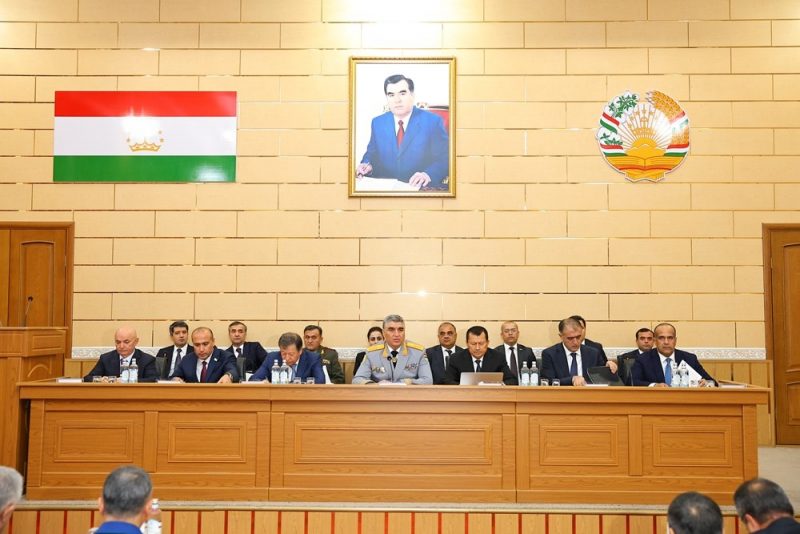
On Nov. 4, 2026, Coordination Council of Law Enforcement Agencies of Tajikistan held a regular meeting at the Prosecutor General’s Office to discuss the implementation of directives issued by President of Tajikistan Emomali Rahmon.
The meeting was chaired by Prosecutor General Vohidzoda Habibullo Saidullo, a colonel-general of justice and chairman of the council.
The agenda included two issues. The first focused on the findings of inspections and analyses of extremist and terrorist crimes, including cases involving pupils and students at educational institutions across the country from 2021 to 2025, as well as measures to prevent such offenses.
The second addressed the detection, registration and investigation of crimes committed using computer technology, the internet and social media in 2025 and the first half of 2026. Participants also reviewed court proceedings in these cases and measures to prevent cybercrime.
The meeting was attended by council members, heads of relevant ministries and agencies, representatives of commercial banks, mobile network operators and internet service providers, as well as officials from the Prosecutor General’s Office and other law enforcement agencies.
Participants noted that Tajikistan had made significant progress since gaining independence in developing its information environment, expanding internet access, introducing digital technologies and public services, and strengthening information security.
However, they said the rapid development of digital technologies had also created new risks, including cybercrime, online fraud and the theft of citizens’ funds. Such offenses increasingly have a transnational dimension and often remain undetected.
Particular attention was given to preventing online fraud, protecting funds held in bank cards and electronic wallets, safeguarding personal data, strengthening information security, and preventing the recruitment of citizens into terrorist groups through the internet.
The meeting also noted that, despite a decline in registered terrorist and extremist offenses in recent years, cases of citizens, particularly young people, pupils and students, joining terrorist and extremist organizations remain a concern. Participants stressed that declining crime statistics do not mean the threats have been eliminated and called for continued preventive efforts.
They also emphasized the need to improve efforts to locate individuals wanted in connection with terrorist and extremist offenses.
In this regard, participants highlighted the importance of strengthening operational and investigative activities, improving the exchange of information and enhancing cooperation among relevant agencies. They also called for examining the causes and circumstances behind each case of recruitment into terrorist and extremist organizations and taking targeted measures to address contributing factors, particularly among adolescents and young people.
The meeting underscored the importance of closer cooperation between law enforcement agencies, relevant ministries and agencies, particularly those responsible for education, as well as parents. Other priorities included raising young people’s legal awareness and civic responsibility, developing critical thinking skills, promoting safe internet and social media use, and preventing the spread of extremist ideas in educational institutions and online.
Following the discussions, the council adopted decisions aimed at strengthening efforts to combat terrorist and extremist offenses, particularly those involving pupils and students. The decisions also called for improving the detection, registration, investigation and prevention of cybercrime, strengthening information security, protecting citizens’ funds, enhancing coordination among relevant agencies and expanding public awareness and prevention campaigns.
 Ambassador of Tajikistan Participates in 42nd Abu Dhabi International Petroleum Exhibition and Conference
 Deputy Foreign Minister of Tajikistan Participates in 22nd IISS Manama Dialogue, Meets Bahraini Counterpart
 Tajikistan Proposes Regional Education Road Map for 2027-2030
 Rustam Emomali Meets Aibek Dadebay to Strengthen Tajikistan-Kazakhstan Parliamentary Ties at Dushanbe Forum
 Tajikistan, Turkmenistan Seek to Strengthen Parliamentary Cooperation
 Tajikistan, German Company Textima Discuss Investment and Economic Cooperation
 Tajikistan Outlines Investment Priorities at AIIB Regional Forum in Istanbul
 Dushanbe Hosts Forum on 5G Development and Digital Technologies
 Tajikistan, Kuwait Discuss Expanding Cooperation in Oil and Gas Sector
 Eurasian Patent Organization Holds 48th Administrative Council Meeting in Dushanbe
 Tajikistan Showcases Cultural Heritage at U.N. Day Event in Turkmenistan
 Tajikistan, Kazakhstan to Hold 20th Intergovernmental Commission Meeting in Dushanbe