










Biogas in Rural Areas: A Real Solution or a Temporary Experiment in Tajikistan?
Read also
DUSHANBE, 24.11.2025 (NIAT Khovar) – The development of green energy in Tajikistan has become a strategic necessity. Experts estimate that the country is among the most vulnerable to the impacts of global warming: despite contributing minimally to atmospheric pollution, it faces accelerated glacier melt, unstable water resources, and growing “ecological anxiety” among the population. All of this increases the need for alternative, sustainable energy sources. For this reason, the government approved the Green Economy Development Strategy for 2023–2037, aimed at the rational use of natural resources, attracting investment, and reducing climate risks. In response, international and local organizations are also stepping up efforts to promote renewable energy projects.
When Electricity Is Unavailable but Gas Is: A Family’s Practical Experience in Vahdat
Annually, over seven million residents of Tajikistan—more than 70% of the population, mostly rural families—face energy shortages. Electricity restrictions are usually introduced by mid-autumn, due to insufficient capacity and growing demand, especially during the cold season when consumption spikes.
We visited the Aliyev family in Vahdat: it was midday, and they had been without electricity since early morning. Yet, lunch was being calmly prepared in the house. In the yard stood a small bioreactor, providing the family with their own gas and reducing dependence on the unstable power grid.
Galatmo Aliyeva, the eldest family member with 14 grandchildren, shares: “We often have power cuts, and this gas literally saves us. We use it ourselves and even share with neighbors. We have three cows, so there’s enough manure to fuel the bioreactor, and the biogas lasts all day. For over 30 years, I spent time collecting cow dung and firewood, but now that’s no longer necessary. After harvest, we even started preserving extra vegetables.”
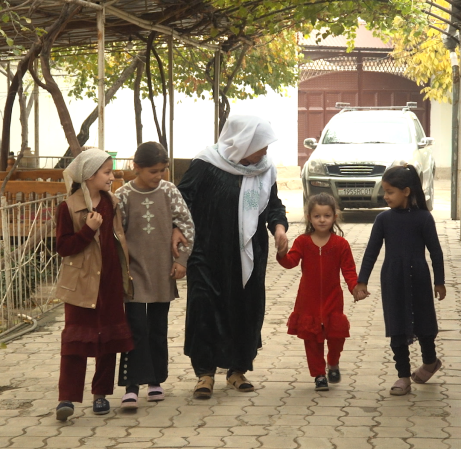
According to specialists, who roughly estimate one hour of labor at $1, switching to biogas allows a family to save up to $416 annually simply by reducing the time previously spent on fuel collection. This is especially significant for women, who bear the majority of this labor. An additional benefit is improved health: the absence of smoke in the home reduces respiratory strain and, according to expert calculations, saves around $50 per year on medications and doctor visits.
Against a backdrop of unstable heating and frequent power cuts, which force families to return to firewood and dung, the Aliyevs’ story shows that even a small bioreactor can transform daily life: reducing labor intensity, increasing comfort, and, in this example, creating new opportunities for income.
Biogas vs. Reality: What Advertising Articles Don’t Tell You
The company Nekigol received UNDP grant funding to install bioreactors in pilot districts. Saidmurod Ramazonov, a company specialist, explains:
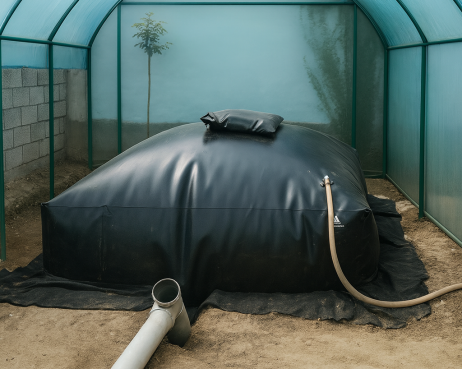
“The bioreactor design is simple: we load manure and water in a one-to-two ratio, and the mixture enters the reactor, where fermentation begins. Inside, there’s no air access, creating anaerobic conditions for special microorganisms. They gradually break down the organic matter, releasing gas—mostly methane, which is biogas. Our model operates at temperatures between +15°C and +22°C.”
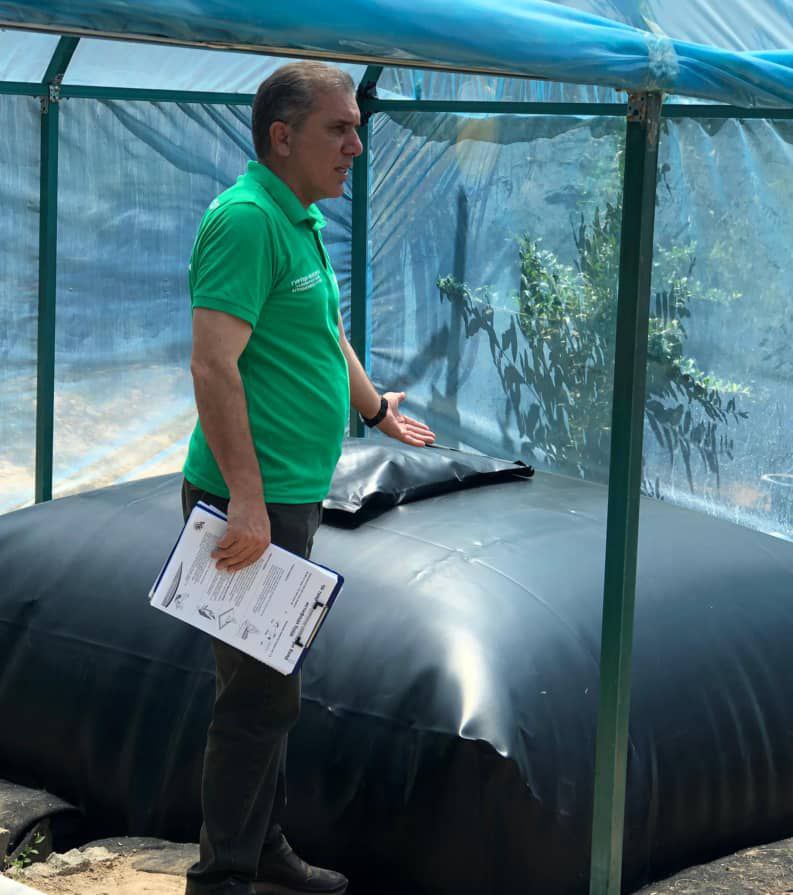
Regarding demand, he adds: “Apart from the UNDP grant, we haven’t received a single order from private households, peasant farms, or entrepreneurs in republican-controlled districts.”
Umarkhon Madvaliev, CEO of the Tajik Renewable Energy Association, is cautious and skeptical about such biogas projects:
“This issue must be considered from at least two perspectives—economic and environmental. It’s especially important to account for the fermentation process in cold climates. My colleagues in Kyrgyzstan also received grant funding for this work, but after completing the project, their company closed due to lack of market demand.”
Several conclusions emerge. First, for cost-conscious users, the price of these bioreactors is too high—not only for Tajikistan but for several Central Asian countries. Prices range from $5,000 to $17,000. Second, operating temperature remains critical: in cold seasons, these units are inefficient without additional insulation or heating. Even placing them in greenhouses does not fully solve the temperature issue. Bioreactors are useful in warm months or mild climates but cannot eliminate winter energy shortages. Year-round use requires advanced models—with insulation, heating, or hybrid energy sources—which significantly increases costs.
Bioreactors: Resource Savings and Environmental Benefits
Field research across 20 households showed that small bioreactors can reduce firewood consumption by 80–90%. Each unit replaces around 276 kg of liquefied petroleum gas (LPG) annually, saving the family approximately $276. Bioreactors also prevent about 2 tons of CO₂ emissions yearly and produce 70–120 buckets of liquid fertilizer per week.
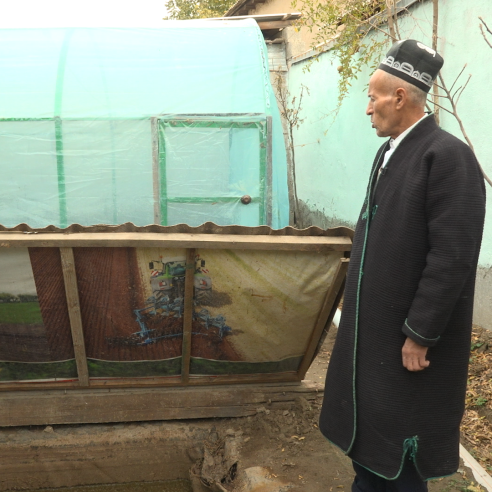
Mirali Aliyev, a farmer with 30 years of experience, shares:
“Our gas comes from livestock waste. After gas production, we collect fertilizer in a pool. On our one-hectare farm, this fertilizer is used for both primary and secondary sowing. After processing in the bioreactor, weed seeds are destroyed, and the liquid is collected with a pump. This ‘bionurin’ fertilizer is better than chemical—it’s alive, full of microorganisms.”
Thus, fertilizer savings reach $547 per year. Families with a bioreactor and a greenhouse can earn additional income—up to $1,000 annually—by harvesting two crops.
Challenges of Green Financing in Tajikistan
Green financing in Tajikistan is at an early stage, despite growing demand for sustainable solutions. Main barriers include:
- Lack of specialized credit products
- Limited knowledge and expertise in financial institutions
- Low public awareness
- Underdeveloped regulatory framework, lacking standards for green loans and ESG reporting
Most banks lack experience evaluating environmental projects, making them cautious about new investment formats. Consequently, renewable energy and energy efficiency projects rely almost entirely on donor support, without a systemic institutional foundation.
Solutions to Overcome Barriers
Experts recommend a comprehensive approach:
- Training banking sector specialists and creating a green finance competence center
- Developing specialized low-interest credit products with risk insurance mechanisms
- Implementing grant programs and incentive schemes for financial institutions
- Strengthening trust through transparent certification and ESG standards
- Conducting information campaigns and pilot demonstrations in rural areas to popularize green technologies
- Introducing mixed financing models and creating joint funds between government, private sector, and donors
These steps could transform the green economy from a donor-driven initiative into a full-fledged element of Tajikistan’s sustainable economic growth.
Conclusion
Biogas installations and other green technologies are not a universal solution for all rural energy challenges. They cannot fully address winter energy shortages in Tajikistan, particularly due to temperature limitations of bioreactors. However, pilot project experiences show that these technologies can significantly ease rural life: reducing costs, improving environmental conditions, and providing new opportunities for agriculture.
Thus, green financing and support for innovative solutions should be seen as a strategic tool—not only to reduce dependence on donors but also to build a sustainable, environmentally oriented national economy.
ShoiraToirova, Journalist
 Tajik Energy Minister Attends Opening of International Electric Power Forum in Kazan
 Tajik Deputy FM Receives Credentials Copies from New Pakistani Ambassador
 Tajik National University, USGS Discuss Expanding Geology Cooperation
 CIS Officials Meet in Minsk to Prepare Upcoming Summits
 Tajikistan, China Sign Deal to Expand Health Cooperation
 Emomali Rahmon Calls for Strengthening Patriotism Among Youth at Navruz Celebration
 Tajikistan, Uzbekistan Discuss Expanding Customs Cooperation
 Tajikistan Eyes Renewable Energy Boost With 500-MW Solar Initiative
 Experts to Discuss Climate Resilience at Dushanbe Water Conference
 Meeting of the Government of the Republic of Tajikistan
 Dushanbe to Host International Forum on Sustainable Development, Green and Digital Transformation in April 2026
 Tajik Delegation Competes at International Delphic Games in Kyrgyzstan