





Address by the President of the Republic of Tajikistan His Excellency Emomali Rahmon, on the main directions of the domestic and foreign policy of the Republic of Tajikistan
Read also
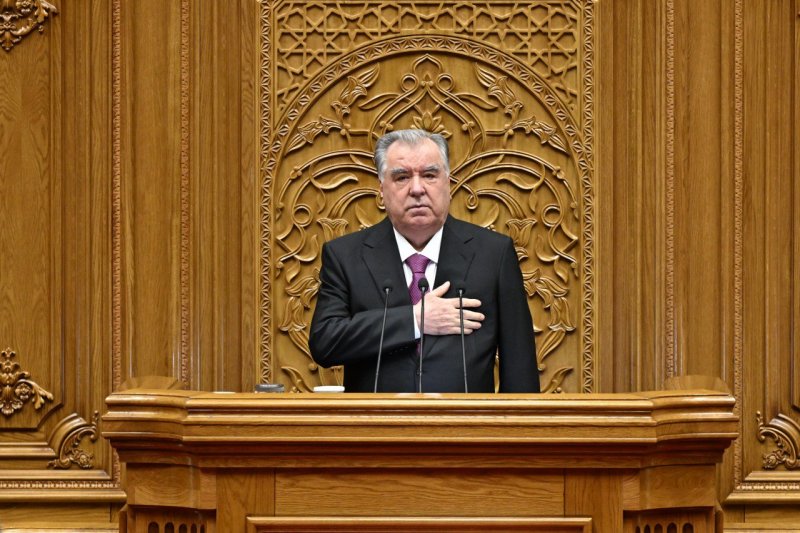
Dear compatriots!
Distinguished members of Majlisi Milli and deputies of the Majlisi Namoyandagon!
The 2025 has become another historic year for the noble people of Tajikistan and the independent Tajik state, marked by significant achievements and important events.
In March 2025, the elections for the deputies of the Majlisi Namoyandagon, local representative assemblies and members of the Majlisi Milli Majlisi Oli of the Republic of Tajikistan — important political events were held in a open, transparent and high-level atmosphere.
Another historic milestone was the full resolution of the longstanding border issues between the Republic of Tajikistan and the Kyrgyz Republic—matters that had remained pending for more than a century—through the signing of the treaty on the delimitation of the state border.
In addition, the Treaty between the Republic of Tajikistan, the Kyrgyz Republic and the Republic of Uzbekistan on the junction point of the state borders of the three countries and the Khujand Declaration on Eternal Friendship were signed by the heads of state, providing a solid legal basis for the development of the region and the continuation of beneficial cooperation.
In 2025, the Republic of Tajikistan hosted the first High-Level International Conference on Glaciers’ Preservation as part of its global initiatives to implement the United Nations resolution on the “International Year of Glaciers’ Preservation”.
It is worth noting that, on 12 December of this year, a resolution entitled “Preserving Glaciers and the Cryosphere, particularly in Mountain Regions” was adopted at the Seventh Session of the United Nations Environment Assembly (UNEA) at the initiative of the Republic of Tajikistan.
At the initiative of our country, a special resolution of the United Nations General Assembly entitled “The role of Artificial Intelligence in creating new opportunities for sustainable development in Central Asia” was adopted.
In the same spirit, the inscription of the cultural heritage monuments of Ancient Khuttal on the UNESCO World Heritage List at the 47th session of the World Heritage Committee in Paris stands as a further acknowledgment by the international community of Tajikistan’s initiatives.
It is also a matter of pride that, on December 12, 2025, at the initiative of the Republic of Tajikistan, the United Nations General Assembly adopted a resolution declaring 2027 as the “International Year of Legal Literacy.”
The adoption of these proposals reflect the international community’s recognition and support of Tajikistan’s constructive contributions to addressing pressing issues on the global agenda.
Dear compatriots!
Over the past ten years, during the implementation of the country’s two medium-term development programs, which include intermediate phases of the implementation of the National Development Strategy until 2030, many important and effective initiatives have been implemented to achieve strategic goals and improve the standard and quality of life of the population.
As a result, the volume of gross domestic product increased 3.4 times, and the national economy grew at an average annual rate of 7.6 percent.
To ensure the socio-economic development of the country during this period, more than 670 billion somoni were allocated from all sources of financing, including 159 billion somoni in foreign investment.
During this period, the gross domestic product per capita rose 2.7 times, increasing from 6,000 somoni in 2015 to 16,400 somoni in 2025.
The country’s population grew by 26 per cent, from 8.5 million in 2015 to 10.7 million in 2025, while life expectancy index has increased from 70 to 77 years.
During this period, the poverty rate declined to 19 percent.
The population’s monetary income increased from 26 billion somoni in 2015 to 165 billion somoni in 2025, that is, more than six times.
In 2025, the Medium-Term Development Program for 2026–2030 was adopted as the final stage of the National Development Strategy up to 2030.
Its timely and effective implementation will enable the gross domestic product to double over the next five years, reduce the poverty rate by 10 percent, and increase the share of the middle class by 50 percent.
During this period, the economy has grown at an average annual rate of 8.7 percent, including 20 percent in industrial production, 8.4 percent in agriculture, and 11.7 percent in paid services.
In this regard, the Government, ministries, agencies, and local executive bodies are tasked with ensuring the timely and full implementation of the Medium-Term Development Program for 2026–2030 to achieve development priorities.
Currently in the country, specific measures are being taken to attract domestic and foreign investment, establish industrial enterprises, construct and modernize energy and transport infrastructure, and make effective use of agricultural land, expand services, broaden regional and international cooperation, and implement key projects.
In 2025, the country’s Gross Domestic Product reached 173 billion somoni, with a real growth rate of 8.4 per cent.
It is imperative to ensure that the national economic growth rate reaches at least 8 percent in 2026, while maintaining the stability of key macroeconomic indicators in the subsequent years.
The Government should reinforce priority areas such as the development of digital technologies and artificial intelligence, rapid industrialization using modern technologies, the full utilization of transit and tourism potential, continuation of public administration reforms, support for entrepreneurship, and the enhancement of the investment climate.
In this process, top priority should be given to the effective management of state-owned enterprises, the development of a green and circular economy, the transition to a knowledge-and innovation-based economic model, the human capital development, and the mitigation of climate change impacts.
Distinguished deputies!
The rapid development of digital technologies and the expansion of artificial intelligence capabilities in the modern world require that these advancements be effectively applied across all productive and non-productive sectors, transforming them into an additional driver of economic growth and service exports.
The Parliament of the country should take the necessary measures to establish a robust legal framework for the transition to a digital economy and the effective use of artificial intelligence.
In this regard, the Communications Service is instructed to develop and submit to the Government a draft Strategy for the Development of the Communications Sector of the Republic of Tajikistan until 2040, with a view to advancing constructive initiatives under the Years of Development of the Digital Economy and Innovation and in alignment with the country’s strategic priorities and objectives.
Urgent measures must be taken to provide the population with high-speed Internet and to develop telecommunications infrastructure, including the modernization of intercity fiber-optic networks and the expansion of international connections.
The Ministry of Economic Development and Trade and the Agency for Innovation and Digital Technologies, in coordination with the Ministries of Education and Science, Industry and New Technologies, and Finance are tasked with analyzing the labor market needs in the digital economy and taking the necessary measures to increase the number of specialists in this field, as well as to enhance the quality of personnel training.
The Ministry of Finance, the National Bank, the Tax Committee and other relevant ministries and departments are instructed to intensify work to increase the share of non-cash payments and the use of payment infrastructure.
The Agency for Innovation and Digital Technologies is instructed to take prompt measures to ensure the full implementation and broad adoption of the Unified Public Services Portal.
Today, it is crucial to establish a public administration system grounded in digital technologies and artificial intelligence, thereby minimizing the influence of human factors across all sectors and types of financial interactions.
For example, prior to the introduction of modern technologies for electricity calculation and payment, the digital billing system revealed that 30 to 40 percent of households were not paying for their electricity consumption.
With the introduction of the new billing system, all households are recorded as being fully up to date with their electricity payments.
These figures demonstrate that, in the past, due to human factors or misuse of authority by certain sector employees, payments were not fully recorded, and unjustified electricity losses were artificially passed on to households and other groups of electricity consumers.
In Dushanbe city alone, as a result of the introduction of a digital billing system, losses in the first 11 months of this year amounted to 13%, which is 7 percentage points less than in the same period in 2024.
In October of this year, the loss rate in Dushanbe was reduced to 5.1 percent, down from 15.1 percent in October 2024, representing a decrease of 10 percentage points.
Electricity losses in the country in the first 11 months of this year amounted to 3 billion kilowatt-hours, a decrease of 500 million kilowatt-hours compared to the same period last year.
During this period, more than 100,000 new customers have been registered, and 1.5 billion somoni have been injected into the energy system.
In Dushanbe, losses decreased from 20 percent to 13 percent over the first eleven months of this year, and fell further to 5 percent in October.
The Ministries of Finance, Economic Development and Trade, the National Bank, and the Tax Committee are tasked, in cooperation with other relevant ministries and agencies, with achieving a full transition to a digital public financial management system, as well as implementing international accounting and financial reporting standards across all business entities, regardless of their ownership structure.
Furthermore, I would like to emphasize that the full introduction of a cashless payment system at all trade and service points is among the priority issues.
Distinguished participants!
Currently, the private sector accounts for 80 percent of the country’s production and 70 percent of its employment, and it is recognized as a driving force behind the country’s development.
The Government must take effective measures to facilitate the private sector’s access to resources, public services, information, affordable financial instruments, technologies, and knowledge to enhance competitiveness, develop and implement investment projects, and strengthen its position in both domestic and international markets.
In addition, in line with the implementation of the State’s strategic objectives, efforts to attract both foreign and domestic investment, particularly foreign direct investment, should be further intensified.
Thus far, under the Tax Administration Development Programme for 2020–2025, a number of important measures have been implemented to improve tax administration, enhance remote interaction with citizens and taxpayers, and promote the development of the digital economy.
These measures have contributed to the digitalization of the sector, improved the quality and accessibility of electronic public services, simplified tax compliance procedures, fostered entrepreneurial activity, and enhanced the tax awareness of business entities.
Given the continuation of reforms and the need to strengthen support for entrepreneurial activity, the Government is required to adopt and implement the new Tax Administration Development Programme for 2026–2030 within a short timeframe.
At the same time, line ministries and agencies should take additional measures to enhance financial literacy and foster a stronger culture of tax compliance among citizens and taxpayers.
Distinguished participants!
As a result of the necessary measures undertaken to ensure the country’s sustainable development, the total volume of state budget revenues from all sources has continued to grow annually, reaching 50 billion somoni in 2025 — an increase of 65 percent or 20 billion somoni compared to 2021.
Nevertheless, the complex and unpredictable global political and economic environment requires that the country’s financial system be aligned with modern standards and that the efficiency of public financial management be further strengthened.
I would like to underscore, in particular, that public expenditure must be more results-oriented than ever before.
The Ministry of Finance, in cooperation with sectoral ministries and agencies as well as local executive authorities, must take additional measures in this regard.
The Ministries of Finance, Economic Development and Trade, the National Bank, the State Committee on Investment and State Property Management, and other relevant institutions are tasked to take the necessary measures to expand the market for government and corporate securities.
I would like to note that the issuance of “green” securities and the establishment of an active and transparent secondary market for them constitute one of the key priorities in this area.
At the same time, a Capital Market Development Strategy must be drafted and adopted.
Over the past ten years, the total volume of loans issued has amounted to 143 billion somoni.
However, only 38 percent of these loans have been directed toward productive enterprises, which remains insufficient.
The National Bank and credit institutions must take additional measures to attract greater volumes of foreign investment into the banking sector, increase deposits from individuals and legal entities, and further expand credit provision to priority sectors of the economy, particularly enterprises engaged in productive activities.
To improve access for productive enterprises to affordable long-term financing and to increase the volume of lending, I would like to propose the establishment of a Credit Guarantee Fund designed to support productive and technology-based entrepreneurship.
Furthermore, in order to enhance the social well-being of the population and expand citizens’ access to housing, it is essential to strengthen mechanisms for the development of the mortgage lending market and to implement measures aimed at increasing the affordability and accessibility of mortgage loans.
Distinguished deputies!
To achieve one of the country’s key national strategic objectives-rapid industrialization during its implementation period (2019–2025), over the past seven years, more than 2,600 industrial enterprises have been constructed and commissioned, creating more than 87,000 jobs.
Notably, in 2025 alone, 400 new industrial enterprises commenced operations.
The volume of production in the mining sector increased from 7.7 billion somoni in 2020 to 26 billion somoni in 2025, an increase of 3.4 times.
In 1991, the mining sector produced only three types of products—gold, silver, and lead concentrate; by 2025, this number had increased to 17.
Significant growth has been observed in mineral production since 1991: gold production has increased sevenfold, while silver and lead concentrate have grown sixfold and ninefold, respectively.
The measures undertaken within the framework of the country’s rapid industrialization have enabled the volume of industrial production to grow two and a half times over the past seven years, reaching 66 billion somoni in 2025.
The industrial sector recorded a growth rate of 22 percent in 2025.
The Ministry of Industry and New Technologies must leverage all available capacities and opportunities to ensure that the sector achieves an annual real growth rate of at least 25 percent over the next five years.
It is important to take further measures, leveraging both domestic and foreign investment, to establish new enterprises for the full processing of domestic raw materials, particularly minerals, non-ferrous and precious metals, agricultural products, and medicinal plants, in order to increase the production of export-oriented and import-substituting goods.
The Government should also adopt and implement the new Rapid Industrialization Programme of the Country for 2026–2030, as well as the Development Programme for the Production and Processing of Non-Ferrous, Precious, and Other Critical Raw Materials.
In addition, it is necessary to ensure the efficient and rational use of subsoil resources, strengthen state oversight, and promote the sustainable development of the country’s extractive and geological sector through the implementation of additional measures.
The Ministries of Finance, Industry and New Technologies, the Main Department of Geology, and the Tax Committee, together with other relevant ministries and agencies, should prepare the legal and regulatory framework governing activities in these sectors and submit it to the Government for consideration.
In the documents being prepared, issues related to ensuring comprehensive statistical coverage, simplifying state procedures, including licensing, improving the taxation system for natural resources, and addressing other challenges must be clearly reflected.
I would like to emphasize that, in the course of implementing these tasks, special attention should be given to the development of light industry, value-added processing, and the production of rare and critical metals.
Over the past ten years, more than 60 billion somoni have been invested in the country’s energy sector, resulting in an increase in national electricity generation capacity by 1,017 megawatts.
Only through the rehabilitation and modernization of existing power plants, production capacity has grown by an additional 200 megawatts.
In 2025, the renovation and modernization of the Kairokkum Hydroelectric Power Plant, with an investment of 1.8 billion somoni completed, raising its generation capacity from 114 megawatts to 174 megawatts, an increase of 60 megawatts.
In addition to expanding generation capacity, a number of major infrastructure projects, including the construction of new electrical substations and power transmission lines have also been implemented.
During this period, the volume of electricity generated in the country increased by 7 billion kilowatt-hours — a 40 percent rise from 17.2 billion kilowatt-hours in 2015 to 24.2 billion kilowatt-hours in 2025.
We are fully aware of the challenges faced by the honorable people of Tajikistan during the period of temporary restrictions on electricity supply.
This situation is, on the one hand, the result of population growth and, as noted above, the increase in the number of industrial enterprises and overall electricity consumption; and, on the other hand, the impact of below-average rainfall during the current autumn and the resulting decline in water inflows to the reservoirs of the country’s hydropower plants.
Since independence, 1.3 million new homes have been built in the country, and more than 8.4 million residents have improved their living conditions.
In the past seven years alone, 2,600 new manufacturing plants have begun operating in the country, contributing to an increase in electricity consumption.
In addition, as mentioned above, electricity losses are still high, amounting to more than 3 billion kilowatt-hours
The Government is taking all necessary measures to address these challenges.
At present, project work has begun on the construction of two solar power plants with a total capacity of 500 megawatts — 250 megawatts in Sughd Region and 250 megawatts in Khatlon Region, which are scheduled to be commissioned by August 2026.
Additionally, the third unit of the Rogun Hydropower Plant is scheduled for commissioning in September 2027.
The Government of Tajikistan continues the construction of the Rogun Hydropower Plant, mobilizing all available resources and capacities.
At present, the facility employs 18,600 workers and engineering and technical staff, supported by over 3,900 machines and equipment.
To sustain the accelerated construction of the power plant, over 9 billion somoni was allocated from the state budget this year, and as of now, approximately 60 percent of the construction work has been completed.
The Government, together with all leaders, officials, and construction personnel involved in this major facility, is committed to advancing the construction of the power plant with the utmost responsibility and quality, ensuring the timely commissioning of its third unit in September 2027, with the aim of achieving the country’s energy independence.
According to analyses, domestic demand for electricity continues to grow each year and by 2030 is expected to increase by 31 percent compared to 2025.
In this context, to ensure a stable and uninterrupted electricity supply for the country’s growing economic and social needs, it is essential not only to develop new production capacities but also to promote the efficient use of electricity.
It is critically important that all consumer groups play an active and responsible role in this process.
We have decided that, over the next two years, several solar power plants with a total capacity of 1,500 megawatts will be commissioned in the country, supported by direct investment.
The Government of Tajikistan, together with the management of the Ministry of Energy and Water Resources, is tasked with strengthening cooperation with both domestic and foreign investors in the construction of solar power plants and taking urgent measures to ensure the timely implementation of these projects.
Additionally, efforts must be accelerated to fully implement a modern billing system across the country’s power networks, utilizing digital technologies.
Tajikistan possesses substantial hydropower resources and is capable of supplying large artificial intelligence data centers with clean, ‘green’ electricity and cooling water.
Therefore, the Government is tasked with taking the necessary measures to establish the National Artificial Intelligence Corporation, the Regional Artificial Intelligence Center, and a complex of green data processing centers to fully harness the potential of artificial intelligence in the country’s development process.
Dear friends!
Despite the challenges posed by climate change, including high temperatures, the diligent efforts of the country’s farmers enabled the agricultural sector to achieve an 8.5 percent growth rate in 2025, ensuring a stable and sufficient consumer market.
Moreover, the level of food security has increased from 60 percent in 2015 to 85 percent in 2025.
In other words, the country’s farmers, despite this year’s challenging weather conditions, including heavy rainfall, have worked diligently to supply the consumer market with products, as reflected in well-stocked markets and stable prices.
Therefore, I wish to convey my sincere gratitude and appreciation to all farmers, peasants, specialists in the sector, and the population who, through their loyal and patriotic efforts and the rational use of water and land, produce food products for the nation.
According to the United Nations Food and Agriculture Organization (FAO), more than 500 million people worldwide are projected to suffer from hunger by 2030.
In 2024, the number of people experiencing hunger increased to 670 million.
I am confident that, despite these unfavorable conditions, the country’s farmers will work with even greater dedication, make effective use of all available resources—including water and land—and achieve abundant harvests, thereby further strengthening the country’s food security.
To this end, the Government is instructed to prepare and submit a draft Law on Agricultural Policy.
The Government is also tasked with introducing a mechanism to ensure the sustainable development of the cotton sector, taking into account the role of the cotton sector in providing jobs for the population, producing raw materials for the development of the light and food industries, and increasing the volume of product exports.
Additionally, the Government is instructed to develop and implement the State Program for the Innovative Development of the Cotton Sector for the years 2026–2030.
The Ministries of Justice, Agriculture, Finance, Economic Development and Trade, together with the Tax Committee and the Customs Service, are instructed to submit to the Government, within two months, the necessary proposals for making relevant amendments to regulatory legal acts in order to support the cotton sector until its situation stabilizes.
I would like to emphasize that promoting the efficient operation of cotton farms remains a key priority in this regard.
Distinguished deputies!
To improve the condition of highways and transform Tajikistan into a transit country, the implementation of 16 state investment projects with a total value of 11.3 billion somoni is currently underway.
In 2025, within the framework of these projects, 236 kilometers of highways and other road and transport facilities constructed in accordance with international standards were commissioned, with a total investment exceeding 5.4 billion somoni.
The completed projects include Obigarm–Nurobod and Rogun roads with a total length of 87 kilometers, Kalaikhumb–Vanj road spanning 109 kilometers, 40 kilometers of international roads in Sughd region, 30 bridges of various sizes, five tunnels, six anti-avalanche corridors with a combined length of 13 kilometers.
Currently, the construction of 50 kilometers of the Dangara-Guliston road, 33 kilometers of the Guliston-Farkhor road, and another 12 kilometers of international roads in the Sughd region is underway for a total cost of 2 billion somoni.
In 2025, construction began on the country’s largest bridge over the Rogun Hydropower Plant reservoir, spanning 920 meters, alongside three additional vehicular bridges totaling 368 meters. The combined cost of these projects amounts to 900 million somoni.
In 2026, within the framework of state investment projects, the construction and reconstruction of 300 kilometers of international and national highways for a total cost of 3 billion somoni will begin.
Key roads slated for construction or reconstruction include the Vahdat–Obigarm road -70 kilometers, Guliston–Kulob -33 kilometers, Khorog–Roshtqala -39 kilometers, Murghab–Kulma — 67 kilometers, Baljuvon–Sari Khosar -55 kilometers, Khistevarz–Konibodom (Arka) -10 kilometers, the Kulob city bypass 11 kilometers, and the Labi Jar–Sangvor road, which features five bridges.
The Ministry of Transport is required to expand its activities, in cooperation with development partners, in order to continue the construction and reconstruction of roads of international significance, ensuring adherence to high-quality design standards.
At the same time, it is important to take measures to establish transport and logistics centers, as well as to modernize the railway fleet and its supporting infrastructure.
The Government is instructed to adopt the necessary measures for the reconstruction and modernization of the international airports of Dushanbe, Bokhtar, and Kulob, in accordance with contemporary service standards.
It should be noted that, over the past three years, more than 3,000 kilometers of roads have been constructed and reconstructed across the country, from which 2,600 kilometers were funded by entrepreneurs and residents. This commendable initiative continues to expand steadily.
I would like to take this opportunity to extend my sincere gratitude to all entrepreneurs and to the noble people of Tajikistan for their valuable contribution to the reconstruction and construction of roads, the building of social facilities particularly preschool and secondary educational institutions and other improvement efforts.
Concurrently, the Committee on Architecture and Construction, local state authorities, and other relevant bodies must fully support the constructive initiatives of entrepreneurs in the development of social, industrial, and infrastructure facilities, while ensuring strict compliance with urban planning and construction standards and regulations.
Furthermore, it is equally important to ensure the use of high-quality construction materials, national and modern architectural elements, and contemporary technologies.
Addressing social issues constitutes a key direction of Government activity, and the measures adopted in recent years have provided substantial impetus to the development of this sector.
Whereas in 2024 budgetary allocations to the sector amounted to 20.9 billion somoni, in 2026 this figure is projected to reach 29.5 billion somoni increase of 8.7 billion somoni, or 41.8 percent, compared to 2024.
Since assuming the office of Head of State, I have consistently emphasized the advancement of science and education as national priorities, devoting unwavering attention to these crucial areas for over three decades.
This is because I am fully aware that the development of all sectors of society and the state, as well as the prosperous future of our nation, depends on the advancement of science and education, the solid foundations of which are being laid today.
In other words, I support and prioritize these important fields as an investment in the bright future of the nation and the stability of the state.
Accordingly, the Government continuously increases funding for these key sectors, and annually their combined share makes more than 21 percent of total state budget expenditures.
In 2026, approximately 14 billion somoni are to be allocated from the state budget to the education sector—an increase of 25.4 percent compared to 2025, and five and a half times more than in 2015.
To ensure the efficient use of public funds and align the financing system with international standards, the funding mechanism for higher and secondary educational institutions should be reviewed, particularly through a transition to per-capita financing or a state-order system.
Therefore, the Ministries of Education and Science, Finance, and the Committee on Primary and Secondary Vocational Education are tasked to submit concrete proposals on this matter to the Government.
According to analysis, within the next 25 years the number of students in Tajikistan will reach to 4 million.
In this regard, measures must be taken from now to train a greater number of pedagogical personnel, to construct additional educational institutions, and to bring the education system into conformity with global standards—specifically, by transitioning to a twelve-year system of schooling.
For these purposes, the Government has been instructed to comprehensively analyze and revise the implementation of the National Strategy for the Development of Education until 2030, and to update it in accordance with the new objectives set in this field.
In 2019, the Head of State’s address declared the years 2020-2040 a twenty-year period dedicated to the study and advancement of natural sciences, exact sciences, and mathematics in the education sector was declared- six years of this period have now passed from the declaration.
The Agency for Supervision in the Sphere of Education, together with the Ministries of Education and Science, Economic Development and Trade, Industry and New Technologies, the National Academy of Sciences, and the Accounts Chamber, is tasked with thoroughly analyzing the results of the past six years of implemented measures and adopting additional steps to address existing shortcomings and obstacles.
To further accelerate the integration of Tajikistan’s education system into the unified international educational space, a decision was made in 2004 to transition higher educational institutions to a credit-based system, and by 2014 all such institutions had completed this transition.
Now, its time for a group of experts to analyze and present conclusions on the advantages and disadvantages of this system, as well as to completely eliminate the human factor in the conduct of current and future examinations.
The aforementioned institutions, including the National Testing Center, must submit detailed information on this matter to the Executive Office of the President within two months.
In addition, a competent working group should analyze and review the status of foreign language instruction, particularly Russian and English—at all levels of education and submit well-reasoned conclusions to the Government in order to further accelerate this process.
I would also like to address parents, teachers, and the public, reiterating that the care and upbringing of children must be approached with the highest sense of responsibility.
We must bear in mind that the future of the state and the nation fundamentally depends on a generation of knowledgeable and skilled individuals—educated, culturally aware, free from prejudice and unfounded beliefs, patriotic, and endowed with a strong sense of national identity
The 21st century is the century of scientific, technological, and engineering advances.
We are witnessing the achievements of developed countries around the world.
Today they generate electricity from the sun.
If we want to have a developed country, a prosperous Motherland, and a peaceful life, let’s not let our children remain illiterate.
We must strive to ensure that they do not suffer in their future lives.
We shall not forget that, when our youth remain uneducated, society becomes afflicted with prejudice, unfounded beliefs, and ignorance, which can lead to serious consequences.
Our esteemed compatriots are well aware that the imposed civil war of the 1990s set back all sectors, especially education, by decades.
With regard to science, I wish to emphasize that the study of glaciers constitutes one of the important areas of national scientific research and an integral part of our state policy.
In 2025 at the proposals of Tajikistan United Nations, the year 2025 has been designated the International Year of Glacier Preservation, and the years 2025–2034 have been declared the Decade of Cryospheric Sciences.
In this regard, I call upon all relevant institutions to expand their scientific and practical activities in this field and to present their achievements on the international stage.
The preservation of glaciers, the advancement of cryosphere research, and the implementation of Tajikistan’s international initiatives in the fields of water resources and climate change carry both strategic and global significance.
Accordingly, it is proposed to transform the State Research Institution “Center for the Study of Glaciers of the National Academy of Sciences” into the State Research Institution “Institute for Glacier and Cryosphere Studies of the National Academy of Sciences.”
Distinguished participants!
The revival of historical memory plays a vital role in strengthening the national consciousness of citizens, especially the youth, who are the future of the nation.
We have always devoted close attention to this important matter, and over the past ten years 150 cultural facilities have been constructed and commissioned, while 350 additional facilities have been repaired and reconstructed.
In the capital city of Dushanbe, the largest cultural facility—the National Theatre is currently under construction, equipped with modern amenities and facilities. It is intended as a gift from the Government to the people of the country and to cultural figures in celebration of the 35th anniversary of national independence.
To enhance the artistic taste of the population, particularly youth and adolescents over the past decade cultural institutions have published and distributed to libraries 900 titles of artistic and children’s literature.
During this period, under the directive of the Head of State, 3.2 million copies of “Tojikon” (Tajiks) by the eminent scholar Bobojon Gafurov and “Shahnameh” (Book of Kings) by Abudulqosim Firdawsi were published and distributed free of charge to the population.
The historical and cultural heritage represents the identity of the ancient Tajik people.
Although ancient monuments constitute over 70 percent of the country’s historical and cultural heritage, a specialized law on archaeology has not yet been adopted.
In this regard, the competent authorities should, at the earliest possible opportunity, prepare the relevant draft law and submit it to the Government.
This year, eleven sites of the ancient Khuttal cultural heritage (located in the districts of Jaloliddin Balkhi, Danghara, Vose, Farkhor and Khovaling of Khatlon Region) were inscribed on the UNESCO World Heritage List.
To this end, the adoption resolutions recognizing -Panjakent city as a “WCC–World Craft City for Panjakent Suzani Embroidery” and commemorating the 1050th anniversary of Rabia Balkhi in 2026–2027 attest to the distinctive role of Tajik cultural and spiritual heritage and values within the shared legacy of human civilization.
Furthermore, the convening of conferences entitled “The Cyrus Cylinder: an early charter of human rights and cultural diversity” (the first declaration of human rights) stands as a source of pride and honour for our Aryan.
In this regard, it is important to continue promoting our nation’s tangible and intangible heritage on the international stage in a deliberate and effective manner to ensure its preservation.
In recognition of the historical contribution of Borbadi Marwazi to the development of global culture, the Ministries of Foreign Affairs and Culture should take the necessary measures to prepare and submit a UNESCO nomination acknowledging his contribution to world music and culture.
Borbad, who lived and composed during the 6th–7th centuries AD in the Sassanid era, is widely recognized by international scholars as one of the earliest masters of musical theory and professional composition within the Aryan cultural tradition.
It is well established that the Tajiks are among the nations that have contributed significantly to global culture and civilization.
We take pride in the fact that our esteemed ancestors, the Aryans, left to the world a legacy of language, culture, scientific knowledge, the arts, vibrant humanistic rituals and traditions such as Nawruz, and sophisticated systems of governance, reflecting an enduring civilization and cultural achievement.
To this end, we are obliged not only to be proud of them but also to embrace the universal heritage of our ancestors, to study it, carry it forward, and pass it on to future generations as a priceless treasure that forms the foundation of individual character.
We should take pride in the fact that our esteemed ancestors embraced “good thoughts, good words, and good deeds” as a fundamental humanistic value and guiding principle of life.
Indeed, Nawruz, which has today attained international recognition, along with Mehrgon, Sada, and Tirgon, which embody the principles of humanism and reverence for nature, and the statehood traditions of our Aryan ancestors, which have played a lasting and significant role in human history, and is considered as the foundation of our identity and authenticity of Tajiks.
Accordingly, the Government and the Executive Body of the State Authority of the City of Dushanbe are instructed to take measures to establish “Konun” — the Center of Aryan Civilisation in the capital city.
Furthermore, taking into account the enduring philosophy and wisdom of Nawruz, its humanistic traditions, and their application in the upbringing of future generations, an International Nawruz Center should be established in the city of Dushanbe.
I am confident that the implementation of these initiatives will stand as undeniable evidence of the more than six-thousand-year-old history and rich cultural heritage of the Tajik people.
The National Academy of Sciences, together with other scientific, research, and design institutions, is tasked with preparing the concept of the aforementioned centers, taking into account the ancient architectural and urban planning traditions of the Tajik people, and submitting it to the Government at the earliest opportunity.
Distinguished participants!
Over the past decade, 1,300 healthcare facilities have been commissioned across the country, with investments exceeding 5.3 billion somoni from all available funding sources.
The State budget allocations for the sector rose from 1.037 billion somoni in 2015 to 4.300 billion somoni in 2025.
Thus, over this period, the sector’s budget has increased more than 4.2 times, reaching a total of 26.3 billion somoni over the past ten years.
The Government is tasked with conducting a comprehensive analysis and review of the healthcare financing system, ensuring the targeted use of budgetary and non-budgetary funds, advancing the transition to a cashless payment system for services, and addressing other sector-related matters.
Necessary measures must be taken to ensure the effective implementation of forthcoming reforms and to address existing challenges and gaps in this area.
In this regard, the Ministry of Health and Social Protection of the Population, in collaboration with other ministries and agencies, is tasked to prepare and submit to the Government a draft State Program for the Development of the Pharmaceutical Sector for 2026–2030.
Ensuring adequate living conditions and improving the quality of life, particularly for vulnerable groups, remains a key priority of the Government’s policy.
In this regard, the Ministry of Health and Social Protection of the Population, in cooperation with the Ministry of Labour, Migration and Employment and the Agency of Social Insurance and Pensions, is tasked to take concrete steps to ensure the efficiency of strategic planning documents and state programmes in social protection.
Furthermore, the heads of all state bodies and local executive authorities should accord the highest priority to matters concerning the regulation of employment relations, provision of pensions and social benefits, promotion of productive employment, and the implementation of other state social guarantees for vulnerable groups in society.
Distinguished deputies!
Tajikistan is a country with abundant labour resources, and its workforce has grown by two per cent annually over the past ten years, amounting to more than 880,000 people.
Annually, more than 200,000 new jobs are created across various sectors of the country’s economy, while over 150,000 graduates from vocational education institutions enter the labour market.
In this regard, the Ministry of Labour, Migration, and Employment of the Population, along with other relevant bodies, must take effective measures to implement the state’s policy on promoting employment.
Key issues in this area include engaging the working-age population in formal employment, ensuring labour protections for workers, maintaining accurate labour force records, strengthening the social insurance budget, and, in this context, enhancing the social protection of citizens.
The executive bodies of state authority in the regions, cities, and districts, as well as relevant ministries and agencies, are required to ensure the effective implementation of the indicators set forth in state programmes aimed at creating 1.4 million jobs over the next five years and strengthening the role of small entrepreneurship, crafts, and traditional folk arts in this process.
In this process, special attention should be given to providing employment for graduates of the vocational education and training centers and primary and secondary specialized institutions, particularly women, persons with disabilities, and other categories of the population in need of social support.
Taking into account current economic conditions and the need to further improve the living standards of the population, I hereby instruct that, effective 1 September 2026:
— The official salaries of employees of educational institutions, including preschool and general secondary schools, shall be increased by 25%, while the salaries of staff in other educational institutions, as well as in the fields of science, culture, sports, healthcare, social protection, state authorities and administration, and other budgetary institutions, along with scholarships, shall be increased by 20%.
— Salaries of law enforcement officers, military personnel, and other employees of these bodies shall be increased by 20%.
— The minimum wage for all economic and social sectors of the country shall be set at 1,300 somoni per month.
At the same time, in order to improve the social conditions of vulnerable segments of the population, effective 1 September 2026, insurance, labor, and social pensions, as well as their supplements, shall be indexed in accordance with the provisions of Article 51 of the Law of the Republic of Tajikistan “On Insurance and State Pensions” and the level of the basic pension, at the 2025 inflation rate, but by no less than 15% of their established amount.
Improving the quality of life of the country’s population is the highest priority of the state and government, and all necessary measures should continue to be taken in this regard.
Dear participants!
We consider the state policy on youth affairs as a central component of the country’s social policy and are leveraging all available opportunities to ensure its effective implementation.
Our youth are the main driving force of society, and we take pride in their strong sense of national identity, self-awareness, and patriotism.
Today, our youth, through their constructive efforts, make a significant contribution to the political, economic, social, and cultural life of our independent country.
Young people currently participate actively across all sectors of our country.
I am confident that the honorable and principled youth of our independence era will continue to make a meaningful contribution to the national economy, the development of the state, and the prosperity of our homeland.
We will continue to take comprehensive measures to address the needs of children, adolescents, and young people, and to create even better conditions and opportunities for their education, work, and development — the very generations who will shape the future of our Motherland and the state.
The Government places issues related to women at the core of its social policy and consistently implements measures to advance this important area.
We always value the role of the noble and honorable women and girls of our homeland in all governmental and social spheres, and we are proud of their efforts to build a prosperous and peaceful future for our country.
The Government places the promotion of women’s status, as well as the education and appointment of capable women and girls to leadership positions, at the forefront of its agenda and remains committed to continuing this policy in the future.
I am confident that the women of the country will make greater efforts to raise their children in the spirit of learning science, knowledge, professions, and crafts, observing national laws regulating traditions, celebrations, and ceremonies, and the responsibility of parents in educating and raising their children, as well as the customs, rituals, and traditions of the ancient Tajik people, including resourcefulness, and the wearing of national attire.
I can say with complete confidence that they are at the forefront of society in combating xenophobia, prejudice, unfounded beliefs, and wasteful practices.
Distinguished members of Majlisi Milli and deputies of Majlisi Namoyandagon!
The role of legislation is crucial in achieving the country’s strategic objectives, ensuring sustainable and accelerated development, safeguarding the security of society and the state, and strengthening stability and national unity.
Therefore, a comprehensive and ongoing review of legislation, along with the development of proposals for its enhancement, is essential for the effective implementation of the country’s strategic objectives and its economic, social, and cultural development programs.
Ensuring social security, political stability, peace and unity, and the rule of law are the foundations for sustainable economic and social development and for enhancing the standard and quality of life of the country’s people.
Indeed, it is peace and stability, security and public order, and the rule of law that have created the essential conditions for the country’s rapid economic, social, cultural, and political progress, and for the steady improvement of our people’s well-being.
Without unity, mutual understanding, peace, and complete stability in society, the achievement of any goals or objectives would not be possible, and none of our plans could be realized.
This is something everyone should keep in mind.
Therefore, law enforcement authorities are entrusted with maintaining social stability and public order, as well as ensuring the security of the state and the people of Tajikistan.
Combating terrorism and extremism, religious radicalism, drug and arms trafficking, and other transnational organized crimes is a vital duty of law enforcement in the volatile and crisis-prone environment of the modern world.
The Government is tasked with taking additional measures to further enhance the working and living conditions of military personnel of Armed Forces and law enforcement officers.
Distinguished deputies!
Dear participants!
The complex situation in various regions of the world, the intensification of geopolitical competition and a new wave of the «Cold War,» the accelerating arms race, the erosion of international legal norms, and other conflicting developments in the international arena continue to be a source of concern.
In such circumstances, it is imperative that we, while actively participating in global processes, strengthen our efforts in solidarity with the international community to achieve lasting peace and stability and to ensure comprehensive and constructive security.
In implementing the Foreign Policy Concept of the Republic of Tajikistan, we will continue to build and deepen our international engagement, broadening political relations and multifaceted cooperation with countries around the world, guided by the principles of trust, mutual respect, and an “open door” policy.
In parallel, concrete measures are being implemented to develop and strengthen comprehensive relations in the trade, economic, cultural, and humanitarian spheres.
Overall, Tajikistan has consistently maintained a strong focus on expanding bilateral and multilateral cooperation with partner countries and institutions, and will continue to actively engage across various areas in the future.
Dear compatriots!
Distinguished members of Majlisi Milli and deputies of Majlisi Namoyandagon!
In today’s address, we reviewed the achievements of our beloved country over recent years.
All of these achievements are, above all, the result of the diligent efforts of the noble people of Tajikistan.
The year 2026 marks a historic moment for us as we celebrate the 35th anniversary of our state independence.
In other words, our ancient yet newly independent Tajikistan will be 35 years old.
Over the past five years, all segments of society have come together with dedication, carrying out important work to mark this historic milestone.
Of the 29,000 facilities and buildings planned in celebration of the 35th anniversary, 26,000 have already been commissioned, with over 70 percent of them constructed by entrepreneurs and community members.
I am confident that by the time of the national holiday, their number will have grown to over 30,000.
I would like to take this opportunity to express my heartfelt gratitude to all entrepreneurs, generous individuals, and patriotic, hardworking, honorable, and responsible members of our community for their contributions to our country.
There is very little time left until the 35th anniversary of state independence.
We must further expand our creative work and hold high-quality festive events leading up to this sacred date.
Every citizen and every family, mindful of their responsibility to the nation’s progress, should take care of and improve their homes, while also contributing to the maintenance, cleanliness, and well-being of their streets and neighborhoods.
This process of development and care for the surroundings should extend across the entire country, reaching even the most remote villages.
In other words, every member of society should, in honor of this historic celebration, contribute to the prosperity of our beloved homeland and demonstrate to the world that the Tajik nation is industrious, creative, and the bearer of an ancient and rich culture and civilization.
The course of the past 35 years has vividly demonstrated that the noble people of Tajikistan are capable of extraordinary accomplishments, cherish their homeland with unwavering devotion, and remain fully committed to safeguarding the independence and freedom of their ancestral land.
In today’s uncertain and challenging world, safeguarding our independence and freedom, and contributing to the progress of the state and the well-being of our homeland, remain the foremost and daily duties of every honorable citizen.
Let us unite with purpose, guided by a deep sense of national pride, gratitude, and respect for our patriotism, statehood, and the six-thousand-year-old culture and civilization of the Tajik people. Together, let us strive to further develop and strengthen our beloved homeland, Tajikistan, and to enhance its prestige and influence on the international stage.
With such an ancient and esteemed culture and civilization, we must remain vigilant against intolerance, extremism, and the uncritical imitation of foreign cultures that could conflict with our values.
In line with the decision adopted four years ago to commemorate the 35th anniversary of independence, I would like to propose that 2026 be declared the “Year of Advancing Development and Renewal, Strengthening and Consolidating National Identity and Consciousness” in honor of this important national milestone.
I have full confidence in the prosperous future of our independent homeland and in the steadfast determination of its hardworking and proud people.
The noble people of Tajikistan, who with patience, resilience, unity, and solidarity have overcome the most difficult and challenging days of the past 34 years, possess immense creative and constructive potential. It is this very force of creativity and nation-building that will ensure a bright and prosperous future for our beloved Motherland.
I am fully confident that, with unity and collective dedication, we will continue to work tirelessly for the development and progress of our beloved Tajikistan, for the prosperity of our dear Motherland, achieve all our noble goals, and further elevate the stature and reputation of the Tajik state on the international stage.
This is a national, moral, and faith-driven duty for each of us!
On this occasion, I extend my heartfelt wishes to all the noble people of Tajikistan, to you, the people’s deputies, and to all distinguished participants here, wishing you health, happiness, well-being, and success in all your endeavors.
May you, dear compatriots, always enjoy good health and continued success in all your endeavors!
 President Emomali Rahmon Receives Russian Deputy Prime Minister Marat Khusnullin
 President Emomali Rahmon Receives Ministers of Internal Affairs of CIS Member States
 President Emomali Rahmon Holds Government Meeting
 President Emomali Rahmon Concludes Two-Day Working Visit to Khorugh
 President Emomali Rahmon Meets GBAO Leaders and Activists in Khorugh
 President Emomali Rahmon Congratulates GBAO Residents on Tajikistan’s 35th Independence Anniversary
 President Emomali Rahmon Commissions 90 Facilities Across Gorno-Badakhshan
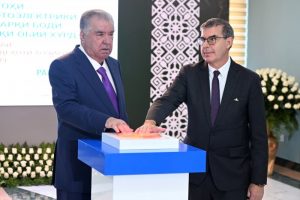 President Emomali Rahmon Commissions Major Energy Facilities Across GBAO
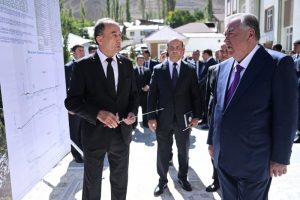 Tajikistan Plans 358 Kilometers of Road Construction and Reconstruction in GBAO
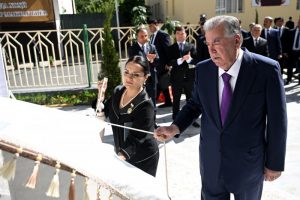 President Emomali Rahmon Inaugurates New Secondary School No. 6 in Khorugh
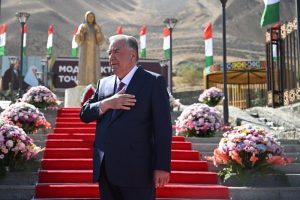 President Emomali Rahmon Inaugurates Duoi Modar Cultural and Recreational Park in Khorugh
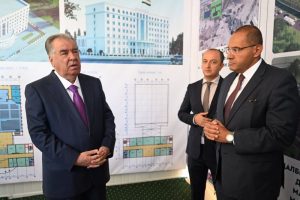 President Emomali Rahmon Reviews Agro-Logistics Center Project in Khorugh