






President Emomali Rahmon Calls for Greater Support for Women’s and Youth Entrepreneurship
Read also
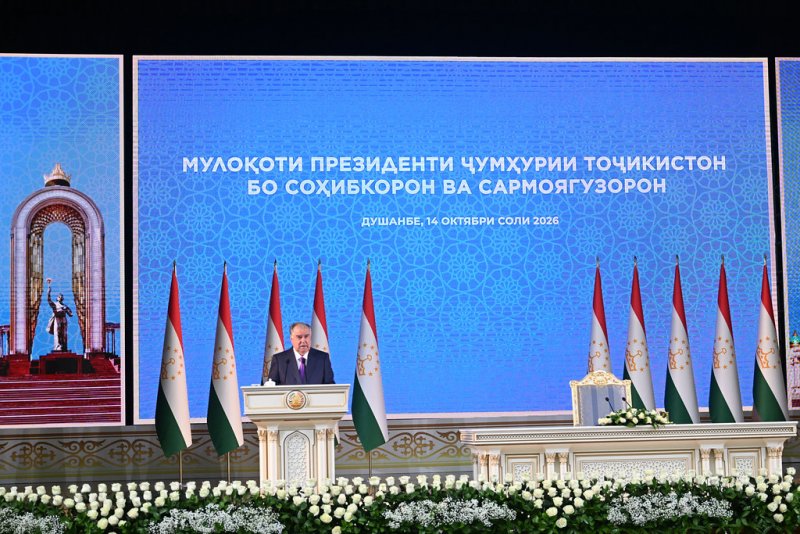
On October 14, at the Kokhi Vahdat building, the President of the Republic of Tajikistan, Leader of the Nation, Emomali Rahmon, met with the country’s entrepreneurs and investors on the occasion of Entrepreneurs’ Day.
At the outset, President Emomali Rahmon congratulated entrepreneurs on Entrepreneurs’ Day in Tajikistan.
The Head of State described Entrepreneurs’ Day as a symbol of recognition for the hard work of people who make a valuable contribution to construction and development, the establishment of domestic production, and the country’s overall progress.
Referring to the nationwide celebration of the 35th anniversary of state independence, the Leader of the Nation highlighted the significant contribution made by entrepreneurs, investors, philanthropists, and the people of Tajikistan as a whole.
It was noted that, in preparation for the 35th anniversary of state independence, entrepreneurs had actively participated in the construction and renovation of more than 36,000 industrial, social, and infrastructure facilities, including thousands of kilometres of roads.
Overall, since independence, entrepreneurs and philanthropists have constructed, renovated, and commissioned more than 3,300 industrial enterprises and workshops, over 4,300 educational facilities, 2,200 healthcare facilities, 2,080 sports grounds, and 5,100 service facilities. With their contribution, 15,000 kilometres of local roads have been renovated, and 734 bridges have been built. Over the past 25 years, entrepreneurs have created more than four million jobs.
President Emomali Rahmon described these contributions as an expression of entrepreneurs’ strong patriotism and civic responsibility.
Taking the opportunity, the President expressed his sincere gratitude to all entrepreneurs, investors, and philanthropists for their valuable contribution to the country’s development and prosperity.
He also thanked foreign investors for their confidence in Tajikistan and their productive cooperation in implementing economic projects.
President Emomali Rahmon stressed that, from the earliest days of the transition to market relations, independent Tajikistan had recognised private property, freedom of entrepreneurial activity, and fair competition as essential foundations for the development of the national economy.
It was noted that the state was taking the necessary measures to develop the private sector, protect property owners’ rights, and create favourable conditions for investors.
The Law of the Republic of Tajikistan “On the Protection and State Support of Entrepreneurship” establishes guarantees for freedom of business activity and the protection of entrepreneurs’ rights. All government bodies must ensure its consistent implementation.
The Head of State also discussed other forms of government support for entrepreneurship, including tax and customs incentives, the introduction of electronic services, and the announcement of a moratorium on inspections of business entities.
It was emphasised that this consistent policy had resulted in the private sector accounting for 70 per cent of both gross domestic product and employment. More than 80 per cent of state tax revenues come from the private sector.
President Emomali Rahmon stated that 395,000 business entities were currently operating in the country, an increase of 20,000 compared with the same period last year.
To achieve the country’s economic objectives, it was deemed necessary to double exports of processed products by 2030 and increase the share of loans directed towards production to more than 40 per cent of the banking system’s loan portfolio.
It was reported that Tajikistan’s gross domestic product reached 177 billion somoni in 2025, with real economic growth of 8.4 per cent. In the first nine months of 2026, the national economy grew by 8.3 per cent.
According to the President, these achievements were primarily the result of peace and stability, the state’s economic policy, and the collective efforts of the people, including entrepreneurs.
President Emomali Rahmon stated that, alongside maintaining high growth rates, the country must ensure improvements in living standards and quality of life, expand competitive production, and create highly productive jobs. These, he emphasised, should be the principal criteria for evaluating the performance of government bodies and the private sector.
In the Leader of the Nation’s view, the effective use of modern knowledge and technologies, increased labour productivity, and the production of competitive goods should become the main objectives of the next stage of entrepreneurial development, in which a strong business sector and a favourable business environment will play a crucial role.
President Emomali Rahmon noted that, in 2025, the Law of the Republic of Tajikistan “On Investment and the Promotion of Investment Activity” was adopted, and the Investment Attraction Strategy through 2040 was approved. He stressed that the provisions of these documents must be implemented fully and consistently at all levels.
It was considered essential to direct attracted investment towards establishing new production facilities, adopting modern technologies, creating productive employment, increasing exports, and further improving the population’s living standards and quality of life.
While analysing the country’s economic and social development, the implementation of strategic objectives, and other government measures aimed at achieving national goals, the Head of State also emphasised the need to put unused production capacity into operation.
Heads of ministries and agencies, local executive authorities, and enterprise owners were instructed to identify the reasons for underutilised capacity at each enterprise and take concrete measures to restore or expand production.
It was considered necessary to assess the establishment of new enterprises not only by their number but also by their production capacity, technological level, permanent jobs created, and competitiveness in the market.
During the meeting, the President called on entrepreneurs not to limit their activities to major cities but also to invest in remote and mountainous districts.
To encourage such initiatives, the Government was instructed to develop a mechanism for supporting industrial and production projects in remote and mountainous areas.
Entrepreneurs and investors were also encouraged to increase investment in the construction and modernisation of tourism infrastructure, including hotels, resorts, and service centres, particularly in remote and mountainous districts with significant tourism potential.
Taking into account modern requirements, the Leader of the Nation instructed the relevant officials to accelerate the digital transformation of production and management, data integration, and specialist training to ensure that the private sector, including entrepreneurs and investors, meets contemporary standards.
The Government and other relevant authorities were also instructed to develop a comprehensive plan for the development of digital entrepreneurship within three months and begin implementing it in 2027.
Entrepreneurs were encouraged to digitise accounting, sales, production management, and quality control in accordance with their enterprises’ needs, and to use artificial intelligence for data analysis and informed decision-making.
Following an analysis of other sectors, including industry and agriculture, entrepreneurs were also advised to increase investment in these areas.
To provide favourable conditions for entrepreneurs and investors, particularly to further support small and medium-sized businesses, President Emomali Rahmon announced that the moratorium on inspections of business entities, excluding inspections conducted by tax authorities, should be extended for another two years, until January 1, 2029.
It was emphasised that protecting lawful business activities and preventing unjustified interference are ongoing responsibilities of government bodies.
Beginning January 1, 2027, inspections of other business entities must be conducted strictly in accordance with the law and based on risk assessments, with due regard for the authority of the relevant inspection bodies and with transparency and proper justification ensured.
The relevant government agencies were instructed, in cooperation with other competent authorities, to establish regular monitoring of compliance with the requirements of the moratorium and the procedures governing inspections of business activities.
To simplify licensing and permitting procedures, President Emomali Rahmon instructed the Government to ensure that all major registration, permitting, and licensing services are fully transferred to electronic format by the end of 2027.
In his address, President Emomali Rahmon also discussed the development of women’s and youth entrepreneurship, the activities of Tajik entrepreneurs abroad, gaining valuable experience, promoting Tajikistan’s economic and investment opportunities, finding reliable partners, attracting modern technologies, and introducing domestically produced goods to foreign markets.
It was emphasised that the development of women’s and youth entrepreneurship is particularly important for making full use of the country’s human potential.
It was reported that the number of active women entrepreneurs had reached 110,000, accounting for 28 per cent of business entities. During the first nine months of the current year, women entrepreneurs received loans totalling 7.2 billion somoni, an increase of 29 per cent compared with the same period last year.
Concluding his address, President Emomali Rahmon expressed confidence that entrepreneurs would continue to make a valuable contribution to the implementation of major projects and the development of Tajikistan through their patriotism, transparent business practices, new initiatives, and responsible approach.
Following the address by the President of the Republic of Tajikistan, Emomali Rahmon, at the meeting with entrepreneurs and investors, several participants delivered speeches. They included entrepreneurs Lutfiya Umarova from Dushanbe, Hamdam Davlatmamadov from the Gorno-Badakhshan Autonomous Province, Gulbuy Vohidova from the Khatlon Province, and Mansur Umarov from the Sughd Province.
They spoke about the support provided by the Head of State, Emomali Rahmon, and the measures undertaken by the Government of the Republic of Tajikistan to develop entrepreneurship, including the provision of customs and tax incentives, among other issues.
 Tajikistan Signs 23 Cooperation Agreements Worth $3.1 Billion at Entrepreneurship Forum
 President Emomali Rahmon Meets with President Ilham Aliyev in Baku
 President Emomali Rahmon Arrives in Baku to Participate in the Seventh CICA Summit
 President Emomali Rahmon Departs for Azerbaijan to Attend the Seventh CICA Summit
 President Emomali Rahmon Remotely Inaugurates Six New Facilities in Shahrinav District
 President Emomali Rahmon Inaugurates Key Emergency Response and Rescue Training Facilities in Shahrinav District
 President Emomali Rahmon launches construction of new Dushanbe airport terminal
 Emomali Rahmon, Masoud Pezeshkian meet on sidelines of CIS summit in Turkmenistan
 President Emomali Rahmon Calls for Expanded CIS Cooperation in Security, Digitalization, Innovation, and Sustainable Development
 President Emomali Rahmon Visits Tajikistan’s National Pavilion at CIS Festival of Cuisine, Crafts, and Industrial and Agricultural Products in Turkmenistan
 Presidents of Tajikistan and Turkmenistan Meet to Discuss Strategic Partnership and Bilateral Cooperation
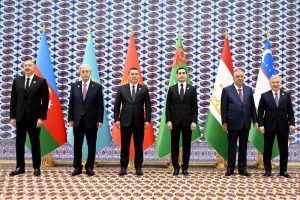 President Emomali Rahmon Proposes Regional AI Center in Dushanbe at Central Asia–Azerbaijan Summit