







UN Secretary General urges ramped up support to meet Peacebuilding Fund’s financial challenges
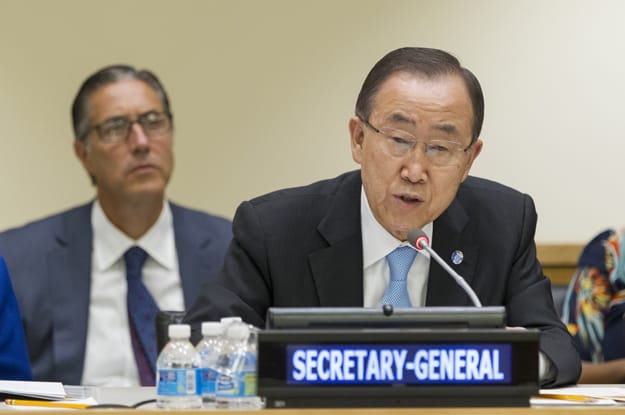
Ban urges ramped up support to meet Peacebuilding Fund’s financial challenges The United Nations system is being pushed to its limits by an unprecedented number of conflicts and economic crises globally, as well as by climate change and inequalities, Secretary-General Ban Ki-moon said today, calling on the international community to help keep the Organization’s Peacebuilding Fund from falling into a dangerous financial position.
“Without the Peacebuilding Fund, we will be forced to stand by as we witness the preventable loss of countless lives and the extinguishing of hope for millions more,” the UN chief told participants at a pledging conference for the Fund, entitled “Invest in Sustaining Peace.”
At today’s event, twenty-six member states pledged $151 Million to the UN Peacebuilding Fund, to cover the years 2017-2019.
Established in 2006 at the request of the UN General Assembly and Security Council, thePeacebuilding Fund concentrates on post-conflict peacebuilding initiatives, currently supporting more than 120 projects in 25 countries. Since its creation to the end of 2015, the Fund has allocated $623 million to 33 countries to help prevent relapse into conflict and to sustain peace.
At today’s event – which was co-organized by the Permanent Missions of Kenya, Mexico, the Netherlands, the Republic of Korea, Somalia, Sri Lanka, Sweden and the United Kingdom – the Secretary-General lamented that the Fund faces “enormous challenges,” because after a long decline, the number of violent conflicts is rising.
“Although there are fewer wars between States, conflicts are taking place within countries, often with international involvement and involving non-state actors. These trends are pushing the UN system to its limits,” Mr. Ban said.
“We are failing to live up to the noble call that opens the UN Charter, “To save succeeding generations from the scourge of war,” he added.
Indeed, in 2015 alone, the Secretary-General said, an estimated $34 billion was spent on UN peacekeeping and humanitarian aid for victims of conflict and refugees. “This is unsustainable,” he stressed.
“That year, 2015, experts estimate that violence and conflict around the world cost some $13.6 trillion. This is more than $1,800 per person on this planet. And yet, we are struggling to raise a tiny fraction of that amount for conflict prevention and peacebuilding,” he said.
The agreements and reviews of the past year, from the 2030 Agenda for Sustainable Development and theParis Agreement on climate change, to the reviews of peace operations and the World Humanitarian Summit, show that the UN must change its approach and its ways of working, the Secretary-General said.
“Some of our traditional tools are out of date,” Mr. Ban emphasized. “The urgent need to address the root causes of conflict is a thread running through these processes, culminating in the landmark joint resolutions on sustaining peace passed by the General Assembly and the Security Council in April.”
As such, the UN is “working hard to implement the clearly-expressed will of Member States,” the Secretary-General said, by breaking down silos and working across departments and agencies, emphasizing joint analysis and planning towards collective outcomes, as well as working closely with the World Bank.
He highlighted that the Peacebuilding Fund has a “vital role” to play in that approach, as it helps millions of people around the world by providing resources for projects that are too risky for others to invest in. In addition, the Fund can react within days, adjusting its funding according to context, the UN chief said.
“The Peacebuilding Fund builds coherence by spreading its resources through more than 25 UN agencies and other partners and getting them to work together,” Mr. Ban said. “This fund is inclusive: its projects support women and young people; and it has a diverse donor base of more than 50 countries.”
“But despite all this, and despite the Peacebuilding Fund’s excellent track record, this crucial resource is in a perilous financial position,” he added, emphasizing that without at least $100 million per year, the Peacebuilding Fund cannot meet its most basic commitments.
The funding requested today will begin to “redress the imbalance between spending on conflict, and on peace,” Mr. Ban said.
“Inaction is also a choice, and its results can be catastrophic. I urge you today to make sure that my successor will be able to make full use of the Peacebuilding Fund to perform its vital work,” he concluded.
 Tajikistan Discusses Economic Cooperation With International Financial Institutions in Bangkok
 Iranian Film Days Open in Dushanbe as Part of Toji Somon Film Awards
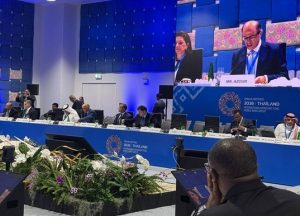 Tajikistan’s Central Bank Chief Discusses Monetary Policy Amid Global Economic Uncertainty in Thailand
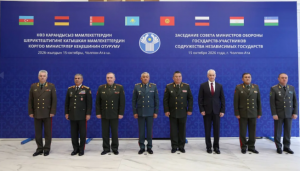 Tajikistan Participates in CIS Defense Ministers’ Meeting in Kyrgyzstan
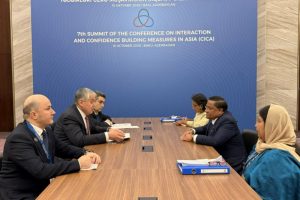 Tajikistan, Sri Lanka Discuss Bilateral Cooperation on Sidelines of CICA Summit
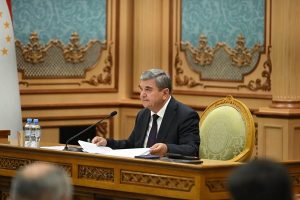 Tajikistan Reviews Progress on State Greening Program Through 2040
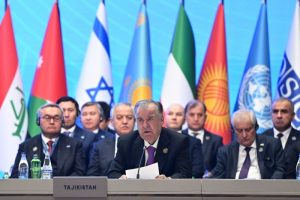 Tajikistan to Host U.N.-Backed Peace Conference in Dushanbe in May 2027
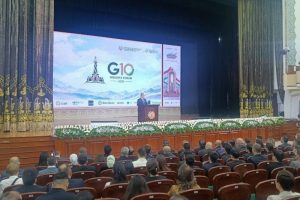 G10 Insight Forum 2026 Opens in Dushanbe to Explore Business and Investment Opportunities
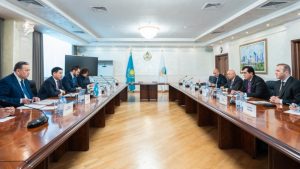 Tajikistan and Kazakhstan Railways Agree to Boost Freight Transport Cooperation
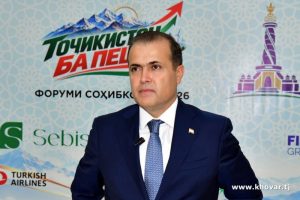 Tajikistan Signs 23 Cooperation Agreements Worth $3.1 Billion at Entrepreneurship Forum
 President Emomali Rahmon Extends Moratorium on Small Business Inspections Until 2029
 Khujand Declaration Takes Center Stage at Geneva Peace Forum