






Expanded meeting of the Government of the Republic of Tajikistan
Read also
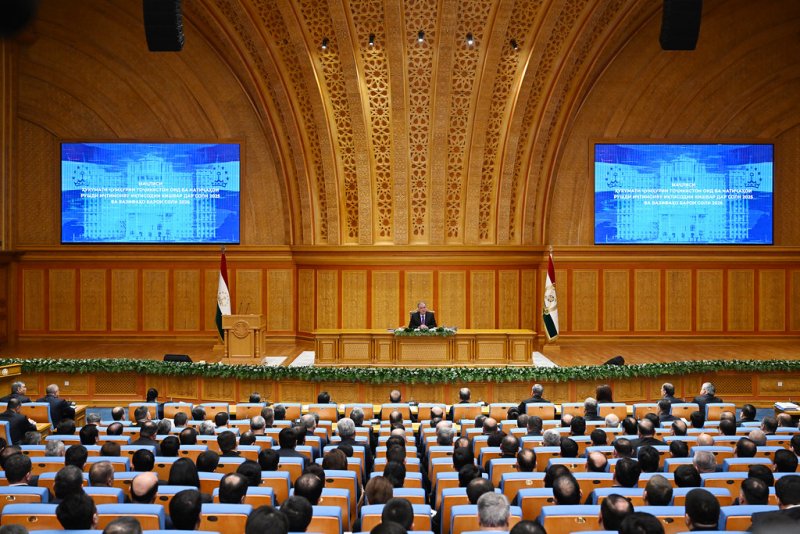
On January 23, an expanded meeting of the Government of the Republic of Tajikistan was held in the Government building of the Republic of Tajikistan under the leadership of the President of the Republic of Tajikistan, Leader of the Nation, Head of the Government, His Excellency Emomali Rahmon.
The meeting was attended by the leadership and members of the Government, the Executive Office of the President of the Republic of Tajikistan, and its subdivisions; heads of central government agencies, departments under the President and Government; national enterprises and institutions; chairmen of provinces, cities, and districts; heads of higher education institutions, state investment project implementation centers, state and joint-stock banks, official newspapers and magazines; and other officials.
At the expanded meeting of the Government of the Republic of Tajikistan, the results of the country’s socioeconomic development in 2025 were reviewed in detail and the key objectives for 2026 were identified.
The expanded meeting of the Government began with a report from Prime Minister Kokhir Rasulzoda on the results of socioeconomic development in 2025.
As noted, despite the complex global challenges of our time and their adverse impact on the country’s economy, 2025 was a successful year for the people of Tajikistan, with significant advances in the country’s political and socioeconomic life.
According to the Prime Minister, during the reporting period, the gross domestic product amounted to 176.9 billion somoni, with a growth rate of 8.4 percent.
The inflation rate was 3.5 percent, 0.1 percentage point lower than the 2024 figure.
In 2025, state budget revenues amounted to 60.3 billion somoni, 7 billion somoni more than planned.
During the reporting year, 400 new industrial enterprises were commissioned in the country, ensuring growth in industrial production.
It was emphasized that, to ensure the sustainable development of the energy sector and achieve its goals in 2025, 13 state investment projects totaling 14.9 billion somoni were implemented.
As a result of measures taken by the Government, electricity generation in the reporting year increased by 7 percent compared to 2024, reaching 24 billion kWh.
In the reporting year, total agricultural production amounted to 84.6 billion somoni, representing a 9.5 percent increase compared to 2024.
To support entrepreneurship and improve the investment climate, the Government has taken a number of measures in recent years, including through tax and customs incentives for the development of domestic production.
In 2025, foreign investment in the country was estimated at 59.5 billion somoni, a 35 percent increase compared to 2024.
During this period, the total volume of loans issued by the country’s banking system to sectors of the national economy and the population increased to 30 billion somoni.
During the reporting period, the volume of investments in fixed assets reached 28.7 billion somoni, a 23 percent increase compared to the 2024 figure.
The implementation of 14 investment projects totaling 11.7 billion somoni in the transport sector enabled the sector’s development. As a result, 155 million tons of freight and 1.1 billion passengers were transported by all modes of transport last year, representing an increase of 15.2 percent and 11 percent, respectively, compared to 2024.
In 2025, total trade turnover amounted to 77.3 billion somoni, a 14 percent increase compared to 2024.
The volume of paid services across all service sectors in 2025 amounted to 30.5 billion somoni, a 13.2 percent increase compared to 2024.
Measures taken by the Government enabled a 20.5 percent increase in foreign trade turnover during the reporting period compared to 2024.
The Prime Minister noted that during the reporting period, the number of preschool institutions in the country reached 795, an increase of 38 compared to 2024.
To expand preschool education coverage, 3,154 child development centers have been established within general education institutions, serving 182,700 children.
In 2025, 214 general education institutions, as well as additional buildings and classrooms for 99,000 students, were built and commissioned in the country.
Currently, there are 4,056 general education institutions operating in the country.
To develop the healthcare sector and promptly address existing problems, 4.3 billion somoni were allocated from the state budget for the sector’s development in 2025, a 24.1 percent increase compared to 2024.
During the reporting period, 113 healthcare facilities were built and commissioned, and 301 facilities underwent major repairs and reconstruction.
Regulating labor relations, developing the labor market, and ensuring employment are priorities in Tajikistan’s state policy.
During the reporting year, 280,000 new jobs were created in the country from all sources.
At the Government meeting, reports were heard from Finance Minister Fayziddin Kakhkhorzoda, Chairman of the Tax Committee Nusratullo Davlatzoda, and Head of the Customs Service Khurshed Karimzoda.
It was reported that as a result of economic growth, job creation, improved tax administration and taxpayer services, outreach efforts on tax legislation, expansion of non-cash payments through electronic payment systems, development of digitalization processes, and other measures, 26.5 billion somoni were received by the state budget in 2025 from taxes and domestic payments, which is 3 billion 598 million somoni more than projected.
The national tax and payment plan was fulfilled at 104.3 percent, including in the Gorno-Badakhshan Autonomous Province (GBAO), 103.1 percent in the Khatlon Province (Khatlon), 107.1 percent in the Sughd Province (Sughd), 119.8 percent in Dushanbe, and 109.5 percent in cities and districts of republican subordination overall.
Following reports from the customs and tax authorities, the Head of State, Emomali Rahmon, gave strict instructions to improve the implementation of customs payment plans, eliminate tax arrears, ensure timely payment of pensions and social security contributions, and transfer all financial transactions in these areas to electronic format.
Then, the Prosecutor General of the Republic of Tajikistan, Habibullo Vohidzoda, presented a report on the activities of supervisory and oversight bodies in the area of crime prevention, eliminating violations of the law in the economic and social spheres, and ensuring strict compliance with the country’s current legislation.
Prosecutor’s offices were instructed to take timely and urgent measures to prevent cases of non-compliance with the legislation of the Republic of Tajikistan regarding land use, regulation of holidays and rituals, and other areas.
The Chairman of the State Committee on Investment and State Property Management, Sulton Rahimzoda, reported on the progress of attracting investment into the national economy and ways to increase it.
Also at the Government meeting, Firdavs Tolibzoda, Chairman of the National Bank of Tajikistan, and Alijon Salimzoda, Chairman of the Savings Bank of the Republic of Tajikistan «Amonatbank,» reported on the state of the banking sector and monetary policy.
The leadership of the State Committee on Investment and State Property Management, the National Bank, and other state-owned and joint-stock banks were instructed to take specific measures to attract domestic and foreign investment into the national economy, particularly direct investment, ensure the stability of the national currency, increase lending, transition to cashless payments, and fully convert all financial and banking transactions to electronic format.
During the Government meeting, Sherali Kabir, Minister of Industry and New Technologies, delivered a report.
It was emphasized that the declaration of 2022–2026 as «Years of Industrial Development» laid a solid foundation for the country’s accelerated industrialization.
In 2025, new industrial enterprises and workshops were commissioned in the country, creating 17,000 new jobs, while industrial production increased by 22.1 percent compared to the previous year.
The Head of State, Emomali Rahmon, instructed the leadership of the Ministry of Industry and New Technologies to ensure the practical implementation of one of the strategic goals—the accelerated industrialization of the country—by commissioning new production facilities, restarting idle capacity, and preventing industrial shutdowns, increasing the production of competitive import-substituting and export-oriented products, expanding the number of small manufacturing enterprises and workshops in cities and districts, particularly in fruit and vegetable processing, and ensuring the sustainable operation of industrial enterprises and organizing production in line with market demands.
The meeting also heard a report from Transport Minister, Azim Ibrohim, summarizing the industry’s performance in 2025 and identifying key areas for developing transport infrastructure and improving service quality in the subsequent period.
The Ministry of Transport has been tasked with ensuring the fulfillment of priority objectives for 2026, as well as the timely and high-quality implementation of investment projects in the sector.
Minister of Energy and Water Resources, Daler Juma, and heads of industry companies have been given specific instructions on the timely and high-quality implementation of projects to reduce electricity losses in cities and regions of the country, implement a billing system and fully account for electricity consumers, ensure the timely collection of electricity bills from residents, organizations, and businesses, and build alternative power generation facilities.
Minister of Agriculture, Qurbon Hakimzoda, and Chairman of the Environmental Protection Committee, Bahodur Sheralizoda, presented reports on the targeted use of land, the inclusion of new lands in agricultural production, increasing agricultural output and exports, the development of livestock farming, breeding, poultry farming, fish cultivation, crop production, grain and vegetable growing, timely land cultivation, the use of high-quality seeds and mineral fertilizers, as well as the impacts of climate change, the environmental situation, and other industry-related issues.
The Ministry of Agriculture, the Export Agency, the State Committee for Land Management and Geodesy of the Republic of Tajikistan, the Agency for Land Reclamation and Irrigation, the Academy of Agricultural Sciences, and local government bodies have been instructed to ensure the targeted use of land, comprehensive preparation for the spring sowing campaign, particularly in terms of the efficient use of each plot of land, taking into account last year’s low snowfall and dry autumn. This includes timely moisture-recharging irrigation, preparation of pumping stations, improvement of land reclamation conditions, compliance with agronomic requirements, increasing crop yields and collecting 3-4 harvests from irrigated arable land, tree planting, providing farmers with high-quality agricultural seeds, including high-quality grain seeds, as well as seeds adapted to climatic conditions, and the cultivation of regionalized varieties of agricultural crops. This includes increasing agricultural exports.
Minister of Education and Science, Rahim Saidzoda, Minister of Health and Social Protection, Jamoliddin Abdullozoda, and Minister of Labor, Migration and Employment, Soleh Kholmahmadzoda, were instructed to improve the quality of education, prepare and publish high-quality textbooks and teaching materials, build new modern schools, promote a healthy lifestyle, build and reconstruct medical centers and health centers, and ensure local employment and develop handicrafts and folk crafts.
Dushanbe Mayor, Rustam Emomali, noted in his report that in 2025, the Dushanbe City Executive Authority implemented a number of creative initiatives, resulting in the creation of 46,000 new jobs, in order to achieve the country’s strategic goals and, based on these, improve the well-being of the capital’s residents and bring Dushanbe to a new stage of development.
According to Dushanbe Mayor, Rustam Emomali, Dushanbe’s socioeconomic development is supported by sustainable indicators: the gross regional product growth rate was 8.3 percent, and the city budget was exceeded by 22.2 percent.
As part of the country’s strategic goal of accelerated industrialization, industrial construction received new impetus during this period: 62 new production plants and workshops were commissioned, and industrial production growth rates reached 26 percent.
Furthermore, the growth rate of fixed capital investment increased by 31 percent compared to 2024, with residential buildings and other social and service facilities totaling 713,000 square meters commissioned.
Specifically, in 2025, six educational institutions for 19,000 students and 16 preschools for 3,640 children were built and commissioned in Dushanbe.
Using all funding sources, a total of 60 kilometers of roads in the city have been reconstructed and paved at a cost of 406 million somoni.
Alisher Mirzonabot, Chairman of the Gorno-Badakhshan Autonomous Province, Rajab Ahmadzoda, Chairman of the Sughd Province, and Davlatali Said, Chairman of the Khatlon Province, presented reports on the socioeconomic development of regions, cities, and districts in 2025.
The Head of State, Emomali Rahmon, gave specific instructions to the heads of regions, cities, and districts to intensify preparations for the celebration of the 35th anniversary of State Independence, fulfill the objectives outlined in the Address of the President of the Republic of Tajikistan, implement programs and plans approved by the Government, promptly address citizen requests and complaints, support entrepreneurship, strengthen cooperation with the private sector, ensure sustainable socioeconomic development, increase industrial and agricultural production, expand exports of these products, and revitalize the activities of educational, healthcare, and cultural institutions.
At the conclusion of the extended meeting of the Government, the President of the Republic of Tajikistan, Emomali Rahmon, delivered a speech on the country’s socioeconomic development results in 2025 and objectives for 2026. Summarizing the performance of all sectors of the national economy, he gave specific instructions to members of the Government, the Presidential Executive Office, heads of ministries and agencies, regions, cities, and districts, and other government agencies to address existing shortcomings, implement the instructions outlined in the Address of the President of the Republic of Tajikistan, and prepare and implement action plans to ensure the progressive development of the country’s industries and regions.
The Government, ministries and agencies, and local executive authorities have been tasked with ensuring the timely and high-quality implementation of the instructions outlined in the Address of the President.
He also instructed the Government to pay special attention to the development of all sectors of the national economy and the resolution of socially significant problems, taking specific measures to prevent the impact of external factors.
President Emomali Rahmon instructed the Government, ministries and agencies, and local executive authorities to intensify their efforts to achieve strategic goals and ensure economic growth of at least 8 percent.
To this end, it was deemed necessary to take effective measures to identify and rationally utilize new sources of development, as well as to identify and attract additional sources of state budget revenue and ensure the country’s financial stability.
It was also instructed to prioritize this year’s efforts to efficiently utilize existing capacity, establish manufacturing enterprises, create new jobs, accelerate the digitalization of national economic sectors, and develop a «green economy.»
In this regard, it was emphasized that increasing the competitiveness of domestic products, strengthening the country’s export potential, developing human capital, and improving the quality of social services are among the priorities in this area.
The Government was instructed to take timely measures to ensure the fulfillment of the instructions set out in the Head of State’s Address regarding increasing wages, pensions, and stipends this year, as well as other social obligations of the state to the people of Tajikistan.
Alongside this, it was deemed necessary to take ongoing measures to improve the level and quality of public services, meet the growing needs of the consumer market, and maintain inflation at a moderate level.
The Ministry of Finance and the Tax Committee, in collaboration with local executive authorities, have been instructed to take the necessary measures to ensure the high-quality and full execution of the state budget revenue in 2026.
At the same time, the relevant agencies and bodies have been instructed to take effective measures to reduce tax arrears and prevent the accumulation of new tax arrears.
Due to existing shortcomings in the targeted and transparent spending of budget funds, as well as strict adherence to financial discipline, ministries and agencies, local executive authorities, budgetary institutions, and other organizations have been instructed to promptly address these shortcomings and ensure the efficient use of budget funds and the transparency of their expenditure.
The Head of State instructed that additional and effective measures be taken to prevent corruption in all government agencies and bodies.
The Ministry of Finance, the Ministry of Economic Development and Trade, the State Committee on Investment and State Property Management, the National Bank, and other ministries and agencies have been tasked with ensuring the timely and high-quality implementation of joint reform programs in cooperation with international financial institutions.
In this context, it was deemed necessary to take concrete and effective measures to continue and expand the attraction of grant funds and concessional loans to the national economy, as well as to support the state budget.
In addition to these instructions, the State Committee on Investment and State Property Management, sectoral ministries and agencies, and project implementation centers were instructed to continuously monitor the timely implementation of projects and the targeted use of funds and to take urgent and effective measures to address existing deficiencies.
Furthermore, the State Committee on Investment and State Property Management, ministries and agencies, and local executive authorities were instructed to take additional measures to significantly increase the volume of direct investment.
In particular, Tajikistan’s diplomatic and trade missions abroad were instructed to prioritize the systematic presentation of investment opportunities and significantly intensify their efforts to attract direct investment.
The National Bank, in conjunction with financial and credit institutions, was instructed by the Head of State to effectively organize the lending process and significantly increase the volume of loans provided to manufacturing businesses, especially in remote areas of the country.
Furthermore, the National Bank was instructed, in conjunction with ministries and agencies, to ensure the development of the payment system and the full implementation of cashless payments in trade and services, as well as to introduce mandatory use of a single code for individual entrepreneurs starting July 1, 2026.
The President noted that the widespread adoption of digital technologies and the transition to a complete cashless payment system in government agencies and across all sectors are an absolute necessity of the times.
Therefore, to expedite the digitalization process, the full and timely execution of these instructions by all responsible officials in this area must be ensured within the established deadlines.
In particular, the Communications Service, in cooperation with mobile phone companies, was instructed to take urgent and effective measures to improve internet speed, service quality, and accessibility.
The Agency for Innovation and Digital Technologies, in conjunction with relevant ministries and agencies, was tasked with ensuring the full digitalization of public services through a unified registry.
Digital monitoring of state budget expenditures is also to be gradually introduced to enhance transparency.
Furthermore, the President instructed the Agency for Innovation and Digital Technologies and the State Committee on Investment and State Property Management to implement a unified digital system for monitoring public investment projects, ensuring financial discipline and increasing accountability for those implementing them.
In his analysis of the country’s industrial sector, President Emomali Rahmon emphasized that, given the country’s resources and capabilities, the implementation of accelerated industrialization measures is the foundation for establishing manufacturing enterprises, increasing industrial output, particularly high-value-added products, creating jobs, boosting exports, and overall developing the national economy.
In this regard, President Emomali Rahmon instructed the Ministry of Industry and New Technologies, other ministries and agencies, and local government bodies to address existing shortcomings, ensure the implementation of relevant instructions, and, using all available resources and capabilities, ensure the accelerated development of the industry.
He also instructed, in conjunction with ministries and agencies, to strengthen production capacity, ensure growth in the production of competitive products and their exports, and, on this basis, increase the share of industry in the gross domestic product to 30 percent by 2030.
Concurrently, he instructed to take specific measures to address the problems of enterprises that had suspended operations and to modernize them through public-private partnerships, primarily involving domestic investors.
Furthermore, he instructed to expand cooperation with investors in order to organize the complete processing of minerals and the production of high-value-added products, including non-ferrous and rare metals.
Based on an analysis of the country’s energy system, the President of the Republic of Tajikistan, Emomali Rahmon, instructed the Ministry of Energy and Water Resources, “Barqi Tojik” Joint-Stock Company, and Electricity Distribution Networks to take additional measures to ensure the timely and high-quality implementation of projects to reduce electricity losses in cities and regions of the country.
Instructions were also given to work with local government authorities to ensure the implementation of billing system, full consumer metering, and timely collection of electricity payments from individuals, organizations, and businesses.
The Head of State instructed responsible officials to expand the implementation of measures to develop alternative power generation capacity in order to achieve the strategic goal of energy independence and fully provide the country’s population with electricity.
In particular, it was emphasized that the construction and commissioning of solar power plants in the Asht and Jayhun districts must be ensured this year.
To ensure the commissioning of the third unit of the Rogun Hydroelectric Power Plant in 2027, the Head of State instructed responsible officials to expedite construction work and ensure the implementation of the approved plan in compliance with international standards.
To increase agricultural production and ensure the country’s food security, the President of the Republic of Tajikistan, Emomali Rahmon, instructed the Ministry of Agriculture, the State Committee for Land Management and Geodesy, the Agency for Land Reclamation and Irrigation, the Food Security Committee, the Academy of Agricultural Sciences, other relevant ministries and agencies, and local government bodies to address existing shortcomings in the sector, effectively implement water-saving irrigation technologies, efficiently use each plot of land, introduce replanting, and achieve three to four harvests.
The need to meet projected sowing targets for key agricultural crops, particularly potatoes, cotton, and rice was also stressed.
The President also instructed responsible officials to take timely measures to ensure comprehensive preparation for the spring planting season, improve land reclamation, prepare pumping stations, use high-quality agricultural seeds, adhere to agricultural practices, and plant seedlings, as well as develop livestock farming.
He also instructed them to implement effective measures to assess the risks of potential drought and climate change and prevent their negative impacts.
The Head of State reiterated that the issue of ensuring a two-year food supply for every family is becoming especially pressing.
In this regard, it was deemed essential for regional, city, and district leaders and specialists to actively educate the population on ensuring the necessary food supplies for the summer and fall.
Local executive authorities and the Antimonopoly Service, together with other relevant agencies, were instructed to continuously take measures to ensure sufficient supply on the consumer market, monitor unjustified price increases, and prevent and eliminate unfair competition.
The Ministry of Industry and New Technologies, the Ministry of Agriculture, other ministries and agencies, and heads of regions, cities, and districts were instructed to take the necessary measures to develop deep processing of raw materials, reduce losses, and improve the production-processing-storage-sales chain.
The Ministry of Agriculture, the Ministry of Economic Development and Trade, export agencies, Tajikstandart, and the Food Security Committee have also been instructed to implement effective measures to bring agricultural products into compliance with international standards, expand foreign markets, and stimulate the export of domestic products.
In analyzing the state of social sectors, the Ministry of Education and Science, the Ministry of Finance, and other relevant agencies were instructed to organize a digital outreach system for general education institutions, equip them with modern digital technologies, and organize short-term courses on digital pedagogy.
The Ministry of Education and Science, heads of regions, cities, and districts, and heads of relevant ministries and agencies were instructed to address existing deficiencies in educational institutions in emergency or in need of repair by the 35th anniversary of Tajikistan’s independence, as well as to ensure the operation of some institutions in three shifts, utilizing all available resources.
Furthermore, the Ministry of Education and Science, the Committee on Primary and Secondary Vocational Education, the Agency for Supervision in Education and Science, and relevant ministries and agencies were instructed to develop and submit to the Government of the Republic of Tajikistan, as soon as possible, a mechanism for assessing the quality of education, taking into account best practices.
The Ministry of Health and Social Protection of the Population, in conjunction with relevant agencies, was instructed to intensify efforts to digitalize the healthcare sector, including by incorporating best practices, and to implement electronic medical records.
The Ministry of Culture, heads of regions, cities, and districts, heads of relevant departments, and representatives of central government agencies assigned to cities and districts were instructed to take specific measures to address issues related to emergency facilities in the sector and those in need of repair.
The Ministries of Culture, Foreign Affairs, and other relevant agencies were also instructed to strengthen cooperation with governments and international organizations to widely promote the culture and history of the Tajik people.
The country’s international airports and other border crossings were instructed to improve their service systems and infrastructure capacity, taking into account the expected long-term increase in tourist numbers.
At the Government meeting, Head of State, Emomali Rahmon, emphasized that the primary goal of declaring 2026 the «Year of Expansion of Development and Construction Works and of Strengthening the National Self-Awareness» is to carry out construction and improvement work throughout the country, as well as to further enhance the population’s education, self-awareness, and national self-esteem based on its ancient history and rich national culture.
It was noted that increasing knowledge and education, strengthening the sense of self-awareness and national identity of every citizen of the country is a critical task requiring the implementation of specific practical measures.
In this regard, the Committee on Television and Radio, the National Academy of Sciences, the Ministry of Education and Science, and other ministries and agencies were instructed to take practical steps, with the involvement of experts, specialists, and scholars, to promote the history, civilization, and rich culture of the Tajik people.
The need was recognized to develop engaging programs and documentaries in various languages and widely disseminate them among young people, adolescents, and society at large.
Furthermore, the Committee on Religion, Regulation of Traditions, Celebrations, and Rituals was instructed, in conjunction with the Islamic Institute, parents, intellectuals, and religious leaders, to strengthen their work in the area of religious education, particularly in the areas of the humanistic teachings of Islam, compliance with the laws of a secular state, and the protection of the creative values of Islam, as well as preventing the spread of extremism.
Concluding his speech, President Emomali Rahmon gave specific instructions to ministries, agencies, and local executive bodies to ensure the high-quality celebration of the 35th anniversary of the country’s independence and the implementation of the Head of State’s instructions stemming from his latest Address.
In particular, representatives of central government bodies assigned to cities and districts, as well as heads of regions, cities, and districts, were instructed to strengthen oversight of the construction and renovation of planned facilities and the quality of their execution.
It was noted that construction work should be expanded before this sacred date, and the celebratory events held at a high level.
The Head of State recalled that, in the current global crisis and instability, protecting independence and freedom, working for the progress of the state and the improvement of the Motherland is the primary and daily responsibility of every honest and decent citizen.
In this regard, he emphasized that every citizen and every family must, with a sense of responsibility for building the state and the Motherland, first and foremost, renovate and improve their homes, streets, and neighborhoods.
The President emphasized that members of the Government, heads of other agencies and government bodies, and heads of regions, cities, and districts bear personal responsibility in this critical year for fulfilling the instructions of the President’s Address and Government decisions, addressing the shortcomings identified at today’s meeting, fulfilling assigned tasks, and upholding public order.
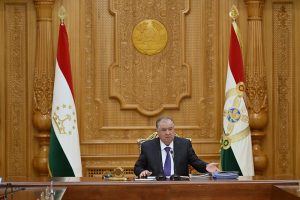 Meeting of the Government of the Republic of Tajikistan
 President Emomali Rahmon Concludes State Visit to the Republic of Uzbekistan
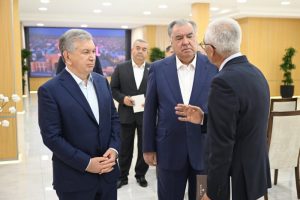 Presidents Emomali Rahmon and Shavkat Mirziyoyev Visits Mergantex Textile Factory in Bukhara, Uzbekistan
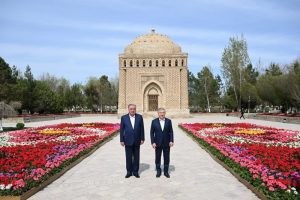 Leaders of Tajikistan and Uzbekistan Tour Major Cultural Heritage Sites in Bukhoro
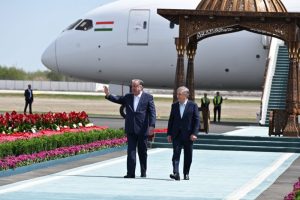 Shavkat Mirziyoyev Welcomes Emomali Rahmon in Bukhoro with Ceremonial Reception
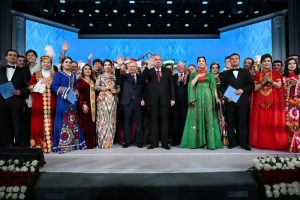 Emomali Rahmon and Shavkat Mirziyoyev Attend “Friendship Evening” Cultural Program in Tashkent
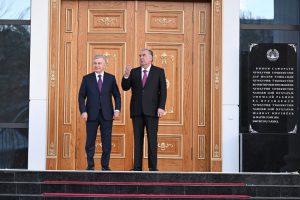 Emomali Rahmon and Shavkat Mirziyoyev Inaugurate New Tajik Embassy Building in Tashkent
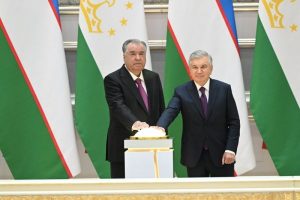 Emomali Rahmon and Shavkat Mirziyoyev Launch Joint Tajik-Uzbek Industrial Projects
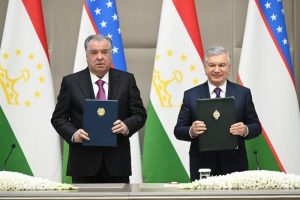 Leaders of Tajikistan and Uzbekistan Witness Signing of Strategic Documents
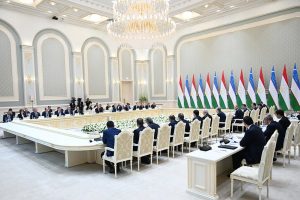 Tajikistan — Uzbekistan Summit Talks Continue in Tashkent
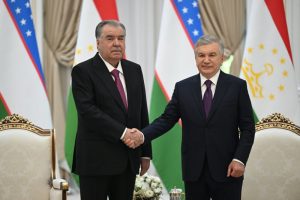 High-Level Tajik–Uzbek Talks Open with Leaders’ Bilateral Meeting
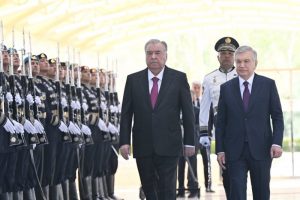 Kuksaroy Palace Hosts Official Welcoming Ceremony for Tajikistan’s President During State Visit