





Afghan Researcher Based in Hamburg, Germany: “The Noble People of Tajikistan Possess a Great Spiritual Treasure”
Read also
DUSHANBE, 26.11.2026 (NIAT Khovar). From 23 to 27 November, a series of international scientific and cultural events dedicated to honouring two outstanding figures of Tajik science and civilization — Abu Ali ibn Sina (Avicenna) and Omar Khayyam — is being held at UNESCO Headquarters in Paris, France, at the initiative of the Republic of Tajikistan.
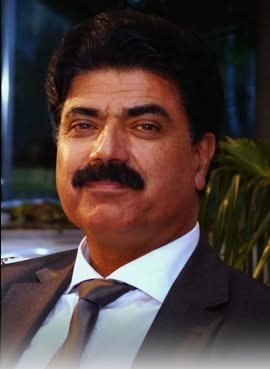
In connection with the significance of these events, the place of these two great scholars’ scientific and literary works in world civilization, and the importance of studying their legacy in the modern era, a correspondent of NIAT Khovar interviewed Professor Dr. Hamidullah Mofid, an Afghan linguist, literary scholar and researcher based in Hamburg, Germany, who is participating in the events.
NIAT Khovar: What are your impressions of these international scientific and cultural events dedicated to commemorating the legacy of Abu Ali ibn Sina and Omar Khayyam?
Hamidullah Mofid: First of all, I would like to express my gratitude for the opportunity to participate in this important gathering. My impressions are profound and encouraging. At UNESCO Headquarters in Paris, I witnessed a remarkable phenomenon: representatives of different nations, languages and academic traditions had come together around the names of two figures whose legacy belongs not merely to one nation or region, but to all humanity.
In my view, the significance of such gatherings is not limited to the delivery of presentations and the exchange of views. They provide an opportunity to examine the great legacy of outstanding historical figures from the perspective of contemporary scholarship and further strengthen ties between civilizations and cultures.
Ibn Sina and Omar Khayyam are historical figures whose ideas, works and worldviews continue to be studied today. When we speak about these two scholars, we are not simply looking back at the past; we are also reflecting on the future of science, knowledge, intellectual thought and humanity.
NIAT Khovar: Which aspects of the scientific, philosophical and literary legacy of these two great thinkers are particularly relevant to the modern world?
 Hamidullah Mofid: To put it briefly, Ibn Sina teaches us how to think, while Omar Khayyam teaches us the wisdom of life. Abu Ali ibn Sina made an outstanding contribution to the development of logical thinking, philosophy, medicine and the study of fundamental questions of existence. His renowned works, including The Canon of Medicine and The Book of Healing, are not merely monuments to the history of science, but also important sources for studying humanity, knowledge, intellectual understanding and existence. The questions he raised in his works remain relevant to researchers today.
Omar Khayyam, through his philosophical reflections and profound quatrains, encourages people to contemplate life, the passage of time, truth and the meaning of existence. At times, a single quatrain of his can convey an idea that would require hundreds of pages to explain. In concise yet meaningful language, he raises profound questions about life.
In my view, the shared message of these two thinkers is particularly important for our time. We live in a world filled with information, an abundance of words and countless voices. In such circumstances, their works guide us towards deeper reflection, the careful choice of words and the pursuit of truth. In other words, what matters is not speaking at length, but expressing valuable and meaningful ideas.
NIAT Khovar: To what extent can such international events contribute to promoting Tajikistan’s cultural and historical heritage on the global stage?
Hamidullah Mofid: Tajikistan is not on the periphery of this great heritage; rather, it is one of the important centres of Tajik-Persian civilization. Abu Ali ibn Sina was born in the village of Afshana, near Bukhara. Omar Khayyam created his literary works in the Persian language, which holds a fundamental place in the formation and development of Tajik culture and literature.
When the international community commemorates Ibn Sina and Omar Khayyam in Paris, it also draws attention to the history of science and culture of the Greater Khorasan region and the Persian-speaking world. For Tajikistan, such events provide a valuable opportunity to showcase its historical and cultural contribution to world civilization.
These gatherings also demonstrate that the scientific and literary legacy of the past does not belong exclusively to history. It can play an effective role in the development of education, the upbringing of younger generations, strengthening national identity and expanding international cultural relations.
NIAT Khovar: What role can European universities and research institutions, particularly those in Germany, play in further studying and promoting the legacy of Ibn Sina and Omar Khayyam?
Hamidullah Mofid: Europe, and Germany in particular, has a rich tradition of philological, philosophical and medical research. Universities and research centres in this country can make a significant contribution to the in-depth and comprehensive study of these two thinkers’ legacy. In my view, three areas are particularly important in this regard.
First, the study of original texts. We should not rely solely on translations of the works of past generations. Researchers need to turn to the original texts, their linguistic structures, the etymology of words and the historical circumstances in which these ideas emerged. Sometimes, the study of a single word or concept can provide valuable information about the history of a language and the cultural relations between peoples.
Second, Ibn Sina’s legacy should be studied not only as a historical subject, but also in connection with contemporary issues in medical science and philosophy. His scientific ideas are particularly important for understanding the development of human knowledge.
Third, direct cooperation between German and Tajik universities should be expanded. The establishment of joint academic programmes and collaborative departments, the publication of scholarly research, the organisation of international conferences and meetings, and the exchange of researchers can create favourable conditions for a deeper study of this heritage.
Science knows no borders. Only through cooperation can we achieve new scientific results and pass on the spiritual treasures of past generations to those of the future.
NIAT Khovar: How important is international scientific and cultural cooperation in preserving and passing on this shared heritage to future generations?
Hamidullah Mofid: Such cooperation is not merely important; it is essential and vital. No nation can preserve and fully study such a great legacy on its own. Ancient manuscripts and copies of scientific and literary works are kept in libraries and research centres around the world, including in Dushanbe, Tehran, Istanbul, Paris, Berlin and Oxford. At the same time, specialists capable of reading, researching and interpreting these works live and work in different countries.
Without scientific cooperation, many research opportunities would be lost. As a result, researchers might be limited to repeating previous work, while younger generations could gradually lose interest in this heritage.
International cooperation, however, makes it possible to connect the knowledge of the past with the achievements of modern science and develop new ideas from this interaction.
In my view, the genuine preservation of heritage does not consist solely of keeping books and manuscripts in museums and libraries. What matters is ensuring that the ideas embodied in these works take root in the minds of younger generations, continue to be studied and remain part of the intellectual and scientific life of society. Only then will the legacy of past generations remain alive.
NIAT Khovar: What message would you like to convey to the people of Tajikistan regarding the preservation and promotion of the legacy of these two great scholars?
Hamidullah Mofid: My message to the noble people of Tajikistan is that you possess a great spiritual treasure, and you should preserve this legacy as an invaluable historical and cultural asset.
Do not allow your children to know Ibn Sina and Omar Khayyam merely as names in school textbooks. Explain to them that Ibn Sina is a great example of scientific thinking and knowledge, while Omar Khayyam, through his poetry and philosophical reflections, gives profound meaning to human life.
Teach the younger generation one quatrain, one concept or one idea from these great thinkers, but do so with love and proper explanation. Sometimes, a beautiful bouquet of carefully selected flowers is worth more than hundreds of flowers gathered without order. The same applies to the study of the legacy of past generations: what matters is not simply the amount of information, but a deep understanding of its meaning.
Preserve your language, because it is through your language that the works of Ibn Sina and Omar Khayyam have reached us, allowing us to feel the spirit of the culture and civilization of past generations.
By preserving this legacy and passing it on to future generations, you will not only honour your history but also contribute to greater international recognition of your culture and civilization.
With respect and sincere affection for the people of Tajikistan!
Prepared by Payrav QOSIM,
NIAT Khovar
PHOTO: Ministry of Foreign Affairs of the Republic of Tajikistan
 Tajikistan Exhibition Showcasing 80 Cultural Artifacts Opens in Rome
 Tajikistan, Iran Open Virtual Exhibition Showcasing Shared Cultural Heritage
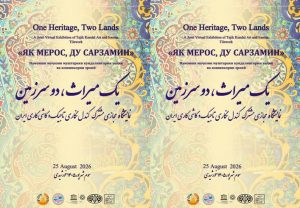 Tajikistan, Iran to Hold Virtual Exhibition “One Heritage, Two Lands”
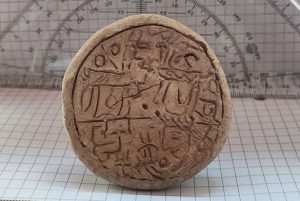 TAJIK CIVILIZATION. Ancient Royal Seal Unearthed at Sayyod Archaeological Site in Tajikistan
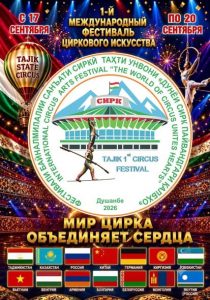 First International Circus Festival to Be Held in Dushanbe in September
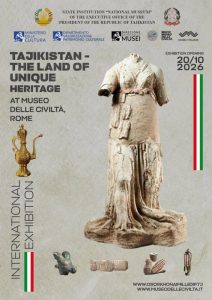 Rome to Host International Exhibition Showcasing Tajikistan’s Ancient Heritage
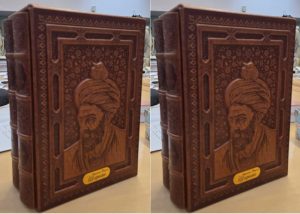 Tajikistan’s “Shahnameh” wins Grand Prix at CIS International Book Art Competition
 Tajik-Iranian Film Wins Best Actor Award at SCO International Film Festival
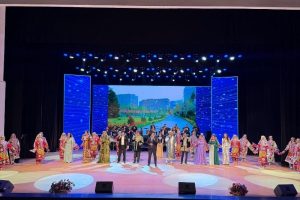 Tajik Culture Days Open in Ulaanbaatar During Emomali Rahmon’s State Visit
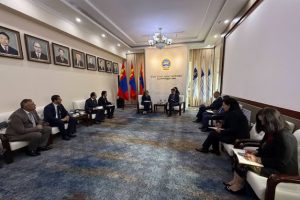 Tajik Culture Days Begin in Mongolia
 Dushanbe to host third Toji Somon National Film Festival in October
 Mohamed Saleh Al-Swayeh: «Tajikistan Possesses Significant Investment Potential»