







Modern Parliamentarism and the Role of the Asian Forum of Parliamentarians on Population and Development: From Experience Sharing to Practice-Oriented Policy Worldwide
Read also
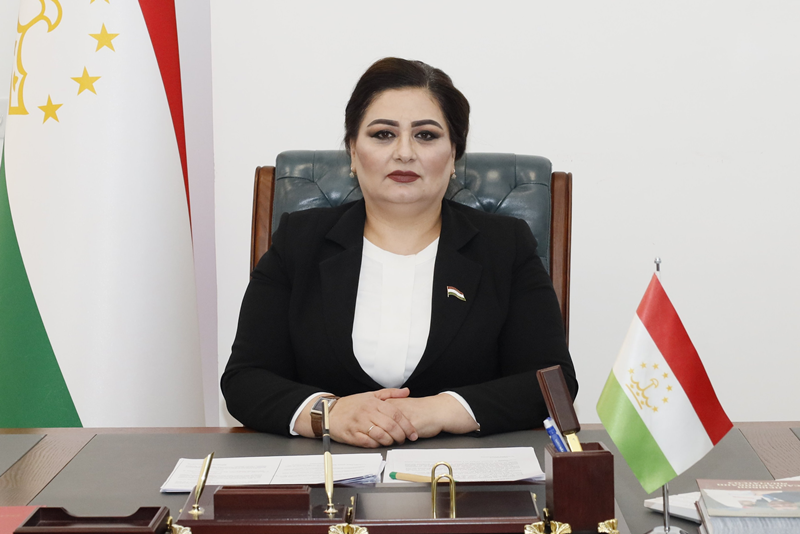
DUSHANBE, 06.10.2025 (NIAT Khovar) – The development of the institution of parliamentarism within the country’s political system, carried out through elections, plays an influential and important role.
The adoption of normative legal acts by the highest legislative body, which in our country is one of the branches of state power, always contributes to the process of democracy, political pluralism, and diversity of opinions, ensuring equal participation of deputies from different regions in this supreme body, which allows the country’s political system to remain balanced and continue to develop.
Emomali Rahmon, Founder of Peace and National Unity – Leader of the Nation and President of the Republic of Tajikistan, gained invaluable experience in the field of politics as a graduate of the parliamentary school. This experience significantly influences his legislative initiatives. The Head of State consistently advocates for the crucial role of parliamentarism in the development of a democratic society.
In Tajikistan, the independent branch of state power is represented by the Majlisi Oli, the supreme representative and legislative authority. It consists of two chambers – the Majlisi Milli and the Majlisi Namoyandagon – which play a crucial role in shaping the country’s legal system. The smooth progression of draft laws through all stages – from review and adoption to approval by the Majlisi Milli and final signing by the President – reflects the high level of organization and systematic nature of Tajikistan’s legal framework.
Cooperation with other countries’ parliaments is integral to the work of any legislature, forming a vital component of parliamentary activity. This collaboration strengthens intergovernmental relations by fostering the exchange of views on legislative initiatives and legal implementation, thus creating a strong foundation for further engagement.
The Majlisi Namoyandagon of the Majlisi Oli of the Republic of Tajikistan actively participates in international affairs. It maintains friendly relations with parliaments from over 70 countries through inter-parliamentary friendship groups and membership in major inter-parliamentary cooperation organizations.
The Majlisi Oli of the Republic of Tajikistan is an active member of several influential international parliamentary organizations, which contributes to the continuous growth of its authority in the field of inter-parliamentary cooperation.
The country’s highest legislative body is a full member of the following organizations, with voting rights in decision-making processes:
- Inter-parliamentary Assembly of the CIS;
- Asian Parliamentary Assembly;
- Parliamentary Assembly of the Economic Cooperation Organization;
- European Parliament (within the framework of partnership relations);
- OSCE Parliamentary Assembly;
- CSTO Parliamentary Assembly;
- Inter-parliamentary Union of OIC Member States;
- Asian Inter-Parliamentary Forum on Population and Development.
The Inter-parliamentary Forum on Population and Development (AFPPD) of the CIS (IPA CIS) serves as a multifunctional platform for inter-parliamentary cooperation among CIS countries, including our republic. It facilitates interaction among parliamentarians through forums, sessions, conferences, roundtables, and study visits, while also promoting legislative harmonization through the development and review of model laws.
As a sovereign state, Tajikistan actively participates in global politics, maintaining a clear and independent position within the United Nations. This role is further strengthened by the country’s consistent initiatives and the compelling speeches of the President of the Republic of Tajikistan, the Leader of the Nation, on issues of global geopolitics, transnational threats, as well as clean water resources and the cryosphere.
The Republic of Tajikistan occupies a central position in Central Asia — a region characterized by high population density and significant strategic importance. Geographically, the country borders Uzbekistan, Kyrgyzstan, the People’s Republic of China, and the Islamic Republic of Afghanistan. This advantageous location enables Tajikistan, as a member of the Commonwealth of Independent States, to maintain strong ties and actively cooperate with countries from both the European and Asian continents, including through inter-parliamentary dialogue.
Asia, a continent home to over 4.85 billion people, is rightfully considered one of the most fascinating and captivating regions on the planet. Its countries play a key role in the development of global civilization and culture.
Asia surpasses all other continents in key demographic indicators: land area, population size, and population density. Together with Europe, it forms Eurasia, which covers 83% of the Earth’s surface. Asia leads among continents in terms of population density. According to statistical data from the past one hundred years, Asia’s population has reached 4.84 billion people, reflecting a significant percentage increase.
The Asia-Pacific region demonstrates one of the fastest population growth rates in the world, ranging from 1.8% to 2.1% per year, leading to a continuous increase in the number of inhabitants.
In several countries of the Asia-Pacific region, a complex set of interrelated problems poses serious challenges to sustainable development. These include harsh climatic conditions leading to droughts, shortages and poor quality of drinking water, as well as food deficits, which in turn contribute to malnutrition and high child mortality rates. These issues have been at the forefront of the global community’s attention, particularly that of the United Nations, for an extended period.
There are a total of 54 countries in Asia. According to the classification adopted by the United Nations, they are divided into four geographic sub-regions: East Asia, West Asia, South Asia, and Central Asia.
The Asian Parliamentary Forum on Population and Development (AFPPD) is one of the most reputable international organizations, established in 1981 in Asia and the Pacific region at the initiative of the United Nations Population Fund during the Asian Parliamentarians’ Conference on Population and Development. Its governing body is located in Tokyo and includes more than 30 national parliamentary committees from various countries around the world.
The activities of the Asian Parliamentary Forum on Population and Development (AFPPD) are funded by the Government of Japan, and its delegation includes parliamentarians from 30 countries.
The governing body consists of the Chairperson of the organization, four Vice-Chairpersons, four Committee Chairs, the Secretary-General, and the Executive Director. Over the years, the Forum has been led by influential figures and high-ranking politicians. Former Prime Minister of Japan Yasuo Fukuda and Minister of Health, Professor Keizo Takemi, headed this international organization for many years and made a significant contribution to the development of inter-parliamentary cooperation, especially with the Majlisi Namoyandagon of the Majlisi Oli of the Republic of Tajikistan.
Currently, the Chairperson of the Asian Parliamentary Forum on Population and Development (AFPPD) is Ms. Yoko Kamikawa, former Minister of Justice and Senator.
As a member of the organization, Tajikistan has gained a stable status within the National Committee of Central Asian countries. The Parliament actively cooperates to strengthen inter-parliamentary relations, with special focus on climate change, gender policy, and the global initiatives of the Leader of the Nation regarding the preservation of water resources and combating climate change. Our country consistently promotes its initiatives on these issues within the framework of the United Nations.
The active work of the Majlisi Namoyandagon of the Majlisi Oli of the Republic of Tajikistan is demonstrated by the fact that, over three convocations, three Deputy Chairwomen of the Majlisi Namoyandagon have held significant leadership positions within the Asian Parliamentary Forum on Population and Development (APFPPD).
- Khayriniso Yusufi (Deputy Chairwoman of the 5th convocation, 2015) headed the Committee on Investment in Youth.
- Mansuri Dilrabo Saidullo (Deputy Chairwoman of the 6th convocation, 2020–2023) served as the head of the Committee on Investment in Youth.
- Muini Mavsuma (Deputy Chairwoman of the 6th and 7th convocations) assumed the position of Chairwoman of the Parliamentary Group of the Standing Committee on Climate and Water Resources of the Asian Parliamentary Forum on Population and Development.
At the same time, we take pride in the fact that our national school of statehood trains and guides experienced specialists. The Executive Director of the Asian Forum of Parliamentarians on Population and Development (AFPPD) is our compatriot, Dr. Farrukh Usmanov, who possesses unique experience in organizing inter-parliamentary cooperation and has made a significant contribution to enhancing the Forum’s prestige and achieving outstanding results.
The Asian Parliamentary Forum on Population and Development (AFPPD), as a collective body of parliaments from influential regions – Asia and the Pacific countries – comprehensively studies, together with the parliaments of its member countries, normative legal acts, primarily concerning the legal protection of human rights. Special attention is given to issues of human resource development, gender equality, the observance of fundamental human rights – especially the rights of women and children – the creation of conditions for a dignified life, and ensuring access to drinking water.
On the other hand, inter-parliamentary cooperation among the countries of Asia and the Pacific region brings mutual strategic benefits to the participating states.
First and foremost, through the study of legislative experience that takes into account the cultural characteristics and social structure of each country, the active participation of Forum members – via the Forum itself, international conferences, high-level meetings, the examination of national legislative practices, and the development of normative legal acts that go beyond the scope of individual states’ laws and carry special authority – contributes to the emergence of a new phenomenon in inter-parliamentary cooperation: the implementation of law, which represents the highest form of such interaction.
During study visits and direct familiarization with the highest legislative bodies of the conference member countries, meetings and sessions are held in the parliamentary buildings with representatives of the leadership of sectoral structures regulating issues related to women and youth, healthcare, education, leading universities, as well as with professional networks of the mass media.
The experience of developing legislative acts that have direct application in modern international legal practice, have gained significant recognition, and have had a substantial impact on the legal environments of states is shared through open dialogue followed by an exchange of expertise.
Discussions among parliamentarians from diverse national, linguistic, and cultural groups, combined with the analysis of their colleagues’ legislative practices, lead to an enhancement of their political and legal competence.
In the course of comparative legal analysis, national legislation, whether presented as a package of regulatory legal acts or as an individual law, can serve as a model for future draft bills. At the same time, our colleagues must take into account the specific features of their own national legislation.
An integral part of the exchange of experience in the field of national legislation among the member states of the AFPPD are roundtables and conferences held in various countries, organized directly by the AFPPD in cooperation with the Government of Japan and supported by the United Nations Entity for Gender Equality and the Empowerment of Women (UN Women) and the United Nations Population Fund (UNFPA). These events focus on the observance of fundamental human rights, gender equality, investment in youth, and ensuring equal opportunities for men and women in the legislative process.
Gender policy and the protection of fundamental human and civil rights – regardless of nationality, race, social status, or gender – play a key role in this dialogue.
In the context of globalization, rapid geopolitical shifts, climate change, and uneven demographic growth leading to the disappearance of certain peoples and ethnic groups, the task of preserving cultural and moral values becomes especially urgent. Measures are needed to maintain birth rates in countries with figures below 0.1%, as well as to realize the potential of women and girls in states with high demographic dynamics. At the same time, to ensure the well-being of women and children, it is important to guarantee access to quality primary healthcare, decent living conditions, protection of maternal and child health, and to create opportunities for stable employment for the heads of households. These issues are of paramount importance for the sustainable development of society.
During study visits and meetings of the Forum Council, as well as its committees, parliamentarians from member countries identify pressing issues and develop action plans to address them within established timeframes.
Since 2010, parliamentary cooperation of the Majlisi Oli of the Republic of Tajikistan within the framework of the Asian Parliamentary Forum on Population and Development (AFPPD) has been expanding. During this time, numerous forums, conferences, and study visits have been held, with delegations from the Majlisi Oli of the Republic of Tajikistan actively participating.
During the sixth convocation and the first half of 2025, conferences, roundtables, and reviews and assessments of normative legal acts of individual countries were conducted with the participation of deputies from the Majlisi Oli of the Republic of Tajikistan and other Central Asian countries in North Macedonia, Austria, the Republic of Uzbekistan, Malaysia, Japan, Bali Island, Bosnia and Herzegovina, and the Philippines.
During the intensive work of the Asian Parliamentary Forum on Population and Development, a comprehensive approach was undertaken to analyze advanced legislative practices and programs of leading international organizations. This analysis focused on issues related to demographics, gender equality, investment in youth and their health, drinking water shortages, and climate change.
It is important to emphasize that the peoples and ethnic groups inhabiting the countries of the Asian region are characterized by an exceptionally rich and distinctive culture, embodying the unique traits of each nation and ethnic group. For centuries, they have tirelessly worked to preserve their cultural traditions and values.
The centuries-old history of statehood of the Tajik people, spanning more than five thousand years, has left an indelible mark on world culture. Representatives of this nation have made significant contributions to all fields of human activity — from the exact sciences and medicine to art, education, and literature. Their works, including the immortal creations of outstanding scholars and world-class classics, are an invaluable heritage for all humanity.
Globalization, accelerating at an unprecedented pace, is blurring national borders and exerting a growing influence on the worldview of young people through global networks, particularly social media platforms. At the same time, the spread of extremist content via these channels is fueling rising intolerance and ignorance, which often overshadow reason and common sense. This trend is becoming increasingly profound and concerning.
One of the effective mechanisms for preserving national cultural heritage is the legal protection of its values. This is achieved through the development, adoption, and implementation of a set of regulatory legal acts aimed at passing on to future generations the finest examples of moral and spiritual values, expressed through good thoughts, words, and deeds.
In the course of applying legislation, certain national regulatory acts that demonstrate exceptional effectiveness at the domestic level and enjoy broad public approval may gain international recognition.
Of particular importance is the fact that during the practical training sessions on the legislation of APFPPD member states, the presentation of three national laws from our country drew the attention of parliamentary representatives. At their request, electronic versions were shared, and there is potential for future legislative initiatives aimed at adapting and incorporating these laws into national legal systems, with consideration given to each country’s cultural context.
In this regard, the Republic of Tajikistan became one of the first countries where our Leader of the Nation was the first head of state to initiate two significant national laws aimed at preserving humanity’s highest values. These legislative acts focus on the upbringing of children, ensuring decent living conditions, respecting traditions of caring for elders, promoting mutual support and tolerance, encouraging the rational use of time and resources, and fostering the intellectual development of the younger generation. Special attention is also given to regulating and limiting excessive expenditures on costly celebrations and ceremonies, which often reach absurd proportions.
The Law of the Republic of Tajikistan “On Parental Responsibility for the Education and Upbringing of the Child,” adopted at the initiative of the President and effective since August 2, 2011, recognizes the family as a key institution of society based on mutual responsibility between parents and children. All provisions of the law are aimed at ensuring the upbringing of a healthy generation, providing children with education, preventing negative and unlawful actions, as well as establishing and regulating mutual obligations between parents and children.
Taking into account the development of economic relations, the introduction of modern technologies, and changes in public consciousness, this law was amended and improved on May 8, 2024.
The Law of the Republic of Tajikistan “On the Patriotic Education of Citizens,” adopted on November 2, 2022, at the initiative of Rustami Emomali, Chairman of the Majlisi Milli of the Majlisi Oli of the Republic of Tajikistan, is a unique legislative act rarely seen in global practice. This law aims to strengthen and preserve the spiritual values of society, as well as to pass on to the younger generation the high ideals of loyalty, honor, and defense of the Motherland. In the context of forming a stable national identity as a key factor in the country’s development, this law plays an important role in fostering patriotism and civic responsibility among the citizens of Tajikistan.
The Republic of Tajikistan, under the leadership of its President — recognized as a global leader — has put forward five comprehensive initiatives within the framework of the United Nations. These initiatives aim to address pressing global challenges related to water resources, climate change, the state of the cryosphere and glacier preservation, as well as combating transboundary crime, including the threat of extremism. Tajikistan prioritizes these issues in both its domestic and foreign policies.
The Asian Forum of Parliamentarians on Population and Development actively carries out its mission on the international stage, focusing on key global issues such as climate change, access to clean water, demographic trends, and the preservation and promotion of the health of mothers, children, and youth. The Forum maintains productive cooperation with a number of influential international organizations, including the United Nations, the UN Population Fund, the Asian Population and Development Association, the Association of Southeast Asian Nations (ASEAN), and the Japan Trust Fund. Additionally, the Forum supports close partnerships with the parliaments of European Union countries, the Arab Countries Population Forum, the African Countries Population Forum, the Asian Parliamentary Center, as well as the Japan Government Fund.
In addition to what has been mentioned, the Forum serves as a platform for deepening inter-parliamentary cooperation. It brings together representatives from various countries at one table to engage in dialogue and develop joint strategies to address pressing global issues such as water resources, climate change, and the health of future generations, which hold worldwide significance.
The Asian Forum of Parliamentarians on Population and Development (AFPPD) is a platform for exchanging ideas and practical experience in the field of law, bringing together 30 national parliamentary committees from Asian countries. The Forum plays an important role in strengthening friendly and cooperative relations, as well as in developing and implementing action plans aimed at preserving and creating decent living conditions for humanity.
The Parliament of the Republic of Tajikistan, prioritizing parliamentary cooperation with the international community, seeks to expand both bilateral and multilateral relations.
Since 2011, the parliamentary delegation of the Republic of Tajikistan has been actively participating in the activities of the Asian Forum of Parliamentarians on Population and Development, demonstrating the reliability and effectiveness of its partnership relations. Deputies of the Majlisi Namoyandagon regularly take part in various Forum events, including conferences, forums, Council meetings, roundtables, and training programs. During these events, they present reports, provide overviews of national legislative practices, and contribute constructive proposals for shaping the Forum’s agenda and developing action plans.
On June 10–11, 2024, within the framework of the Third High-Level International Conference dedicated to the International Decade of Action «Water for Sustainable Development, 2018–2028,» the ICPD-30 International Forum of Parliamentarians was held on the theme “Water Resources and Demographic Sustainability for the Benefit of Youth.” Representatives from the parliaments of 20 countries participated in the event, along with representatives of partner organizations of the forum, including the Majlisi Oli of the Republic of Tajikistan – the Asian Forum of Parliamentarians on Population and Development, the United Nations Population Fund, the Asian Population and Development Association, and the Japan Target Foundation.
The two-day conference program provided all parliamentary representatives with ample opportunities to speak and exchange views during the opening day and panel sessions. At the conclusion of the forum, a Declaration was adopted in support of the Leader of the Nation’s initiatives related to water resources and the national Sustainable Development Goals.
A two-day conference was held with the participation of the respected Zokirzoda Mahmadtoir Zoir, Chairman of the Majlisi Namoyandagon of the Majlisi Oli of the Republic of Tajikistan of the sixth convocation, deputies and deputy chairs from the parliaments of CIS countries, totaling 19 states from the Asian region, the Pacific basin, and Europe. During the conference, participants discussed issues related to water, climate, and the initiatives of the President of our country, gender policy, and strengthening human potential across five sessions. Representatives of the Majlisi Namoyandagon of the Majlisi Oli of the Republic of Tajikistan, along with over 400 representatives from ministries, institutions, and agencies, took part in the event, delivering 40 reports. At the conclusion of the forum, a Declaration was adopted in support of the Leader of the Nation’s initiatives concerning water resources and the national Sustainable Development Goals.
As part of implementing the large-scale initiatives of the President of the Republic of Tajikistan aimed at preserving water resources, mitigating the impacts of climate change, and executing corresponding action programs, Idizoda Faizali Fuzaylsho, new Chairman of the Majlisi Namoyandagon of the Majlisi Oli of the Republic of Tajikistan’s seventh convocation, places special emphasis on developing inter-parliamentary cooperation. In this context, he provides comprehensive support for the active participation of deputies in international processes and promotes the Head of State’s global initiatives on the international stage.
During the first six months of the seventh convocation, deputies of the Majlisi Oli of the Republic of Tajikistan actively participated in high-level meetings, conferences, and international forums held in European and Asian countries, delivering reports and making significant contributions to the expansion and strengthening of parliamentary diplomacy.
This year, a meeting of the AFPPD Council was held in Malaysia, during which a new composition of the Coordinating Council was elected and approved.
In May of this year, a delegation of deputies from the Majlisi Namoyandagon of the Majlisi Oli of the Republic of Tajikistan participated in a forum and a major study visit to Bosnia and Herzegovina, where experience was exchanged on expanding women’s rights and ensuring equal opportunities for future development. The event featured a series of reports and a comprehensive package of normative legal documents from national legislation.
From September 2025, deputies of the Majlisi Namoyandagon of the Majlisi Oli of the Republic of Tajikistan, Mavsuma Muini, Chairwoman of the Permanent Parliamentary Group on Climate Issues of the Asian Forum of Parliamentarians on Population and Development, and Zarafо Qiyomzoda, member of the Ecology Commission of the Majlisi Namoyandagon, participated in the Forum’s annual regional conference. During the event, the parliamentarians presented a report detailing the climate and water initiatives of the President of the Republic of Tajikistan, which have received widespread support and recognition from the international community.
In today’s world, water supply and climate change have become paramount concerns for the global community and political institutions. Alongside traditional domestic and foreign policy priorities, these global challenges are increasingly taking center stage on the agendas of international organizations and government bodies.
Since the early years of his leadership – decades before these issues became matters of global concern – the President of the Republic of Tajikistan, Leader of the Nation, as a true statesman endowed with great wisdom, strategic thinking, and farsighted vision, began consistently raising on the international stage topics vital to humanity. Among them are the threats of transnational crime and extremism, the preservation of water resources, as well as the strengthening of peace and stability through dialogue. He has promoted these initiatives at national, regional, and global platforms, including the United Nations. A vivid confirmation of this is his speeches at the UN Summit dedicated to the Decade of Peace-building for the Sake of Future Generations and at the general debates of the 80th session of the UN General Assembly, where he not only voiced these initiatives but also presented concrete action plans for their practical implementation.
Time has shown that the initiatives put forward, amid a rapidly changing global environment and alongside issues of national security, food sustainability, and foreign policy strategy, have become priority areas for both world leaders and the broader public. In this context, inter-parliamentary cooperation, as well as the development and implementation of joint action plans within reputable international organizations and forums in which the Parliament of the Republic of Tajikistan actively participates, serve as a reliable foundation for advancing these initiatives at a high legislative level. This is due to the parliament’s key role in shaping the normative legal framework in this field.
In this context, the Asian Forum of Parliamentarians on Population and Development serves as a reliable strategic partner and institution, uniting the efforts of independent states to strengthen cooperation on preserving the fundamentals of human existence – water and climate – as key and vital resources.
Surayo Dustmurodzoda,
Deputy of the Majlisi Namoyandagon of the Majlisi Oli of the Republic of Tajikistan
 Joint Statement by the Ministries of Foreign Affairs of the Republic of Tajikistan and the Kingdom of Bahrain on the Occasion of the 30th Anniversary of the Establishment of Diplomatic Relations
 The Political School of the Leader of the Nation in the Context of the Activities of the People’s Democratic Party of Tajikistan
 Speaker of the Grand National Assembly of Türkiye Numan Kurtulmuş Arrives in Tajikistan on an Official Visit
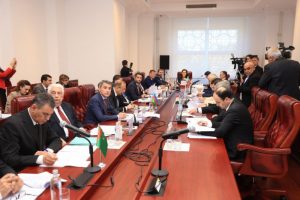 Session of IPA CIS Permanent Commission on Political Issues and International Cooperation took place in Dushanbe
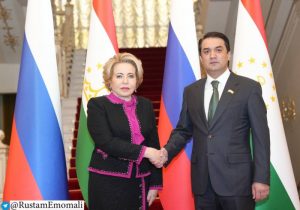 Rustami Emomali, Valentina Matvienko discussed issues of parliamentary cooperation between Tajikistan and Russia
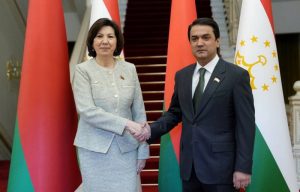 Rustam Emomali, Natalya Kochanova discuss strengthening parliamentary ties between Tajikistan and Belarus
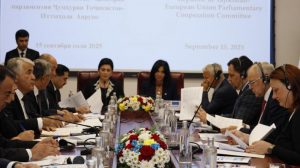 Dushanbe Hosts 12th Meeting of the Cooperation Committee Between the Republic of Tajikistan and the European Union
 Fayzali Idizoda Meets with Chairman of the Jogorku Kenesh of the Kyrgyz Republic Nurlanbek Turgunbek uulu
 Tajik MP Participates in International Forum of Parliamentarians of Friendly Countries
 Rustam Emomali Meets with Nurlanbek Turgunbek uulu
 Chairman of the Jogorku Kenesh of the Kyrgyz Republic Lays Wreath at the Monument to Ismail Somoni
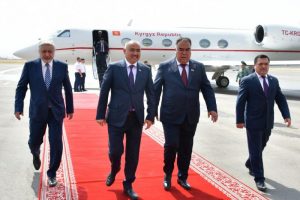 Chairman of the Jogorku Kenesh of the Kyrgyz Republic Arrives in Tajikistan