







Full confidence in China’s economy in 2026
Read also
DUSHANBE, 05.01.2026 (NIAT Khovar) – As China enters 2026, the first year of the 15th Five-Year Plan (2026-30), it does so not as a country embarking on a new stage «from a blank slate,» but as a nation shaping its development within the logic of long historical cycles. In the Chinese practice, five-year plans are not projects or declarations of intent; they are guiding benchmarks, like lighthouses that help keep the course amid rapidly changing global conditions. It is stated based on an authorial material published in Global Times.
«A strong foundation makes a stable house.» Based on my many years of observation, this principle precisely reflects how China approaches the formation of its economic strategy.
My confidence in the country’s economic outlook at the start of 2026 stems from not only its achievements of the previous years, but also a deeper source — a millennia-old philosophy of the path as a purposeful movement toward a goal. In the Chinese understanding, development is neither a sudden leap nor a race for indicators; it is a consistent advance toward building a society in which economic growth is combined with social stability and responsibility to future generations.
China is a vast country with 1.4-billion-strong population,, and it faces no shortage of challenges. These challenges are not glossed over. On the contrary, the Communist Party of China (CPC) consistently brings the existing contradictions into the open, turning them into the subjects of in-depth analysis and practical policymaking. The CPC regularly draws attention to difficulties and vulnerable points in development, emphasizing that reforms are never painless. The strength of the Chinese model lies not in concealing the problems, but in the ability to acknowledge and manage them.
When comparing the period of the 14th Five-Year Plan (2021-25) with the time when I first visited China in 1993 (and then returned again in 2005, for a period of 13 years), one cannot help but note the dramatic changes in China’s social and economic environment. Particularly striking are the improvements in the environmental conditions of megacities and large and medium-sized cities across the country. China’s green agenda is not a declaration, but a set of practical achievements that are tangible in everyday reality.
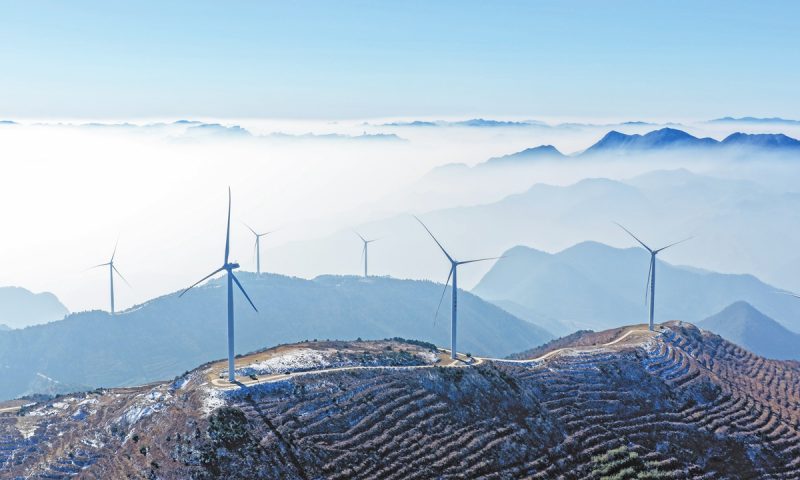
In particular, green energy is present everywhere — from motorcycles and automobiles to the world’s largest solar and wind power plants. Between 2021 and 2025, installed solar power capacity accounted for more than half of the global total.
It is worth recalling that during the COVID-19 pandemic, when the global economy was experiencing severe shocks, China not only preserved the stability of key sectors but also accelerated the development of new areas — the digital economy, e-commerce, logistics, smart manufacturing, and renewable energy. The most significant change, however, lies in the transformation of public consciousness. Environmental responsibility has become the norm. China has confidently turned into the global locomotive of green energy, a trendsetter in models and an architect of the emerging global green economy.
The country’s scientific and technological development deserves special attention. At times, it seems that China’s achievements in artificial intelligence (AI) and robotics are created not only by engineers, but also by people with artistic and athletic ways of thinking — with a sense of form and balance, rhythm, and even humor. Chinese technologies are increasingly oriented not only toward efficiency, but also toward harmonious interaction between humans and machines.
A telling example is China’s DeepSeek, which burst onto the AI market in 2025, becoming one of ChatGPT’s main competitors. A significant portion of its functions is available free of charge to end users, which radically expands the access to advanced technologies. Overall, China generously shares its achievements in future technologies with the world, especially with developing countries, reducing the global technological gap and turning innovation into a common good.
China’s transition from high-speed growth to high-quality development fits organically into this philosophy. This is not about abandoning growth, but about qualitatively rethinking it — with an emphasis on sustainability and long-term impact. China does not envision its own development without the sustainable development of the global economy. Development «in isolation» is impossible in today’s world, just as prosperity at the expense of others is untenable. Joint development multiplies mutual gains many times over.
This logic is particularly evident within the framework of the China-proposed Belt and Road Initiative (BRI). Today it is difficult to imagine the development of global transport and logistics infrastructure without this project. Those who attempted to oppose it have largely found themselves on the sidelines. Those who supported the initiative have gained tangible advantages. Tajikistan was among the first countries to sign an agreement in 2014 on the joint promotion of the BRI, and this step proved to be strategically sound.
The countries of Central Asia, as China’s closest neighbors and strategic partners, were among the first to benefit. A region that until recently was perceived as remote from global trade routes now increasingly forgets about its continental isolation. Participation in the BRI has brought the ocean of global trade closer to Central Asia, while China has become the region’s main trading partner and investor. According to the latest estimates by the Eurasian Development Bank, Central Asia accounts for about 47 percent of all Chinese investments directed to the Eurasian region, with their cumulative volume reaching $36 billion by mid-2025. These investments are already generating a long-term multiplicative effect for the region’s economy.
Against the backdrop of global turbulence, the Shanghai Cooperation Organisation (SCO), which marks its 25th anniversary in 2026, is gaining special significance. Increasingly, the SCO is viewed as a structure capable of leading the formation of a more just system of global governance. Such potential is embedded in the goals and objectives set out in the SCO Development Strategy through 2035, adopted at the Tianjin Summit on September 1, 2025. If these guidelines are implemented consistently, the SCO may evolve from a regional association into one of the pillars of a new architecture of international relations.
China enters a new five-year cycle without illusions, but with a clear understanding of the complexity of the tasks ahead. Realism, the philosophy of the path, and an orientation toward joint development make this course not only internally sustainable, but also significant for the world as a whole.
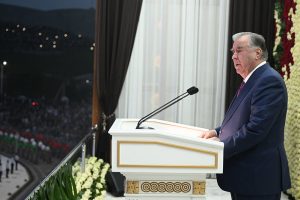 Emomali Rahmon Calls for Strengthening Patriotism Among Youth at Navruz Celebration
 Tajikistan, Uzbekistan Discuss Expanding Customs Cooperation
 Tajikistan Eyes Renewable Energy Boost With 500-MW Solar Initiative
 Experts to Discuss Climate Resilience at Dushanbe Water Conference
 Meeting of the Government of the Republic of Tajikistan
 Dushanbe to Host International Forum on Sustainable Development, Green and Digital Transformation in April 2026
 Tajik Delegation Competes at International Delphic Games in Kyrgyzstan
 Tajik, Uzbek Writers Celebrate Navruz at “Literary Friendship – Eternal Friendship” Event
 Dushanbe to Host International Judo Grand Slam 2026
 FAO to Hold 35th Regional Conference in Dushanbe on Food Security, Climate Issues
 Tajik Cinema Days Open in Uzbekistan, Showcasing National Films
 Youth Navruz Festival Opens in Dushanbe with Global Participants, Cultural and Sports Events