




Industry as a Driver of Growth: What Has Changed in 35 Years of Independence?
Read also
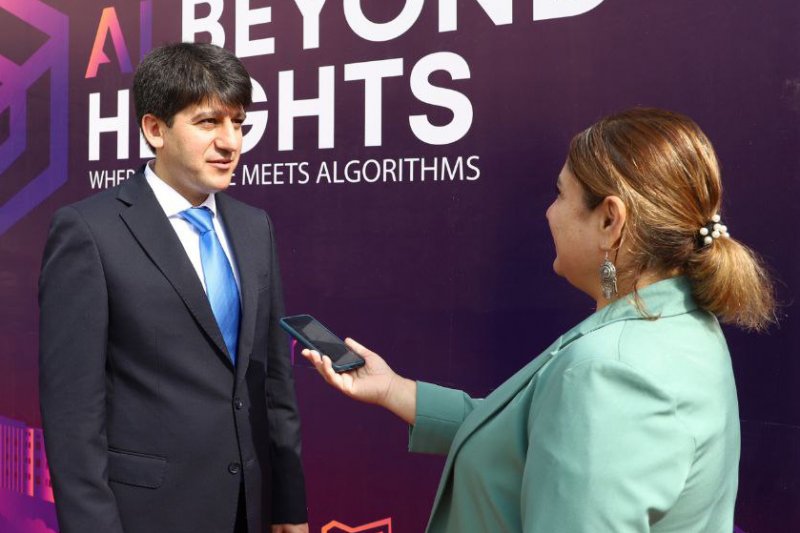
DUSHANBE, August 3, 2026 (NIAT Khovar) — Tajikistan approaches the 35th anniversary of its state independence with notable achievements in the industrial sector. In recent years, the country has pursued accelerated industrialisation, transforming industry into one of the principal drivers of economic growth. In an interview with a correspondent of the National Information Agency of Tajikistan “Khovar”, Aziz Nazar, Deputy Minister of Industry and New Technologies of the Republic of Tajikistan, discussed the sector’s achievements, investment attraction, the introduction of new technologies, and prospects for further development.
— In your view, what have been the most significant achievements in industry over the past 35 years?
— Over the 35 years of state independence, Tajikistan’s industry has progressed from preserving basic production capacity under difficult historical circumstances to establishing a modern, diversified, and export-oriented industrial system. In my view, the most important achievement is that, under the leadership of the President of the Republic of Tajikistan, Leader of the Nation, His Excellency Emomali Rahmon, industry has been elevated to the status of one of the principal pillars of the national economy, while the country’s accelerated industrialisation has been designated as the fourth national strategic goal.
Historically, this decision marked a turning point in the country’s overall economic policy. On 26 December 2018, in his Address to the Majlisi Oli, the President of the Republic of Tajikistan, His Excellency Emomali Rahmon, proposed declaring the country’s accelerated industrialisation as the fourth national goal. The same Address set the task of transforming the economy from an agrarian-industrial model into an industrial-agrarian one. By that time, industry’s share of GDP had risen from 15.2 to 17.3 percent. This was not merely a sectoral decision, but a strategic choice by the state: industrial development came to be regarded as a foundation for economic resilience, productive employment, export growth, and greater national competitiveness.
The results achieved in recent years are particularly illustrative. In 2025, industrial enterprises produced goods worth 66 billion 726.1 million somoni, representing a growth of 22.1 percent in comparable prices and exceeding the 2024 figure by 13.3 billion somoni. Manufacturing accounted for 51.8 percent of total output, mining for 30.0 percent, electricity supply for 17.6 percent, and water supply, sewerage, waste management, and materials recovery for 0.6 percent.
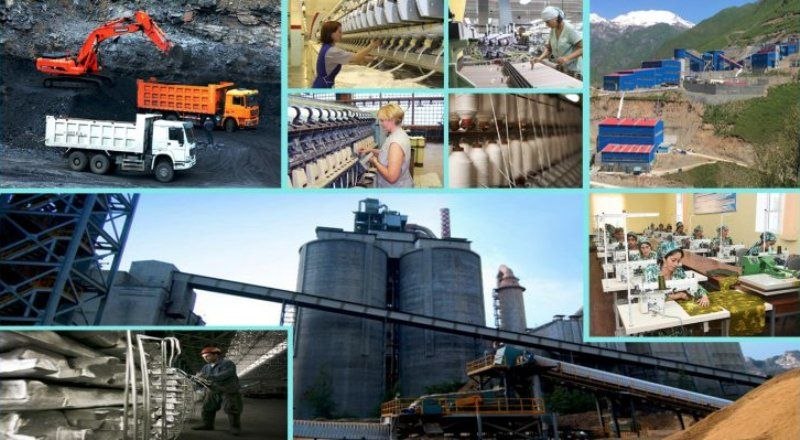
Between 2019 and 2025-over the past seven years-more than 2,600 industrial enterprises were built and commissioned in the country, creating over 87,000 jobs. In 2025 alone, 396 new industrial enterprises were commissioned, creating 13,113 jobs and demonstrating the sustained expansion of the country’s industrial base.
Importantly, this positive momentum has continued into 2026, the country’s anniversary year. As of 1 July 2026, 4,002 industrial enterprises were registered nationwide, providing 89,059 jobs. Compared with the corresponding date of the previous year, the number of enterprises increased by 153. Between January and June 2026, 4 billion 916.7 million somoni from enterprises’ own funds and foreign investment was channeled into the industrial sector-645.4 million somoni more than during the same period of 2025, when the figure stood at 4 billion 271.3 million somoni. These indicators attest to the continued strengthening of the country’s industrial potential and the sustained nature of its accelerated industrialisation policy.
The principal achievement lies not only in quantitative growth but also in the qualitative transformation of industry. Today, priority areas include the deep processing of domestic raw materials, the manufacture of high value-added products, and the development of metallurgy, construction materials, food processing, light industry, chemicals, pharmaceuticals, mechanical engineering, and the mining sector. In the period leading up to the 35th anniversary of state independence, this is especially important because industry demonstrates the maturity of the national economy, the strength of domestic potential, and the effectiveness of consistent state policy.
In essence, the fourth strategic goal has built upon the state’s three fundamental goals: securing energy independence, breaking the country’s transport and communications isolation, and ensuring food security. Energy, roads, and food security have created the foundation on which Tajikistan’s new industrial economy is now being built.
— Could you outline the dynamics of industrial development 35 years ago and today?
 — A comparison between the early years of independence and the present stage demonstrates the scale of the historic progress achieved. In 2023, industrial output exceeded 46 billion somoni, representing a 4.6-fold increase compared with 1992. The figure rose to 53 billion 819 million somoni in 2024 and reached 66 billion 726.1 million somoni in 2025.
Whereas Tajikistan was historically perceived primarily as an agrarian country, today we are confidently building an industrial-agrarian economy. Agriculture retains its important role, but industry is becoming the driving force behind structural modernisation, raw-material processing, value creation, and the strengthening of export potential.
The structure of production is also changing. In 2025, 3,972 industrial enterprises were operating in the country. Over the years of independence, more than 3,000 industrial enterprises were built and commissioned, creating 54,000 jobs, while in 2019-2025 alone, more than 2,600 enterprises were established and over 87,000 jobs created.
By the end of April 2026, 3,983 industrial enterprises were operating nationwide, including 3,446 in manufacturing, 364 in mining, 72 in electricity, gas, and steam supply, and 101 in water supply and waste management.
This progress is particularly evident in mineral production. In 1991, the mining industry produced three types of products; by 2025, that number had increased to 17. Mining output rose from 7.7 billion somoni in 2020 to 27 billion somoni in 2025-a 3.4-fold increase.
— Have new technologies and innovation changed the development of industrial sectors?
— Yes, new technologies have fundamentally transformed the country’s industrial development. Previously, the main task was to restore and restart production facilities. Today, our ambitions are much greater: to establish modern enterprises, introduce energy-efficient technologies, improve product quality, deepen raw-material processing, and enter foreign markets with competitive products.
The Address of the President of the Republic of Tajikistan set out tasks relating to the introduction of digital services, the transition to energy-efficient equipment, the development of innovation and technology parks and data-processing centres, and the implementation of the National Artificial Intelligence Strategy. The years 2025-2030 have also been declared the “Years of the Digital Economy and Innovation” in Tajikistan, logically extending the policy of industrialisation and technological modernisation.
For industry, this means transitioning towards higher value-added production. Technology facilitates the deeper processing of cotton fibre, aluminium, minerals, agricultural produce, and medicinal plants, while supporting the development of the chemical, pharmaceutical, metallurgical, textile, and food industries, as well as construction-material production. In 2025, chemical-product output grew by 26.1 percent, rubber and plastic products by 21.1 percent, and pharmaceutical products by 10.6 percent, confirming the expansion of more technologically sophisticated industries.
This trend continued between January and April 2026: manufacturing output reached 11 billion 401.2 million somoni, which is 28.0 percent more than in the corresponding period of the previous year. Particularly importantly, growth occurred in sectors associated with deeper processing and finished products. Output of food products, beverages, and tobacco reached 3 billion 747.7 million somoni; textiles and clothing, 864.0 million somoni; chemical products, 210.3 million somoni; non-metallic mineral products, 1 billion 494.6 million somoni; and metallurgy and fabricated metal products, 4 billion 288.7 million somoni.
Training personnel for the new industrial economy is also of great importance. In 2025, more than 8,042 students were enrolled in 129 programmes at institutions subordinate to the Ministry, 80 of which were industry-related. More than 20 new programmes were introduced in information technology, engineering, artificial intelligence, innovation, and the digital economy. This provides the foundation for digitalisation, artificial intelligence, and engineering expertise to contribute directly to industrialisation.
This combination of industry, science, innovation, and human capital is fully aligned with the National Development Strategy of the Republic of Tajikistan for the Period up to 2030. The Strategy provides for industrial and industrial-innovation development scenarios. During its third phase, covering 2026-2030, emphasis is placed on the accelerated completion of industrialisation through capacity expansion, the introduction of advanced technologies, and the development of science and innovation.
— Which industrial sectors have recorded the strongest growth, and which still require further development?
— In recent years, the most significant growth has been recorded in mining, manufacturing, construction-material production, food processing, metallurgy, energy, textiles, and clothing.
In 2025, manufacturing output reached 34 billion 595.4 million somoni, including food products worth 12.4 billion somoni; textiles and clothing, 4.2 billion somoni; other non-metallic mineral products, 4.5 billion somoni; and metallurgical and fabricated metal products, 10.6 billion somoni. Mining output amounted to 20.0 billion somoni, representing 136.2 percent of the previous year’s level; manufacturing reached 34.6 billion somoni, or 110.5 percent of the previous year’s level; electricity generation and distribution amounted to 11.8 billion somoni, with a growth of 13.0 percent; and water supply and waste management reached 0.4 billion somoni, with a growth of 22.8 percent.
Looking at individual industries, mining and precious-metals production generated output worth 27 billion somoni, equivalent to 44 percent of the country’s total industrial output. The construction-materials industry produced goods worth 4.1 billion somoni, with a growth of 12.3 percent, while cement production reached 5.1 million tonnes. Food-industry output reached 12 billion 442.1 million somoni, increasing by 16.1 percent, while light industry, including cotton-ginning enterprises, produced goods worth 4.8 billion somoni, with a growth of 6.4 percent.
Statistics for January-April 2026 also show which sectors are driving growth. Overall industrial growth of 13.0 percent was driven primarily by a 28.0 percent increase in manufacturing and a 23.2 percent increase in food-industry output. Within the food industry, canned-food production increased by 41.5 percent, vegetable oil by 12.3 percent, flour by 37.6 percent, and poultry meat by 10.9 percent.
Positive trends were also recorded in textiles, clothing, and construction materials. Between January and April 2026, textile and clothing output increased by 11.0 percent, carpet and carpet-product output by 1.2 percent, and cotton-fibre production by 1.6 times. Output of non-metallic mineral products increased by 23.7 percent, including growth of 9.4 percent in cement, 9.7 percent in reinforcing steel, and a 1.8-fold increase in construction bricks. These products are directly relevant to the country’s construction and infrastructure projects.
At the same time, several sectors require even more active development. These include mechanical engineering, the electrical industry, pharmaceuticals, chemicals, component manufacturing, the deep processing of non-ferrous, rare, and precious metals, and the final processing of cotton and agricultural raw materials. In 2025, mechanical-engineering, defence-industry, and chemical enterprises produced goods worth 5 billion 298.8 million somoni, an increase of 18.6 percent. Aluminium-processing enterprises processed 26,850 tonnes of aluminium, which is 8,780 tonnes more than in 2024. These sectors will enable us to move from selling raw materials to exporting finished products, expand exports, and create more highly skilled jobs.
The production of rare and rare-earth metals is a strategic area deserving particular attention. According to the Main Department of Geology, 15 new rare-metal deposits were discovered in Tajikistan in 2024, including lithium, tantalum, niobium, beryllium, lanthanum, cerium, neodymium, and other elements. Tajikistan possesses reserves of 10 of the 12 metals that are critical to the green-energy transition, potentially making the country a significant participant in the global market for strategic raw materials. The Ministry’s task is to ensure a systematic transition from exploration to development of these deposits by attracting investment and establishing domestic facilities for the deep processing of rare metals.
— What measures is the Ministry taking to attract investment?
— Attracting investment into industry is one of the principal areas of activity of the Ministry of Industry and New Technologies. This work is carried out in accordance with the instructions of the Leader of the Nation, President of the Republic of Tajikistan, His Excellency Emomali Rahmon, and the decisions of the Government of the Republic of Tajikistan on implementing the country’s fourth national strategic goal-accelerated industrialisation. For us, investment means not only financial resources but also new technologies, modern equipment, management expertise, access to foreign markets, and sustainable job creation.
The Ministry undertakes practical work to attract domestic and foreign investors to specific industrial sectors. Priority areas include the deep processing of mineral raw materials and non-ferrous, rare, and precious metals; aluminium processing; construction-material production; textiles and clothing; food processing; chemicals; pharmaceuticals; mechanical engineering; jewellery production; and the introduction of digital technologies in industry. In each area, the Ministry identifies promising projects, studies the raw-material base, production capacity, infrastructure, and market requirements, and then presents investors with well-prepared and commercially viable proposals.
It should be emphasised that the Ministry does not limit its work to general presentations of the country’s investment potential. In practice, it supports investors at various stages, from initial negotiations and the provision of sectoral information to coordination with other state bodies, local executive authorities, free economic zones, industrial enterprises, and potential domestic partners. This approach helps investors understand the country’s operating environment more quickly, select an appropriate site, and assess the raw-material base, logistics, energy availability, workforce requirements, and market prospects.
The state has established a favourable legal and institutional framework for investors. At the national level, this includes legal guarantees protecting investment, the ability to transfer income abroad, tax and customs incentives, and mechanisms for public-private partnerships, concessions, and investment agreements. The Ministry’s task is to use these opportunities specifically to develop production projects rather than facilitate short-term trade in raw materials.
The country’s five free economic zones-Sughd, Danghara, Kulob, Panj, and Ishkoshim-are important instruments for attracting investment. They offer tax and customs preferences, legal guarantees for capital protection, and simplified registration procedures, making them effective entry points for foreign partners seeking to manufacture export-oriented and import-substituting products.
The Ministry’s direct engagement with international partners is also highly important. In 2025, Tajikistan hosted the International Jewellery Forum and Industrial Exhibition in Dushanbe, the International Mining Forum and Industrial Exhibition of Tajikistan in London, the International Textile Forum, the International Artificial Intelligence Forum, and the Second International Investment Forum on the Mining and Metallurgical Industry. These events brought together representatives from more than 50 countries and over 500 participants from 85 foreign companies and organisations. They were not merely image-building events, but platforms for substantive negotiations, the presentation of investment projects, the demonstration of the country’s industrial potential, and the establishment of direct contacts among Tajik enterprises, foreign companies, financial institutions, and technology partners.
The Ministry also works actively with domestic investors and entrepreneurs. For accelerated industrialisation, national business activity must grow alongside foreign investment. We therefore support projects to modernise existing enterprises, expand production lines, establish new workshops, introduce contemporary technologies, and manufacture import-substituting and export-oriented products. This approach strengthens the domestic industrial base and supports the development of national companies capable of competing in regional markets.
The results are already visible. In 2025 alone, 10 billion 326.3 million somoni from enterprises’ own resources and foreign investors was channelled into industrial sectors-384.4 million somoni more than in 2024.
Between January and June 2026, 4 billion 916.7 million somoni from enterprises’ own resources and foreign investment was directed into the industrial sector. This was 645.4 million somoni more than in the same period of 2025, when the figure stood at 4 billion 271.3 million somoni. This demonstrates continued growth in investment activity, stronger production potential, and the consistent implementation of the policy of industrialising the economy.
It should also be noted that industrial investment policy follows the logic of the fourth strategic goal. The National Development Strategy 2030 seeks to achieve higher industrial growth, increase industry’s share of GDP, diversify the economy, and reduce the concentration of exports in a limited range of products. The Ministry therefore consistently promotes investment projects that deliver the greatest benefit to the country: processing domestic raw materials, creating value added within Tajikistan, exporting finished products, introducing new technologies, and expanding employment.
This is particularly important given the structure of foreign trade. In 2025, industrial goods accounted for 96.8 percent of the country’s total exports, while agricultural products accounted for only 3.2 percent. The principal exports include aluminium, electricity, cement, ores and metals, textiles, yarn, and other industrial goods. At the same time, approximately 70 percent of exports still consist of raw materials, while finished industrial products represent around 30 percent. The Ministry’s key task is therefore not simply to increase exports, but to improve their composition: raising the proportion of finished goods, expanding deep processing, and transforming industrial exports into a source of long-term technological and economic growth. In 2020, industrial goods accounted for approximately 48 percent of exports; the subsequent increase to 96.8 percent demonstrates the significantly greater role that industry has come to play in Tajikistan’s foreign trade.
— How are domestic production and the introduction of import-substituting technologies supported?
— Domestic production is supported, first and foremost, through the sustained attention and comprehensive assistance of the Government of the Republic of Tajikistan. At the initiative of the Leader of the Nation, President of the Republic of Tajikistan, His Excellency Emomali Rahmon, state strategies, programmes, and sectoral plans for the development of industry, raw-material processing, and other key areas of the economy are being consistently prepared and implemented.
State industrial policy aims to expand production capacity, create new jobs, and strengthen Tajikistan’s economic self-reliance. To this end, industrial zones are being established, modern technological equipment is being introduced, free economic zones are being developed, the processing of domestic raw materials is being supported, and enterprises producing export-oriented and import-substituting goods are being encouraged.
Within the framework of state priorities, particular attention is paid to the deep processing of cotton fiber, the production of green aluminium, and the processing of minerals, agricultural products, and medicinal plants. At the same time, new industrial sectors are developing actively. Jewelry clusters are being established in Dushanbe, focusing on the deep processing of precious metals and the manufacture of high value-added finished products.
The modernisation of mining and metallurgical enterprises remains another important priority. Modern technologies for extracting and processing minerals are being introduced, production infrastructure is being upgraded, and capacity for processing gold, silver, antimony, and other mineral resources is being expanded. This contributes to greater domestic processing of national raw materials and strengthens the country’s export potential.
Considerable attention is also being paid to the development of the food industry. State policy seeks to increase the processing of domestic agricultural produce and expand the production of flour, vegetable oil, canned goods, meat and dairy products, soft drinks, and confectionery. The development of the food industry is directly connected with strengthening food security and reducing dependence on imports.
Construction-material production provides a good example of import substitution. Through the development of the cement industry, the republic is supplying its domestic market with domestically produced goods, reducing import dependence, and expanding export opportunities.
Further development of this sector is being pursued in accordance with instructions issued by the President of the Republic of Tajikistan, Leader of the Nation, His Excellency Emomali Rahmon, at a meeting of the Government of the Republic of Tajikistan on 28 May 2026. Over the next two to three years, four new cement plants with a combined annual capacity of 6 million tonnes are planned for construction in different regions of the country. These projects will almost double cement production, fully supply domestic demand with nationally produced cement, and create approximately 5,000 jobs.
For Tajikistan, import substitution does not imply economic isolation. On the contrary, it means establishing modern, competitive domestic industries capable of competing successfully with imported goods in terms of quality, price, and technology. In 2025, domestic production supplied a substantial share of the internal market: domestically produced soft drinks accounted for 94.9 percent, flour for 93.0 percent, meat for 78.2 percent, dairy products for 63.6 percent, pasta for 54.4 percent, and confectionery for 49.7 percent.
Data for January-April 2026 confirm the strengthening position of domestic production in socially important goods. Growth in the production of flour, vegetable oil, canned foods, poultry meat, cement, bricks, reinforcing steel, textiles, and clothing demonstrates that the state’s industrial policy is directly contributing to domestic market supply, reducing import dependence, and strengthening the industrial self-reliance of the Republic of Tajikistan.
— From a logistics perspective, with which countries has Tajikistan established successful cooperation?
— Tajikistan’s logistics policy is closely linked to the state’s second strategic goal: breaking the country’s transport and communications isolation and transforming it into a transit country. Industrial and trade logistics are currently developing along several routes. The northern route connects us with Uzbekistan, Kyrgyzstan, and Kazakhstan, and onwards to Eurasian markets. The eastern route is strategically important for access to China through the Kulob-Khorog-Kulma-Karakorum road corridor and other routes of international importance. The southern route through Afghanistan is viewed as a promising gateway to South Asian countries and seaports, while the western route through Uzbekistan and Turkmenistan expands access to regional transport corridors.
At the international level, Tajikistan participates in transport corridors and cooperation frameworks such as TRACECA, CAREC, the Shanghai Cooperation Organisation, and the Economic Cooperation Organisation, as well as other regional mechanisms. For industry, this means reducing logistics barriers, expanding export routes, and making the country more attractive to investors targeting markets in Central, South, and East Asia.
As a transit country with an advantageous geographical position, Tajikistan intends to make maximum use of new regional corridors to increase industrial exports, including cement, aluminium, textiles, food products, and construction materials.
The practical benefits are already evident in industrial exports. In 2025, coal was exported primarily to the Republic of Uzbekistan and, to a lesser extent, to the Islamic Republic of Afghanistan; cement was supplied to Afghanistan; mechanical-engineering, chemical, and aluminium products were exported to Uzbekistan, Kazakhstan, Türkiye, the Russian Federation, Turkmenistan, and European countries; and food-industry products were exported to Kazakhstan, Russia, Türkiye, Germany, China, Uzbekistan, and Georgia. This demonstrates that Tajikistan’s industrial cooperation is developing simultaneously across Central Asian, Eurasian, South Asian, and European markets.
Industrial growth in the regions also has logistical significance.
— What industrial products has Tajikistan begun exporting over the past three decades, and which brands are now recognised internationally?
— Over the years of independence, Tajikistan has broadened the range of its industrial exports. Today, major export categories include aluminium and metal products, electricity, cotton fibre and textiles, cement and construction materials, mining products, selected food products, and dried fruit.
TALCO remains one of the country’s most recognisable industrial brands. The company is regarded as one of the republic’s foremost industrial enterprises, while aluminium is one of the country’s principal export commodities. TALCO products are exported to Türkiye, Uzbekistan, Japan, China, Western European countries, the United States, and other destinations. In 2025, mechanical-engineering and chemical enterprises, together with the Tajik Aluminium Company OJSC, exported products worth 262.5 million US dollars, including primary aluminium, industrial explosives, and aluminium profiles. Exports increased by 16.7 percent compared with 2024.
Cement enterprises play an important role in supplying the domestic construction market and developing cement-export capacity. In 2025, Tajikistan produced 5.1 million tonnes of cement, of which 312,100 tonnes, valued at 16.1 million US dollars, were exported. Food products and textiles also have substantial potential: exports of principal food-industry products reached 68.1 million US dollars in 2025, while approximately 60 percent of clothing output, valued at almost 280 million somoni, was exported.
It is important to us that international markets recognise not only Tajik raw materials but also finished products incorporating value added in Tajikistan. Accordingly, future emphasis will be placed on textiles and finished clothing, food products, construction materials, metallurgy, products derived from the deep processing of minerals, pharmaceuticals, and goods manufactured using green energy.
In this context, the “Made in Tajikistan” concept is acquiring particular importance by establishing a recognizable national origin for Tajik products in international markets. Tajik textile enterprises currently manufacture products under brands such as Nassojii Tojik (Tajik Textile), Oriyon J Textile, Gulistoni Dushanbe, Arvis, Jadid, and Carrera, among others. They are successfully entering international markets and positioning Tajik manufacturing as modern, high-quality, and competitive. The next stage is to support this process systematically by creating conditions for the registration of national trademarks, participation in international exhibitions, and the promotion of Tajik products through digital trading platforms.
— Could you describe the prospects for industrial development in Tajikistan?
— Tajikistan’s industrial-development prospects are extensive. Under the “Years of Industrial Development, 2022-2026”, strategic targets have been set to increase industrial output to 95 billion somoni, double industrial exports, and raise industry’s share of GDP to 26 percent. These goals are ambitious, but they correspond to the country’s potential, given Tajikistan’s rich natural resources, substantial hydropower potential, labor resources, and advantageous regional location.
The next stage will be associated with a new accelerated industrialisation programme for 2026-2030. In accordance with the relevant instructions, the draft programme should seek to ensure real annual industrial growth of at least 25 percent. Particular attention will be given to light industry, the deep processing of raw materials, the production of rare and strategically important metals, and increased output of export-oriented and import-substituting products.
The practical foundation has already been established. In 2025, 10.3 billion somoni was invested in industry, hundreds of new enterprises were commissioned, and major international forums were held on jewellery, mining, textiles, artificial intelligence, and investment in the mining and metallurgical sector. During high-level visits, 14 legal and regulatory instruments were signed with relevant ministries of partner countries. Tajikistan has an established body of sectoral documents, including the Industrial Development Strategy up to 2030; the Law “On State Policy in the Sphere of Industry”; programmes covering accelerated industrialisation, the coal industry, food processing, mechanical engineering, carpet weaving, and metallurgy; and the National Strategy for the Development of Cotton Processing and the Textile Industry for 2024-2040.
The results of the first half of 2026 confirm that the established targets are realistic. Between January and June, industrial output reached 33 billion 982.2 million somoni, representing a growth of 13.2 percent in comparable prices compared with the corresponding period of the previous year. Sustained manufacturing growth remains particularly important, as this sector creates new jobs, produces high value-added goods, promotes import substitution, and expands the country’s export potential.
We see the future of Tajikistan’s industry in three key areas. The first is the deep processing of domestic raw materials, so that the country exports finished products rather than raw materials. The second is the introduction of digital, energy-efficient, and green technologies to ensure that our industry remains competitive in international markets. The third is the creation of new industrial complexes in the regions, so that industrialisation becomes not only an economic undertaking but also a social project that provides employment for young people, women, and skilled professionals.
Tajikistan has a particular competitive advantage in its ability to develop green industry based on renewable hydropower. TALCO already produces aluminium with a minimal carbon footprint-so-called green aluminium-which makes its products particularly attractive in European markets in light of the European Union’s Carbon Border Adjustment Mechanism. In the future, the same principle can be applied to the production of green steel, hydrogen, and other low-carbon products. Tajikistan has hydropower potential exceeding 527 billion kWh per year, creating a unique foundation for the country to become a regional leader in environmentally sustainable industrial production by 2030.
The philosophy of accelerated industrialisation is based on viewing industry not merely as a sector of the economy but also as a symbol of the constructive development of an independent state. It is a path towards the rational use of natural resources, the introduction of innovative technologies, the development of a green economy, reduced dependence on imports, the creation of national brands, and the strengthening of economic sovereignty. The new programme for 2026-2030 should therefore be more than a continuation of existing measures: it should represent the next stage in the transition towards an industrial-innovation development model.
As the Republic of Tajikistan approaches the 35th anniversary of its state independence, it does so with confidence, political stability, and a clear industrial policy. Thanks to the wise and far-sighted policy of the esteemed Leader of the Nation, industry has become a symbol of constructive development, economic self-reliance, and confidence in our country’s future.
Lailo Toiri,
NIAT «Khovar»
 Tajikistan, China Hold 14th Intergovernmental Commission Meeting in Dushanbe
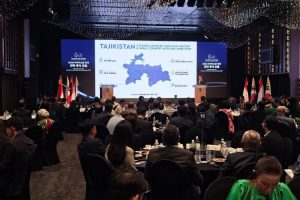 Tajikistan-Republic of Korea Strategic Investment Forum was held in Seoul
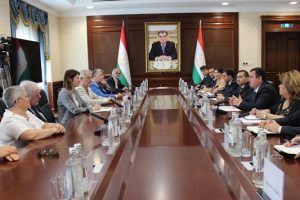 Tajikistan, Flanders discuss investment and trade cooperation
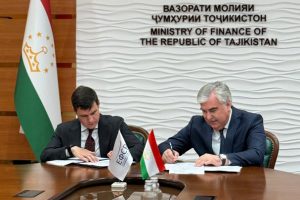 Tajikistan, EFSD Sign $200 Million Budget Support Loan Agreement
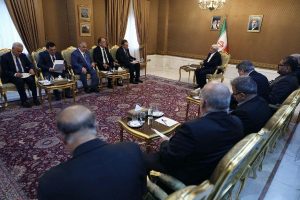 Tajikistan, Iran Strengthen Economic and Trade Cooperation
 Tajikistan, IMF Discuss Human Capital Development and Economic Cooperation
 PamirInvest-2026: 57 investment agreements worth over 6.5 billion somoni signed at international forum
 Shohin Airlines to acquire four Airbus A320neo aircraft
 Tajikistan Imports Goods Worth Over $5 Billion in First Half of 2026
 Citizens and Entrepreneurs Conduct 3.7 Million Non-Cash Transactions via POS Terminals and E-Wallets
 Plans for Non-Ferrous Metals Industrial Cluster in Sughd Discussed in Shanghai
 National Bank of Tajikistan and GGGI Discuss Advancing Sustainable Finance